
I don’t care what the nightly rate says. I care what I actually pay once my card is charged and the trip is over.
If that’s how you think too, this guide is for you.
Airbnb used to be the obvious budget pick. Now, in a lot of places, hotels are cheaper. In others, Airbnbs still win by a mile. The trick is to match trip type + length of stay + group size and then look at the real total cost, not the pretty headline price.
Below, we’ll walk through the decisions you actually make when planning a trip and how the total cost of an Airbnb vs hotel stay changes in each case.
1. Short City Break (1–3 Nights): Why Hotels Usually Win
For a quick city break, I start with one question: Is the Airbnb cleaning fee going to destroy the math?
Most of the time, yes.
Here’s why short stays usually tilt toward hotels in any Airbnb vs hotel cost comparison:
- Fixed Airbnb fees crush short trips. Cleaning and service fees are often flat. On 1–2 nights, they can add 30–60% to the total. On 7 nights, they barely move the needle.
- Hotels are built for short, busy stays. 24/7 front desk, easy check-in, luggage storage, housekeeping, and predictable standards. You’re in, you’re out, no drama.
- Perks often offset the price. Free breakfast, loyalty points, late checkout, and central locations can save you both money and time.
For a typical 2–3 night city trip for two adults, here’s what I usually see when I compare the total cost of Airbnb vs hotel stay:
- Hotels are often cheaper or roughly the same price as an entire-place Airbnb once all Airbnb fees are added.
- Private-room Airbnbs can undercut hotels, but you give up privacy and sometimes convenience.
So for a short city break, my rule of thumb:
Default to a hotel unless:
- You’re okay with a private room in someone’s home, or
- You find an unusually low-fee Airbnb (rare, but it happens).
Quick mental check: If the Airbnb cleaning fee is more than one night of the hotel you’re considering, the hotel probably wins the Airbnb vs hotel cost per night battle once everything is added up.
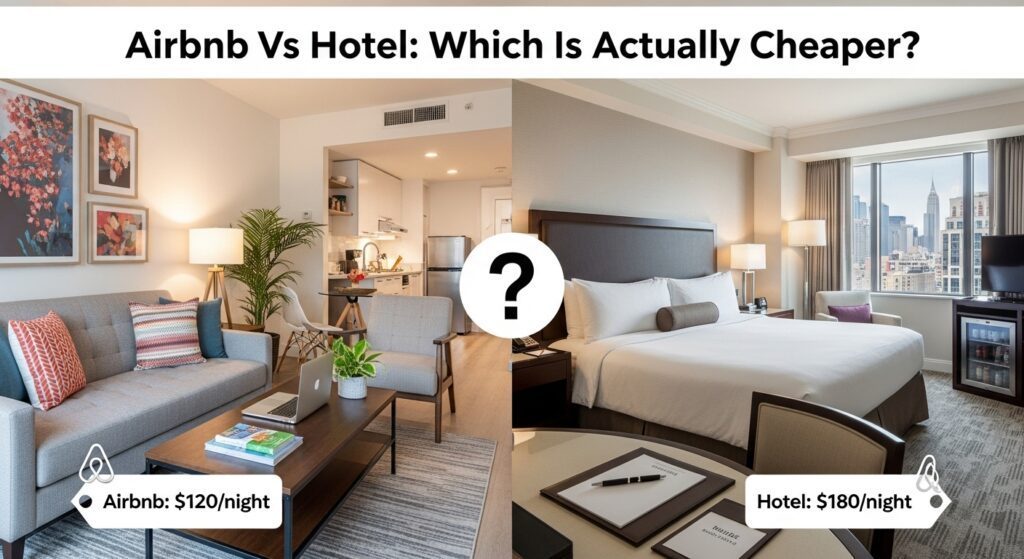
2. Week-Long Vacation (5–10 Nights): When Airbnb Starts to Pull Ahead
Once I cross about 5 nights, the math changes.
Those painful Airbnb cleaning and service fees get spread over more nights, and the quieter savings start to show up: cooking, laundry, and extra space. This is where the Airbnb vs hotel price breakdown starts to favor apartments.
Here’s how I think about a week-long stay:
- Airbnb wins on space. Separate bedrooms, a living room, maybe a balcony or yard. Over a week, that comfort really matters.
- Kitchens quietly save money. You don’t need to cook every meal. Even just doing breakfast at home and a few simple dinners can shave a big chunk off your food budget.
- Weekly discounts. Many hosts offer lower nightly rates for 7+ nights. Hotels sometimes do, but usually less aggressively.
But it’s not automatic. I still ask:
- What’s included in the hotel rate? Breakfast, parking, resort fees, Wi‑Fi, pool, gym, shuttle?
- What’s missing in the Airbnb? No daily cleaning, no front desk, maybe weaker soundproofing, and you’re doing your own trash and dishes.
For a 7‑night stay, I often find:
- Entire-place Airbnbs become competitive or cheaper than hotels, especially if I actually use the kitchen and laundry.
- Hotels can still win in very hotel-heavy markets or where resort fees are low and competition is high.
My rule: For 5–10 nights, I price both seriously. If the Airbnb is within ~10–15% of the hotel cost, I usually pick the Airbnb for comfort and food savings—unless I really need hotel-level service.
3. Families & Groups: One Airbnb vs Two (or Three) Hotel Rooms
This is where Airbnb can still be a game-changer in the Airbnb vs hotel for family vacation debate.
If I’m traveling with kids, friends, or extended family, the question becomes: How many hotel rooms would I need to match this Airbnb?
For groups, the cost equation shifts fast:
- Multiple hotel rooms add up quickly. Two or three rooms at $150–$250 each per night can blow past a 2–3 bedroom Airbnb.
- Shared spaces matter. A living room where kids can crash, adults can talk, and everyone can eat together has real value, not just in money but in how the trip feels.
- Kitchen = realistic savings. Families rarely cook every meal, but doing breakfast in, plus a few simple dinners, can save hundreds over a week.
But there are hidden costs families often forget when comparing Airbnb vs hotel for group trips:
- Location trade-offs. A cheaper, out-of-center Airbnb can mean higher transport costs, longer days, and more stress with kids.
- Housekeeping is not trivial. In a hotel, someone else handles trash, towels, and often some laundry. In an Airbnb, that’s you.
- Cancellation risk. Strict Airbnb policies can wipe out any savings if your plans change.
So for families and groups, I ask:
- How many hotel rooms would I realistically book?
- What’s the total cost of those rooms vs one good Airbnb or aparthotel?
- What’s my tolerance for doing chores on vacation?
My rule: If I’d need more than one hotel room, I always price out an Airbnb or aparthotel. If the Airbnb is at least ~20% cheaper and well located, it usually wins.
4. Business Trips & Solo Travel: Predictability vs Price
On work trips, I’m not experimenting. I want predictability.
That usually means a hotel.
Here’s why hotels tend to win for business and solo travel, even if they’re not always the absolute cheapest option in an Airbnb vs hotel cost comparison:
- Time is money. 24/7 front desk, easy check-in, no waiting for a host, no awkward key handoffs.
- Work setup. Desk, decent chair, reliable Wi‑Fi, quiet floors—business hotels are designed for this.
- Support when things break. If the AC dies at 11 pm, maintenance shows up. In an Airbnb, you’re at the mercy of the host.
- Loyalty points. If you travel often, hotel points and status can be worth real money in upgrades, free nights, and breakfast.
That said, there are two Airbnb scenarios I still consider when thinking about Airbnb vs hotel for business travel or solo trips:
- Private-room Airbnbs in expensive cities, where they can be dramatically cheaper than hotels for a night or two.
- Longer remote-work stays (2+ weeks) where a proper apartment with a desk, kitchen, and laundry beats a cramped hotel room.
My rule: For short business trips and solo city breaks, I default to hotels unless the price gap is huge or I find a very well-reviewed, business-friendly Airbnb with flexible cancellation.
5. Destination Matters: Same Trip, Different Winner
One of the biggest mistakes I see is assuming Airbnb is cheaper everywhere
or Hotels are always a rip-off.
Both are wrong.
The winner flips by destination.
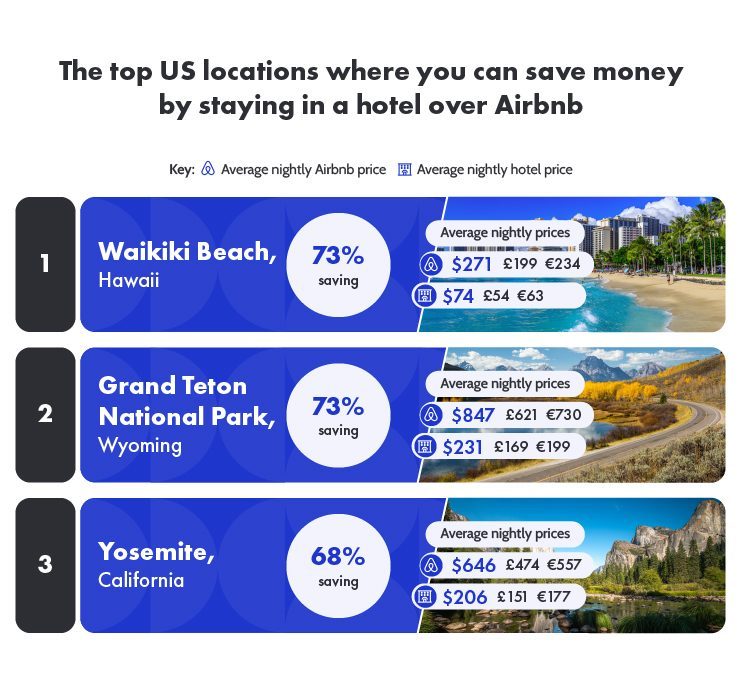
In some places, hotels crush Airbnbs on price. In others, Airbnbs are the only way to avoid eye-watering hotel rates. For example, some analyses of Airbnb vs hotel cost by trip type and location have found:
- In certain resort or national park areas, hotels can be dramatically cheaper than comparable Airbnbs.
- In some big cities, Airbnbs can undercut hotels by a wide margin, especially if hotels are dominated by high-end chains.
So I never assume. I do a quick, structured comparison:
- Pick 2–3 hotel options I’d actually stay in.
- Pick 2–3 Airbnbs with similar location and comfort level.
- Compare the total stay cost, not just nightly rates.
My rule: Treat each destination as a fresh puzzle. In some places, hotels are the budget choice. In others, Airbnb is the only way to keep costs sane.
6. The Hidden-Fee Trap: How to Compare True Total Cost
This is where most people get burned. They compare a hotel’s nightly rate to an Airbnb’s nightly rate and stop there. That’s how you overpay.
If you really want to know whether Airbnb or hotel is cheaper for your trip, you have to dig into the details.
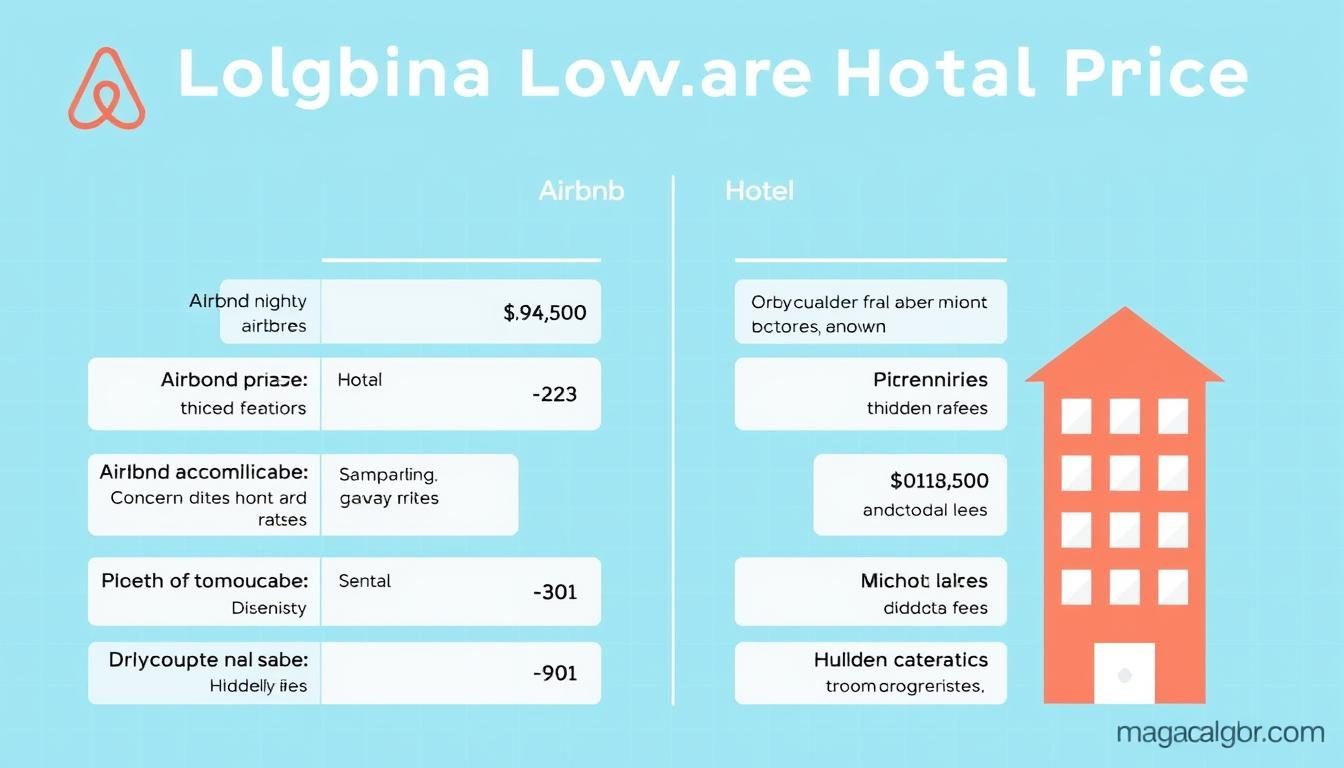
For an Airbnb, I add:
- Base nightly rate × number of nights
- Cleaning fee (one-time)
- Service fee
- Local taxes
- Extra guest fees (if any)
For a hotel, I add:
- Base nightly rate × number of nights
- Resort or destination fees
- Parking
- Breakfast (if not included)
- Wi‑Fi or other mandatory add-ons
- Local taxes
Then I subtract the value of perks:
- Hotel perks: free breakfast, lounge access, shuttles, late checkout, loyalty points.
- Airbnb perks: kitchen (food savings), laundry (fewer checked bags), free parking, extra space.
This is the real Airbnb fees vs hotel taxes and resort fees comparison. At this point, I’m not just asking Which is cheaper?
I’m asking:
Which gives me more value per dollar for this specific trip?
7. Long Stays & Remote Work: Apartment, Aparthotel, or Extended-Stay Hotel?
For trips longer than about two weeks, I stop thinking in terms of vacation
and start thinking in terms of temporary life.
At that point, I’m usually choosing between:
- Airbnb / apartment-style rentals (more space, kitchen, laundry, local feel)
- Extended-stay hotels / aparthotels (kitchenette + hotel services)
This is where the Airbnb vs hotel for long term stays question really matters. Here’s how I decide:
- If I want maximum independence and space: I lean Airbnb, but only with excellent reviews for Wi‑Fi, noise, and host responsiveness.
- If I want support and routine: I look at extended-stay hotels with kitchenettes, weekly cleaning, and maybe breakfast.
For long stays, small annoyances become big:
- A bad chair can wreck your back if you’re working daily.
- Weak Wi‑Fi can ruin calls.
- No laundry means constant laundromat runs.
My rule: For 2+ week stays, I list my non‑negotiables (desk, good chair, blackout blinds, quiet, laundry, strong Wi‑Fi) and only compare places that meet them—whether that’s an Airbnb or an extended-stay hotel.
8. A Simple Framework: How to Decide in 5 Minutes
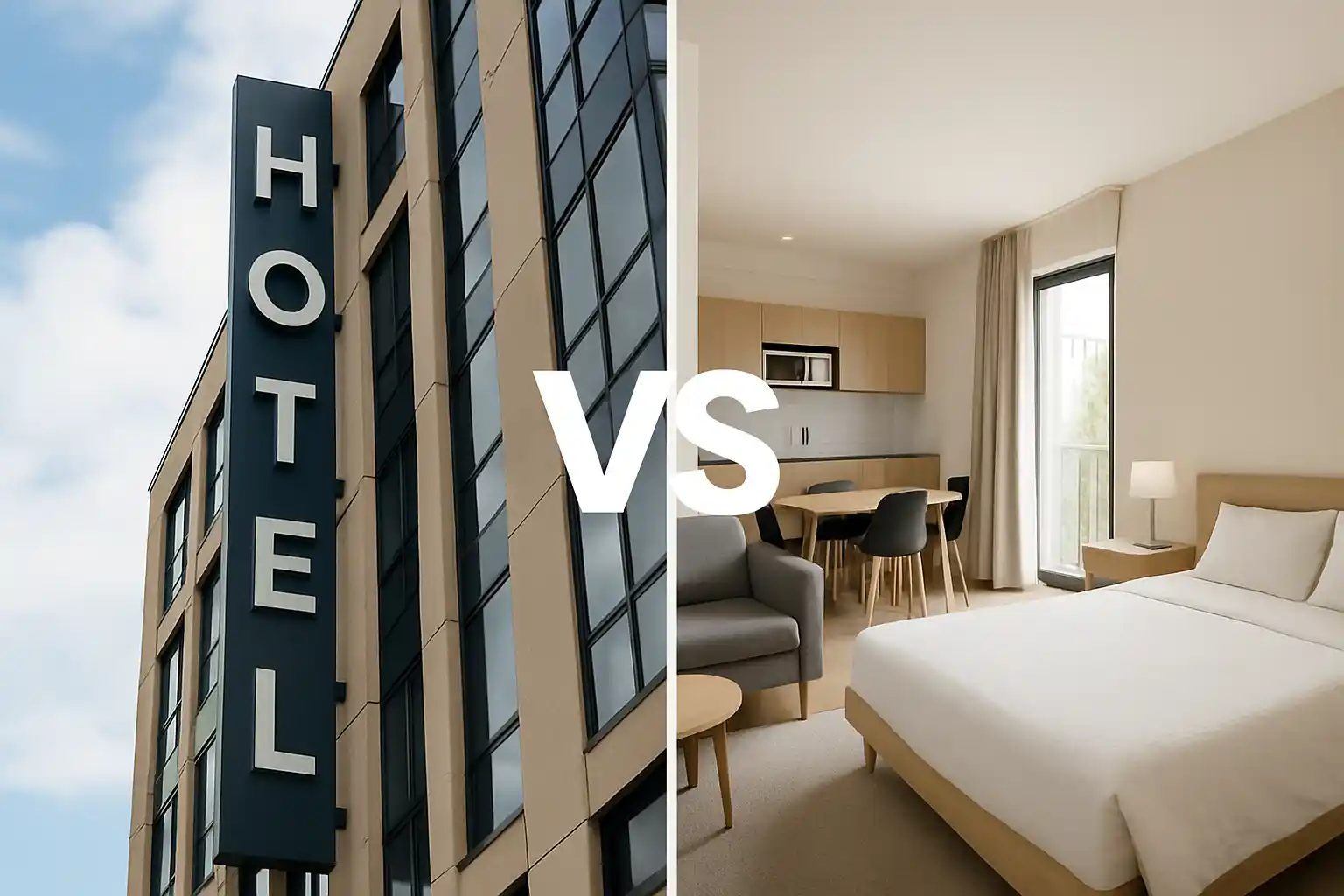
If you want a quick, repeatable way to choose between Airbnb and hotel without getting lost in tabs, here’s the framework I actually use.
Step 1: Define your trip type.
- 1–3 nights, city, busy schedule → Hotel usually wins (especially for solo travelers and business trips).
- 5–10 nights, vacation → Compare both seriously; the Airbnb vs hotel hidden costs matter here.
- Family or group → Always price an Airbnb or aparthotel against two or more hotel rooms.
- 2+ weeks, remote work or slow travel → Apartment / Airbnb vs extended-stay hotel is the real decision.
Step 2: Shortlist 2–3 realistic options of each type.
Not the absolute cheapest. The ones you’d actually stay in and feel good about.
Step 3: Calculate true total cost.
- Add all fees and taxes for both Airbnb and hotel.
- Estimate food savings if you have a kitchen.
- Add transport costs if you’re far from where you’ll spend your time.
Step 4: Weigh non-price factors.
- How much do you value space vs service?
- How much risk and hassle are you willing to tolerate?
- How important are loyalty points, breakfast, and daily cleaning?
Step 5: Choose the best value, not the lowest sticker price.
Sometimes that’s a hotel. Sometimes it’s an Airbnb. Sometimes it’s a hybrid like an aparthotel or serviced apartment. For a weekend getaway, a central hotel might be perfect. For a family vacation, a big Airbnb might be unbeatable.
If you want to go even deeper, tools like an Airbnb vs Hotel price comparison calculator can help you plug in your exact dates, group size, and preferences and spit out a detailed cost breakdown.
But even without a tool, if you remember this, you’ll avoid most traps:
Never compare nightly rates in isolation. Always compare total trip cost and total trip comfort for your specific type of stay.