I’ve lost count of how many times I’ve stared at a $6 bottle of water in an airport and thought, There is no way this should cost that much.
If you’ve had the same thought, you’re not wrong. But you’re also not powerless.
Think of this as a practical playbook for that expensive no‑man’s‑land between security and boarding: food, water, and Wi‑Fi. We’ll look at why airport food prices are so high, how to avoid paying for airport water, and when airport Wi‑Fi is worth it—or when your own mobile data is the better deal.
1. Understand the Game: Why Airport Prices Are So High
Before you can beat the system, you need to understand it. Airport prices feel like gouging, but under the hood it’s more complicated.
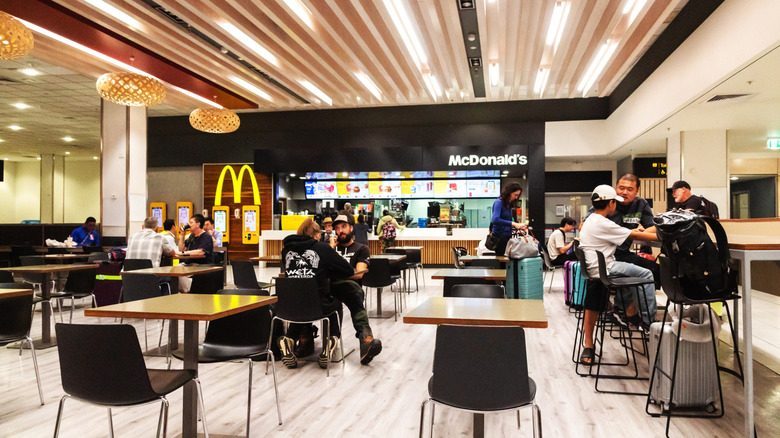
Most airport restaurants and shops are independent businesses leasing space from the airport, not airport-owned. Their costs are brutal:
- Rents are sky‑high. At Portland International, for example, vendors face at least about $80 per square foot per year or 10–18% of sales in rent and fees, compared with roughly $30/sq ft for prime city office space (source).
- They pay a cut of every sale. Many airports take a percentage of revenue on top of base rent. Some concession deals can reach 15–30% of revenue.
- Logistics are painful. Every delivery has to go through security, often in small batches, with limited storage. That means more trips, more staff, more time.
- Labor is expensive. Early/late shifts, long commutes, paid parking, background checks, and high turnover all push wages and training costs up.
- You’re a captive audience. After security, you can’t bring large liquids, options are limited, and you’re stuck for hours. Vendors know this.
Airports sometimes talk about “street pricing”—keeping prices close to what you’d pay in town. In reality, it’s often street‑plus
(10–15% higher) and loosely enforced. That’s how you end up with burgers and bottled water at 2–3x normal prices even when there’s technically a cap.
The takeaway: the system is built to make you spend more. Once you accept that, you can start planning around it and avoid the worst airport money‑saving mistakes.
2. Food Strategy: Eat Well Without Paying Terminal Prices
Food is where most people bleed cash. The cost of eating at the airport adds up fast—especially on long travel days or family trips.
The good news? You have more control here than you think.
Decide where you’ll actually eat
On any trip, I make one simple decision in advance:
- Eat before the airport (at home, the hotel, or a café on the way), or
- Pack food and treat the airport as a backup, not the main event.
Because airport vendors pay high rent and commissions, they have to charge more. You avoid that entire cost structure by eating outside the terminal. It’s the easiest way to start winning the game of overpriced airport food and drink.
What you can actually bring through security
Security rules are strict on liquids, not on solid food. In most countries you can bring:
- Sandwiches, wraps, burritos
- Salads (go easy on smelly toppings)
- Snacks: nuts, granola bars, crackers, chips, fruit
- Pastries, muffins, bagels
Where people get tripped up is semi‑liquids. Things that can be smeared or poured
may count as liquids or gels:
- Yogurt, pudding, hummus, peanut butter
- Soups, stews, sauces
Those need to fit in your 3‑1‑1 liquids bag if they’re over the local limit (often 100 ml / 3.4 oz). If you don’t want to argue with security, keep spreads and dips small or skip them.
Think of this as your quiet, low‑effort budget guide for airport layovers: bring real food, and use airport options only if you have to.
Plane‑friendly vs. plane‑hostile food
Just because you can bring it doesn’t mean you should. You’re in a metal tube with recycled air and strangers. A little courtesy goes a long way.
I avoid:
- Strong smells: tuna, hard‑boiled eggs, heavy garlic, fast‑food onions
- Messy items: saucy wings, overstuffed burritos that explode on first bite
- Crumb bombs: flaky pastries that disintegrate into your lap
Instead, I aim for quiet, compact, and filling:
- Simple sandwiches or wraps
- Cut fruit in a sealed container
- Trail mix or nuts
- Protein bars
It’s not glamorous, but it beats paying $18 for a sad airport salad.
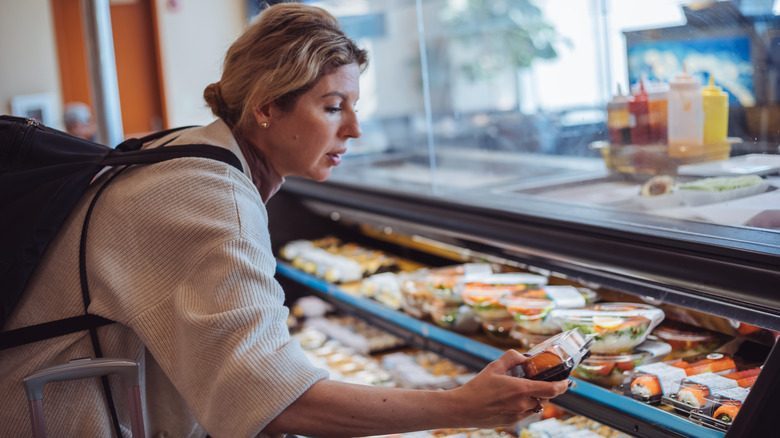
When you do have to buy at the airport
Sometimes you can’t avoid it. Delays happen, plans change, or you just didn’t have time to prep. When you’re stuck with airport food prices, you can still be strategic.
- Walk the whole concourse first. Prices and portions can vary wildly between gates.
- Look for local chains. Airports often bring in city favorites that try to keep closer to street pricing.
- Check combo value. A burger + fries + drink might be only slightly more than a salad alone.
- Skip the extras. Sides, desserts, and impulse snacks are where the bill quietly doubles.
And if you’re connecting, remember: the most expensive food is usually at your departure hub. A smaller regional airport or your destination might be cheaper, so time your main meal accordingly. That’s a simple way to save money on airport food without feeling deprived.
3. Water: Beat the $6 Bottle Without Going Thirsty
Water is where airports really cash in on the liquid rules. You can’t bring a full bottle through security, so vendors know you’ll be thirsty and stuck.
Behind the scenes, bottled water is a dream product: tiny storage footprint, long shelf life, and huge markups. That’s why you see it everywhere at 2–3x convenience‑store prices.
The simple move: bring an empty bottle
This is the single easiest way to save money in airports, full stop.
- Pack a reusable bottle in your bag, empty at security.
- Bring an empty water bottle through security, then refill it airside.
- Top up again before boarding and during layovers.
Most major airports now have dedicated bottle‑filling stations. They’re usually near restrooms or clustered around food courts. Once you get used to this habit, you’ll almost never need to pay for airport water again.
What if you don’t see a fountain?
If I can’t find a fountain, I’ll:
- Ask any café or fast‑food counter to fill my bottle with tap water.
- Buy one large bottle, then keep refilling it from fountains or on the plane.
Many places will give you tap water for free or for a small fee, especially outside North America. It’s not guaranteed, but it’s worth asking. Even if you buy one bottle, you’re still avoiding that endless cycle of $6 refills.
Don’t forget the plane
Cabin service is slow, and those tiny cups don’t hydrate much. I board with a full bottle and ask the flight attendant to refill it once or twice on longer flights.
It’s better for you, cheaper than buying multiple bottles in the terminal, and a simple way to avoid paying for airport water over and over again.
4. Wi‑Fi: When to Pay, When to Hack Around It
Wi‑Fi is the third money trap. Some airports offer it free and fast. Others give you a slow, ad‑ridden version and push you toward a paid upgrade. A few still charge outright.
Here’s how I decide what to do—and how to compare airport Wi‑Fi vs mobile data without overthinking it.
Step 1: Check what’s actually free
Open your Wi‑Fi list and look for the official airport network (usually the airport name). Then:
- See if there’s a time limit (e.g., 30–60 minutes free).
- Test the speed with a quick video or file download.
- Decide if it’s good enough for email and messaging only, or if you need more.
Many airports quietly upgraded to unlimited free Wi‑Fi to keep passengers happy and spending. Don’t assume it’s paid just because it used to be. A quick check is your own mini airport Wi‑Fi cost comparison.
Step 2: Use what you already pay for
Before you buy airport Wi‑Fi, ask yourself:
- Does my mobile plan include hotspot data?
- Do I have a credit card that includes lounge access (and therefore free Wi‑Fi)?
- Does my airline status or ticket class include lounge access?
Turning your phone into a hotspot is often faster and more secure than airport Wi‑Fi, especially for short sessions. Just watch your roaming and data limits.
In many cases, your phone is the best cheap alternative to airport Wi‑Fi—you’re already paying for that data.
Step 3: Decide if paid Wi‑Fi is actually worth it
When I consider paying, I ask:
- How long am I here? Paying $10 for 45 minutes is rarely worth it.
- What do I need to do? If it’s just email and messaging, free or slow Wi‑Fi is fine.
- Is there a cheaper alternative? A day pass from your mobile provider or airline may cover both airport and in‑flight Wi‑Fi.
If I’m stuck for hours and need to work, I’ll sometimes pay—but I treat it like buying a meal: a deliberate choice, not an automatic click. That mindset alone can save you from a lot of quiet, forgettable charges.

5. Time vs. Money: How Early Should You Really Arrive?
Airports have figured out something important: the more time you spend airside, the more money you spend. So they encourage early arrival and invest in faster security. Shorter lines + longer dwell time = more food, drinks, and impulse buys.
That doesn’t mean you should cut it dangerously close. But it does mean you should be intentional.
Find your personal cutoff
Instead of blindly following the arrive 2–3 hours early
rule, I look at:
- Airport size and reputation for delays
- Time of day and day of week
- Whether I’m checking a bag
- Security options (TSA PreCheck, Global Entry, fast track, etc.)
Then I aim for a window where I’m not rushed but also not sitting at the gate for three hours buying snacks out of boredom.
In other words, I try not to give the airport extra time to tempt me into overpriced food, drinks, and last‑minute gadgets I don’t need.
Use your extra time somewhere cheaper
If I know I’ll be early, I try to shift my spending:
- Have a proper meal near home or the hotel.
- Grab coffee and a snack before heading to the airport.
- Do last‑minute shopping in the city, not in duty‑free.
Think of the airport as your backup plan, not your main shopping mall. That simple shift helps you avoid a lot of subtle airport price gouging.
6. Smart Splurges: When Paying More Actually Makes Sense
Not every airport purchase is a mistake. Sometimes spending a bit more is rational—if you’re doing it on purpose.
When I’ll happily pay airport prices
- Long‑haul flights. I’ll buy extra snacks or a decent meal if I know the in‑flight food will be weak.
- Red‑eye or overnight connections. A hot meal and a coffee can be the difference between functioning and feeling wrecked.
- Health reasons. If I need specific foods or hydration to feel okay, I don’t gamble.
- Rare local spots. Some airports host genuinely good local restaurants. Paying a bit more for a last taste of a city can be worth it.
The key is to choose your splurges instead of drifting into them because you’re hungry, bored, or stressed. A few intentional treats are fine; autopilot spending is what hurts.
7. Your Personal Airport Playbook
If you want to stop getting overcharged between security and boarding, build a simple routine you follow every trip. Mine looks like this:
- Day before: Plan one airport‑friendly meal and a few snacks. Toss an empty water bottle into my bag. Check if my airport has free Wi‑Fi and what the options are.
- On the way: Eat a real meal before the airport if timing allows. Top up my phone battery so I can hotspot if needed.
- After security: Fill my water bottle. Walk the concourse once before buying anything. Use free Wi‑Fi or my hotspot first and only consider paid options if I really need them.
- At the gate: Only buy food or Wi‑Fi if I’ve decided it’s worth it, not because I’m on autopilot.
Airport prices aren’t going down anytime soon. Rents are high, logistics are messy, and you’re a captive customer by design. But once you see how the system works, you can opt out of the worst of it and build your own set of airport food, water, and Wi‑Fi tips that actually fit your travel style.
Next time you’re staring at that $6 bottle of water or $18 burger, pause and ask: Is this a deliberate choice, or am I just playing the game the airport wants me to play?
That one question alone can save you a surprising amount of money over a year of travel.