I like saving money as much as anyone. But I also hate 3 a.m. alarms, sprinting through terminals, and eating a $19 airport sandwich because I didn’t plan ahead. So before every trip, I ask one question: when does paying extra for an airport hotel or lounge actually save me money overall?
This guide is a practical, slightly skeptical look at that question. We’ll walk through real scenarios, rough numbers, and the trade-offs that actually matter: stress, sleep, risk of missing flights, and all those sneaky airport costs we pretend don’t exist. Think of it as a realistic airport hotel vs lounge cost check, not a luxury travel fantasy.
1. The Early-Morning Flight Problem: Hotel, Taxi… or Just Suffer?
If you’ve ever had a 6 a.m. departure, you know the dilemma. Do you:
- Wake up at 2–3 a.m. and gamble on traffic or public transport?
- Pay for an airport hotel and avoid the pre-dawn chaos?
- Or try to sleep at the airport and spend almost nothing?
When I’m deciding, I don’t start with the hotel price. I start with the total cost of getting to the gate on time—money, time, and stress all rolled together.
Let’s say you’re flying at 6 a.m. from a major airport:
- Option A: Stay at home
You’ll need a taxi or rideshare at 3–4 a.m. Those rides are often pricier than daytime trips. Add the risk of delays, road closures, or a no-show driver. Miss the flight and the cost explodes: rebooking fees, lost hotel nights at your destination, maybe even missing a cruise or wedding. Suddenly that “cheap” choice isn’t so cheap. - Option B: Airport hotel
You pay for a room, but you cut out the long pre-dawn commute. You walk or shuttle to the terminal. You sleep more. You slash the risk of a catastrophic miss. For a lot of people, this is where the cost benefit of airport hotels quietly shows up.
Articles like this one and this one make the same point: airport hotels are basically an insurance policy against chaos.
They’re especially useful when:
- Your flight leaves before about 9–10 a.m.
- You live more than 60–90 minutes from the airport.
- You’re on a long-haul or a trip you absolutely cannot miss.
The key is to compare all-in costs, not just the room rate. Add up:
- Taxi or rideshare both ways vs. one daytime ride + hotel shuttle
- Parking at the airport vs. park-and-stay packages
- Food at the airport vs. hotel breakfast or snacks
- The financial hit if you miss the flight
Sometimes the math is surprisingly close. When that happens, I ask myself: Is a calmer, later wake-up worth the difference?
For early flights, it usually is. That’s often when an airport overnight stay budget feels less like a splurge and more like a safety net.
2. When an Airport Hotel Is Actually the Cheaper Move
Airport hotels have a reputation for being expensive and soulless. Sometimes that’s true. But in a lot of cases, they’re quietly saving you money in ways that don’t show up on the booking screen.
Here’s where they can win financially and tilt the airport hotel vs nearby hotel decision in their favor.
Scenario A: Long drive + early flight
Imagine you live two hours from the airport. Your flight is at 7 a.m. You’d need to leave home around 3 a.m. to be safe.
- Fuel + tolls + parking for a week can easily hit $100–$200.
- Add the risk of traffic or an accident on the highway.
Now compare that to a park-and-stay package at an airport hotel. Many properties let you stay one night and leave your car for 7–14 days. The room + parking combined can be cheaper than airport parking alone. In that kind of airport layover hotel cost comparison, the hotel quietly wins.
Scenario B: City-center hotel vs. airport hotel on the last night
Another common trap: you spend your last night in a fancy city hotel, then pay for a 4 a.m. taxi to the airport. One article on Explore.com suggests flipping that: downgrade your last night to a basic airport hotel and save the splurge for earlier in the trip.
Why this works:
- You’re not really enjoying the hotel at 3 a.m. anyway.
- Airport hotels often include early breakfast or grab-and-go bags.
- You avoid a pricey pre-dawn taxi from the city.
Even if the airport hotel rate looks similar to your city hotel, you might save by:
- Using points for a no-frills chain near the airport.
- Choosing a smaller room or bed size.
- Picking a slightly off-airport hotel with a free shuttle.
My rule of thumb: if the last night is all about logistics, not experience, go cheap and close. Save the charm for earlier nights when you’re actually awake to enjoy it. That’s often when a “boring” airport hotel quietly becomes the smartest line item in your airport hotel pricing guide.

3. Lounges vs. Gate Areas: When That Day Pass Pays for Itself
Airport lounges are another “luxury” that can quietly be a money saver. Not always. But more often than people think, especially when you look at the real airport lounge day pass value.
A research report from LoungePair breaks it down: frequent travelers can save $20–$40 per visit just on food, drinks, and Wi‑Fi. Over a couple of years, that can offset the cost of a lounge membership or a premium credit card.
But let’s keep it simple and look at a single trip.
When a lounge day pass makes sense
- Layover of 3–6 hours: This is the sweet spot. Too long to be comfortable at the gate, too short to justify a hotel.
- You’d otherwise buy meals and drinks at the airport: A sandwich, coffee, and a drink can easily hit $25–$40 in many airports.
- You need to work: Reliable Wi‑Fi, power outlets, and a quiet-ish space can be the difference between a productive day and a wasted one.
If a lounge day pass costs $35 and you’d spend $25–$30 on food and drinks anyway, the real cost of the lounge is closer to $5–$10. Add in better seating, showers in some lounges, and fewer impulse purchases in the terminal, and it starts to look less like a splurge and more like a smart trade.
Where lounges don’t make sense:
- Layovers under 2–3 hours, especially if you’re arriving late to the gate.
- When you’re on a tight budget and can bring your own snacks.
- When the lounge is known to be overcrowded and chaotic (check recent reviews).
So, are airport lounges worth the cost? I ask myself: Am I buying comfort I’ll actually use, or just paying to feel fancy for an hour?
If it’s the latter, I skip it. If I’m going to eat, drink, work, and shower there, the math usually works out.
4. Long Layovers: Lounge, Day Room, or Airport Hotel?
Long layovers are where the hotel vs. lounge decision gets interesting. This is where the long layover sleep options cost really matters. A guide from HotelsByDay breaks it into three buckets:
- Under 3 hours: Stay near your gate. Don’t overcomplicate it.
- 3–6 hours: Lounge or sleep pod if you want comfort without leaving security.
- 6+ hours: Consider a day-use hotel room near the airport.
Here’s how I decide.
Option 1: Lounge only
Best when you want food, Wi‑Fi, and a decent chair. Not great for real sleep. If you’re the type who can nap upright, you might be fine. If not, you’ll arrive groggy and annoyed.
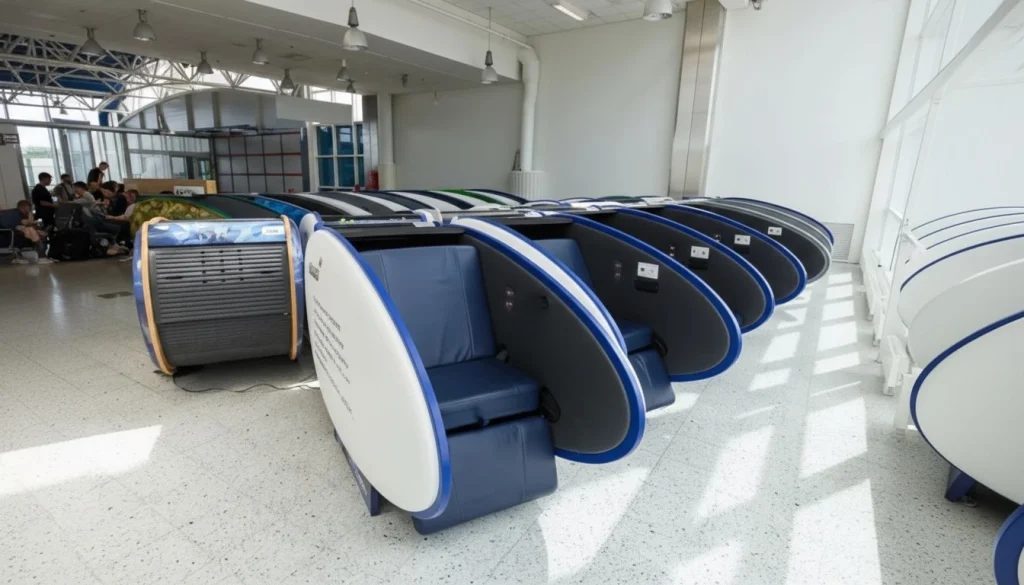
Option 2: Sleep pods inside the terminal
These are like mini-cabins or capsules you rent by the hour. They’re perfect when you want privacy and a flat-ish surface but don’t want to re-clear security. Downsides: limited availability, variable soundproofing, and often no shower.
Option 3: Day-use hotel or airport hotel
For layovers of 6+ hours, a day room can be a game changer. You get:
- A real bed
- A private bathroom and shower
- Climate control and quiet
The catch: you have to leave the secure area and go back through security later. That means you need to subtract 1–2 hours from your layover for transit and re-screening.
Financially, a 4–6 hour day room can cost the same as two lounge day passes for a couple. If you’re exhausted, the hotel wins. If you’re fine with a chair and some snacks, the lounge wins. This is where the airport hotel vs lounge cost really comes down to how badly you need sleep.
My rule: if I’m crossing time zones or arriving at my destination late at night, I prioritize real sleep over everything else. A short hotel stay can prevent a wasted first day of the trip.
5. The Hidden Value of Airport Hotels: Breakfast, Shuttles, and Stress
Airport hotels aren’t just about the bed. They’re built around early flights in ways city hotels rarely are. That matters more than people think, especially when you’re trying to save money on airport overnights without making your life miserable.
From examples like Pilot Airport Hotel near Helsinki and others, here’s what you typically get:
- Early breakfast: Light options from around 3:30–4:00 a.m., full buffets from 5–6 a.m.
- Grab-and-go bags: If you’re leaving before the buffet opens, you can often pre-order a breakfast box.
- Shuttles timed to flights: Many hotels run shuttles every 15–30 minutes from 4–5 a.m. onward.
- 24/7 reception and quick check-out: You can settle your bill the night before and just drop your key in the morning.
- Wake-up calls: Old-school, but still useful as a backup to your phone alarm.
These details sound small, but they add up. A city hotel that starts breakfast at 7 a.m. and has no early transport leaves you paying for food at the airport and scrambling for a taxi. An airport hotel that hands you coffee and a shuttle at 4:30 a.m. quietly saves you both money and cortisol.
Of course, there are downsides:
- Rooms can feel generic or sterile.
- On-site restaurants are often overpriced and uninspired.
- Noise from other travelers and runways can be an issue if soundproofing is weak.
So I treat airport hotels as tools, not destinations. I don’t expect charm. I expect efficiency. If they deliver that, I’m happy—and my late flight airport hotel decision usually feels justified.

6. When You Shouldn’t Pay Extra: The Cases for Staying Put
Not every trip needs an airport hotel or lounge. Sometimes the cheapest, simplest option really is the best.
I usually skip the extras when:
- My flight is midday or later, and I live within 30–45 minutes of the airport.
- I’m on a tight budget and every dollar counts more than comfort.
- I’m traveling light, with no checked bags and no complex connections.
- I’m flying from a small, easy airport with short lines and cheap food.
There’s also the nuclear option: sleeping at the airport. Some travelers do this to save every possible dollar. If you go this route, you need to:
- Check if the airport allows overnight stays.
- Know when security closes and reopens.
- Secure your belongings (locking your bag to your chair, using money belts, etc.).
It’s not glamorous. But if your hotel sleep would be only 3–4 hours anyway, and you’re comfortable roughing it, it can be the most financially rational choice. Just remember: the hidden costs of airport lounges and hotels aren’t only about money—they’re also about how wrecked you’ll feel the next day.
My personal line: If I’m so tired that I’ll be useless the next day, I spend the money.
If I’m rested, on a short flight, and the budget is tight? Maybe I tough it out.

7. A Simple Decision Framework You Can Reuse
To keep this practical, here’s the framework I use before every trip. You can run through it in a couple of minutes and quickly decide how to decide hotel or lounge at airport without overthinking it.
- What’s my flight time?
- Before 9–10 a.m.: seriously consider an airport hotel.
- Midday or later: probably fine to skip.
- How far am I from the airport?
- Over 60–90 minutes: airport hotel or park-and-stay might be cheaper than you think.
- Under 45 minutes: staying home usually wins.
- What’s the cost of missing this flight?
- High (weddings, cruises, long-haul, non-refundable): pay for the insurance of a hotel.
- Low (short domestic, flexible ticket): you can accept more risk.
- How long is my layover?
- <3 hours: skip lounges unless you already have free access.
- 3–6 hours: consider a lounge or sleep pod.
- 6+ hours: compare lounge vs. day-use hotel.
- What would I spend at the airport anyway?
Add up realistic food, drinks, Wi‑Fi, and maybe a shower. Compare that to the cost of a lounge or hotel. If the difference is small, comfort usually wins. This is where the airport lounge food vs restaurant cost comparison can surprise you. - How much is my stress worth?
This is the squishy part. But it matters. If a $60 hotel night or a $35 lounge pass turns a miserable travel day into a manageable one, that’s not indulgence. That’s strategy.
In the end, airport hotels and lounges aren’t about luxury. They’re about control. Control over your sleep, your schedule, your risk of missing flights, and your tendency to panic-buy overpriced airport food.
The trick is to stop asking, Is this expensive?
and start asking, Does this save me money, time, or sanity compared to my other options?
When the answer is yes, paying extra is often the most rational—and most human—thing you can do.