
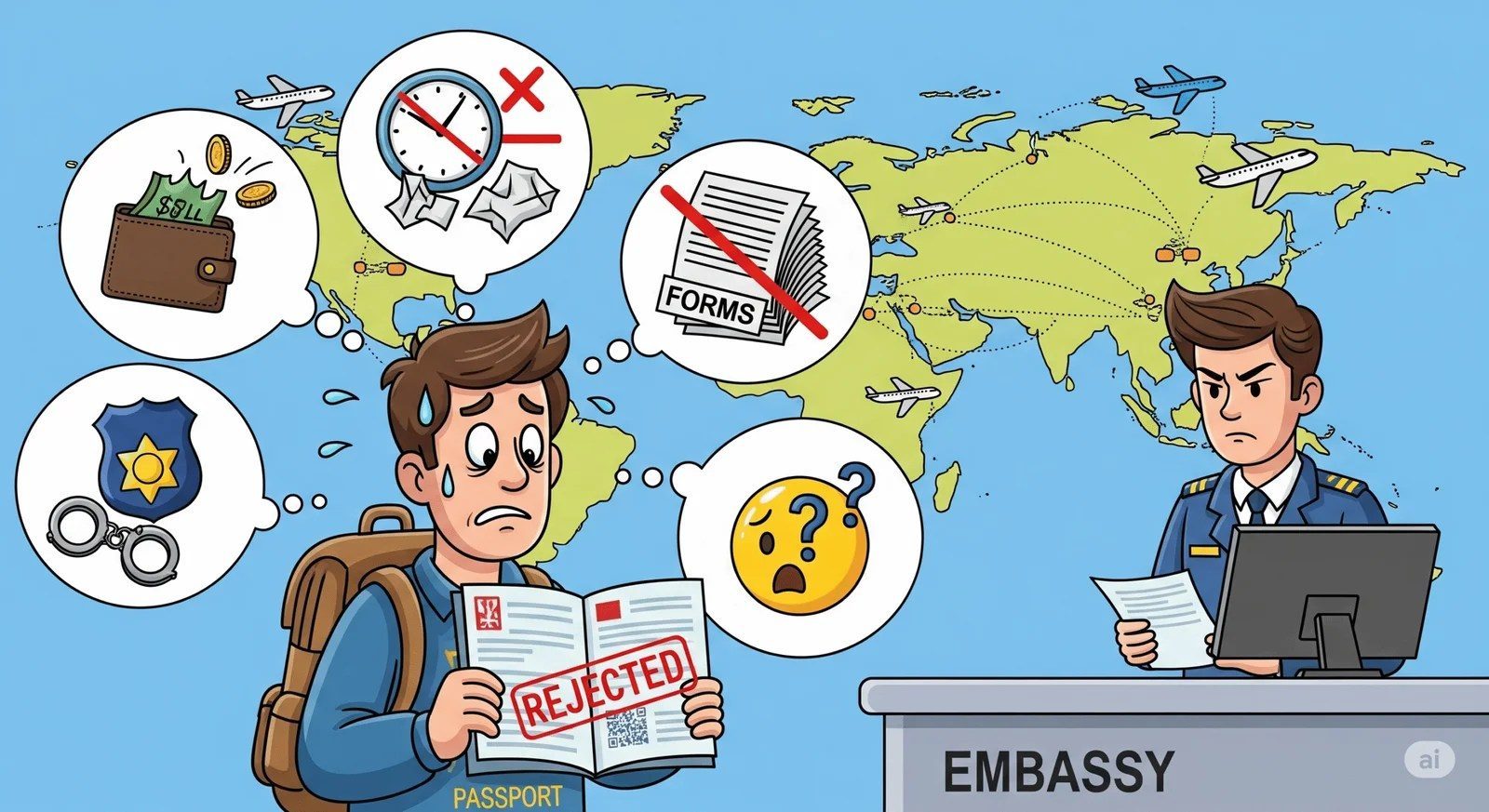
I don’t know your exact case. But I do know this: most people who get refused a visa were actually approvable on paper. They just didn’t prove it properly.
Visa officers don’t have time to “figure you out”. They look at what’s in front of them. If your documents are incomplete, inconsistent, or confusing, they can legally refuse you without asking a single follow-up question. That’s the brutal reality behind most rejections described in guides like this legal breakdown.
Instead of throwing in every paper you can find, you need a clear visa documentation strategy. Not just “submit everything”, but submit the right things, in the right way, with the right story.
That’s how you avoid visa rejection caused by weak or confusing documents.
1. Start With the Officer’s Mindset: What Are You Actually Proving?
Before printing a single page, I ask myself one question:
If I were the visa officer, what doubts would I have about this application?
Legally and practically, officers are trying to answer a few core questions:
- Are you who you say you are? (identity, history, criminal/immigration record)
- Will you overstay or work illegally? (ties to home country, realistic plans)
- Can you afford this trip or stay? (funds, income, sponsor credibility)
- Is your purpose of travel genuine and aligned with the visa type?
- Are you honest? (no fraud, no contradictions, no hidden issues)
Every document you submit should help answer one of these questions. If it doesn’t, it’s either noise or a potential red flag.
So instead of asking What documents are on the checklist?
I ask:
- What is each document supposed to prove?
- Is there any doubt this document might create? (dates, amounts, gaps, inconsistencies)
Once you think like this, you stop treating your file as a pile of papers and start treating it as evidence. That mindset alone can dramatically improve your chances of visa approval.
2. Kill the Silent Killers: Incomplete, Outdated, and Inconsistent Forms
Most refusals start with boring mistakes: missing fields, old forms, mismatched details. They look small. They are not.
Officers see incomplete or inconsistent forms as a credibility problem, not a typo. Multiple sources, including documentation checklists and rejection guides, repeat the same thing: form errors are a top reason for refusal.

Here’s how I tighten this up and avoid those basic visa rejection reasons related to documentation:
Use the right, latest form
- Download forms only from the official government site, not blogs or agents.
- Check the form version/date in the footer. If it’s old, find the latest one.
Make your identity details 100% consistent
I cross-check these across every document:
- Full name (order, spelling, middle names)
- Date of birth
- Passport number and issue/expiry dates
- Marital status
- Current address and phone number
If your name is written differently on your bank account, degree, or employment letter, fix it with an affidavit or explanation. Don’t hope the officer will “understand”. That’s how simple visa documentation mistakes turn into refusals.
Never leave mandatory fields blank
- If something doesn’t apply, I write “N/A”, not nothing.
- I double-check for signatures and dates on every page that requires them.
Align your story across forms and documents
Dates of employment, salary, job title, study periods, travel history – they all need to match your supporting documents and what you’ll say in the interview. Any mismatch looks like either carelessness or lying. Both are bad.
Think of your application as one story told in many places. If the pieces don’t match, the officer will assume the story is unreliable.
3. Build a Financial Story That Actually Makes Sense
Money is where many “almost approved” applications die. Not because the person is poor, but because their financial story is unclear.
Officers are checking two things:
- Can you afford the trip or stay?
- Is the money real, stable, and legal?
Guides like Visa for Nation and others are blunt: weak, inconsistent, or unexplained finances are a major rejection trigger. A strong set of visa supporting documents for your finances can make or break your case.
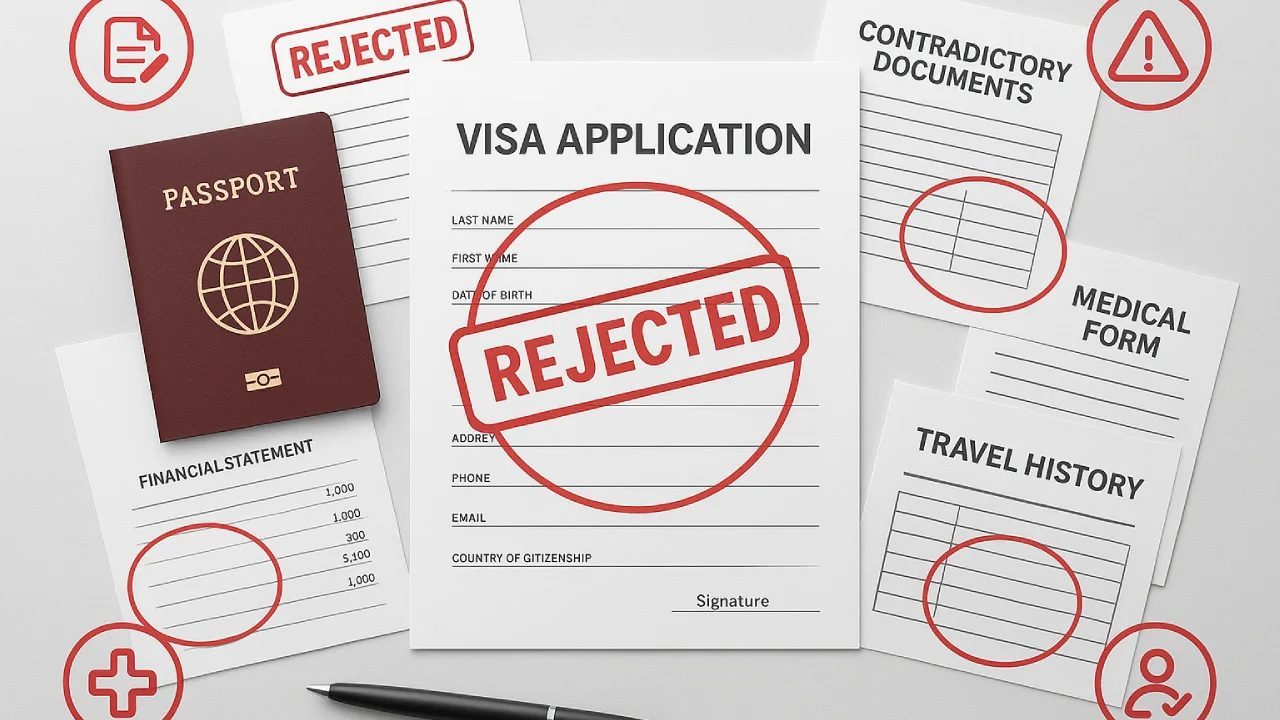
Show enough – and the right kind – of money
- Use recent bank statements (usually last 3–6 months) from official banks.
- Make sure balances are consistent, not suddenly inflated right before applying.
- If there are large deposits, I prepare a short explanation and proof (sale deed, bonus letter, loan agreement, etc.).
This is the core of proof of funds for visa application: not just showing a big number, but showing a believable pattern.
Prove the source of funds, not just the amount
For my own income, I like to include:
- Salary slips (3–6 months)
- Employment contract or HR letter stating salary and position
- Tax returns, if relevant
For sponsors (parents, spouse, company):
- Sponsorship letter clearly stating relationship and commitment
- Their bank statements and income proof
- Documents that prove the relationship (birth certificate, marriage certificate, etc.)
Think of it this way: your bank statement requirements for visa are not just about balance. They’re about showing a clear, legal, and stable source of money.
Avoid these financial red flags
- Cash-heavy accounts with no clear income trail.
- New accounts opened just before applying.
- Borrowed money parked temporarily to “look rich”. Officers see this pattern all the time.
If something looks odd even to you, it will look worse to them. Either fix it in advance or explain it clearly. That’s how you fix weak visa documents around finances before they cause trouble.
4. Make Your Purpose of Travel Impossible to Misread
Many people are technically eligible but get refused because their purpose of travel is vague, poorly documented, or doesn’t match the visa type.
Officers are asking: Does this person’s story make sense for this visa?

Match your visa type to your real intent
If you’re going to study, don’t try to squeeze it into a tourist visa. If you’re going for business meetings, don’t pretend it’s tourism. Articles like this one are clear: wrong category = easy rejection.
Choosing the right category is the first step in any solid visa documentation strategy.
Document your purpose like you’re proving a case
Depending on your visa type, I’d include:
- Tourist: hotel bookings, day-by-day itinerary, return flights, proof of leave from work.
- Student: admission letter, fee receipts, study plan, proof of previous education.
- Work: job offer, contract, company registration, role description.
- Business: invitation letters, conference registrations, meeting schedules.
- Family visit: invitation letter, proof of relationship, host’s status in that country.
If you’re applying for a tourist visa, treat this as your personal tourist visa documentation checklist. For students, think in terms of student visa documentation requirements and make sure each point is backed by a clear document.
Use a short, clear cover letter
I like to write a 1–2 page cover letter that:
- Summarizes who I am (job, family, background).
- Explains why I’m traveling, with dates and key details.
- Lists what I’m submitting and what each document proves.
- Briefly addresses any obvious red flags (gaps in work, previous refusals, etc.).
This is also where I include a simple travel purpose letter for visa decisions: clear, honest, and easy to follow. The goal is not to write a novel. It’s to make the officer’s job easier.
5. Prove You’ll Come Back: Ties to Home Country That Actually Matter
This is the part many people underestimate. You can have perfect finances and still be refused if the officer thinks you might overstay.
Guides like VisaVerge and others repeat the same theme: weak home ties = high risk = refusal.
Think in categories of ties
I group my ties into four buckets and try to show at least two or three:
- Professional ties: permanent job, business ownership, ongoing contracts.
- Family ties: spouse, children, dependent parents living with or near me.
- Financial ties: property, investments, long-term loans, ongoing obligations.
- Social/academic ties: ongoing studies, memberships, community roles.
Turn vague ties into documented ties
Instead of just saying I will return
, I prove it:
- Employment letter stating my position, salary, and approved leave dates.
- Property documents or rental agreements in my name.
- Marriage certificate, children’s birth certificates, school enrollment letters.
- Evidence of ongoing studies or long-term commitments.
These are your ties to home country documents. The stronger and clearer they are, the easier it is to improve chances of visa approval.
If you’re young, single, or self-employed, you may look higher risk by default. That doesn’t mean you’re doomed. It means your documentation needs to be extra clear about your ongoing commitments and realistic plans.
6. Clean Up Your History: Past Refusals, Overstays, and Other Red Flags
This is the uncomfortable part. Immigration systems share data. If you’ve overstayed, been refused, or used sketchy documents before, it’s probably recorded.
Legal-focused guides like this one are clear: previous violations can trigger automatic or near-automatic refusals.
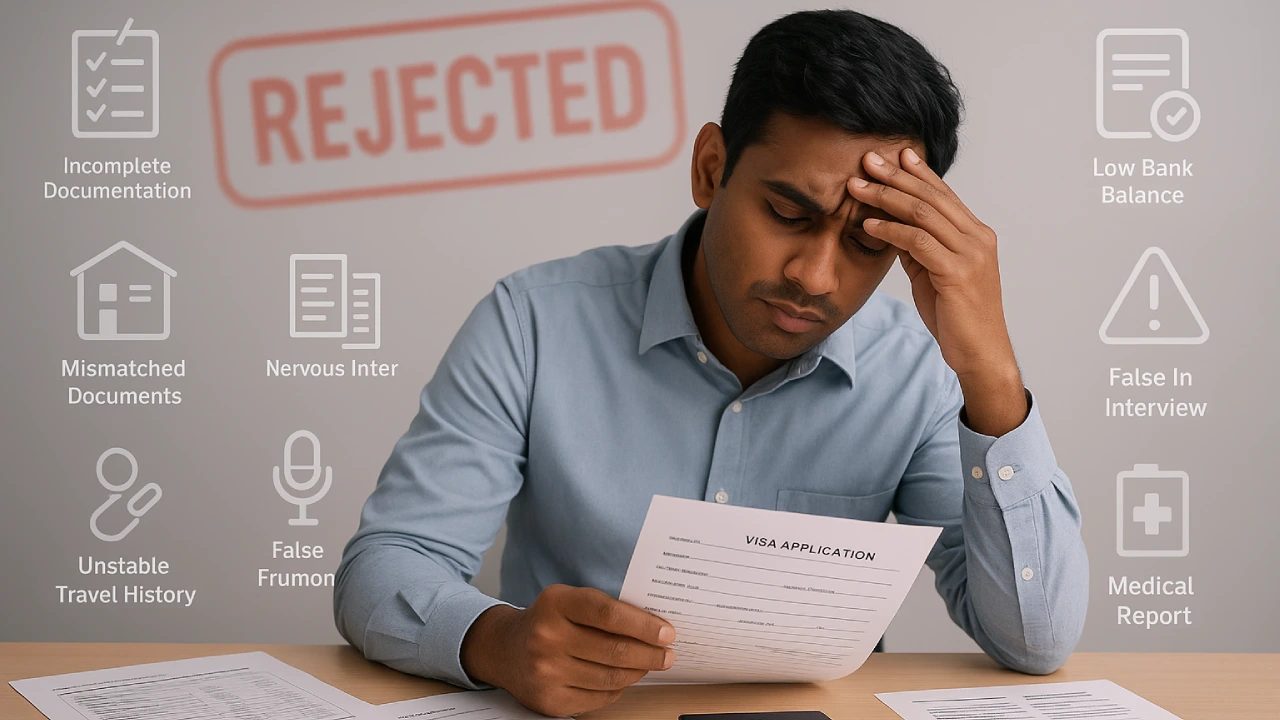
Never hide past refusals or overstays
- If a form asks about previous refusals, I answer truthfully and briefly explain.
- If I overstayed in the past, I don’t pretend it didn’t happen. I explain the context and show that my situation has changed (better job, stronger ties, different purpose).
Lying about history is often worse than the history itself. It turns a manageable problem into a misrepresentation issue, which can mean bans and blacklisting.
Address gaps and oddities before they’re questioned
Ask yourself:
- Do I have unexplained gaps in employment or study?
- Do my travel dates look strange or inconsistent?
- Have I applied multiple times in a short period?
If yes, I add a short written explanation with any supporting proof. The goal is to show I’m aware of the issue and not trying to hide it.
Zero tolerance for fake or “adjusted” documents
Every serious guide says the same thing: fake bank statements, altered employment letters, or forged documents are the fastest way to long-term bans. Even “small” edits (changing a date, tweaking a salary) count as fraud.
If your real situation isn’t strong enough, fix your situation, not your documents. That’s the only sustainable way to avoid visa refusal due to documents.
7. Turn the Interview Into a Consistency Check, Not an Interrogation
For visas that require an interview, the officer is mostly checking one thing: Does what you say match what you submitted?
Many people over-focus on “perfect answers” and under-focus on consistency. But as multiple sources point out, contradictions between your documents and your words are a major reason for refusal.
Know your own file
- I read my entire application and supporting documents the day before.
- I memorize key dates: travel dates, employment start dates, course start dates, etc.
- I rehearse a simple, honest explanation of my purpose and plans.
Answer like a normal person, not a script
Officers are trained to spot memorized, robotic answers. I keep it:
- Short: answer the question asked, not five extra questions.
- Clear: simple language, no over-explaining.
- Honest: if I don’t know, I say so and clarify what I do know.
Bring key documents to back up your words
Even if you’ve uploaded everything online, I like to carry:
- Printout of the application form.
- Financial documents.
- Employment or admission letters.
- Itinerary and bookings.
If they ask, I can show. If they don’t, at least I was prepared.
8. Build a Documentation Strategy, Not a Paper Avalanche
In the end, avoiding visa rejection is less about more documents
and more about better strategy
.
Here’s how I structure my approach for any visa:
- Study the official rules first. I ignore random forums and start with the government site, then cross-check with serious guides like those from legal or professional visa services.
- Map each requirement to a piece of evidence. For every rule (funds, ties, purpose, history), I decide exactly which documents will prove it.
- Audit my file for contradictions. I look for mismatched dates, names, amounts, or stories and fix them before submission.
- Explain what can’t be fixed. Gaps, past refusals, unusual finances – I address them head-on in a short, calm explanation.
- Submit early. Applying too close to travel dates is another avoidable risk mentioned in multiple guides. I give myself time to correct issues if the consulate asks.
You can’t control the officer’s mood, the political climate, or the exact interpretation of the rules on a given day. But you can control how clear, honest, and complete your documentation is.
If you treat your visa file like a legal case you have to prove – not a formality you just “fill out” – your chances of approval go up dramatically. And that’s the most reliable way to avoid visa rejection caused by documentation gaps and red flags.


