
I plan trips for my own family the same way you probably do: a rough itinerary, a budget, and then the big question that quietly decides everything else:
Do we need a car, or can we skip it?
Most of us start with shortcuts. Driving is cheaper.
Trains in Europe are always best.
Rideshare is a rip-off.
For family trips, especially with 3–5 people, those rules of thumb are often wrong.
In reality, the right choice depends on three things:
- Where you’re going (US vs. Europe, city vs. countryside)
- How many of you there are (solo vs. family of 4–5)
- How you like to travel (fast and efficient vs. slow and scenic)
Let’s walk through the real trade-offs, using both cost breakdowns and what actually works on the road for family vacations.
1. The Big Picture: What Actually Drives Your Transportation Costs?
When families compare car vs. no car
, they usually compare the wrong numbers. They see a $60/day rental rate and a $45 train ticket and stop there. That’s not the real cost of your family travel transportation.
Here’s a more honest way to think about it:
- Cars (rental or your own) = high fixed daily cost, low extra cost per mile.
- Trains, buses, flights, rideshare = low fixed cost, but they scale per person, per ride.
That’s why research consistently finds:
- Cars are often bad value for solo travelers, but can be great value for families when you split costs across 3–5 people (source).
- Trains and public transit usually win in big cities with strong networks and expensive parking (source).
- Cars become almost essential in rural, remote, or national park destinations.
So the first question isn’t really car or train?
It’s:
Is my trip mostly big cities, or mostly spread-out countryside?
Answer that honestly, and half your car vs public transport family vacation decision is already made.
2. Europe with Kids: Train, Car, or Both?
Europe is where the car vs. train debate gets emotional. People have strong opinions. I try to ignore the drama and look at three things: route, group size, and travel style.
Where trains shine in Europe:
- Major city-to-city routes (Paris–London, Rome–Florence, Madrid–Barcelona)
- Trips focused on 2–4 big cities with good local transit
- First-time visits where you don’t want to deal with foreign driving rules
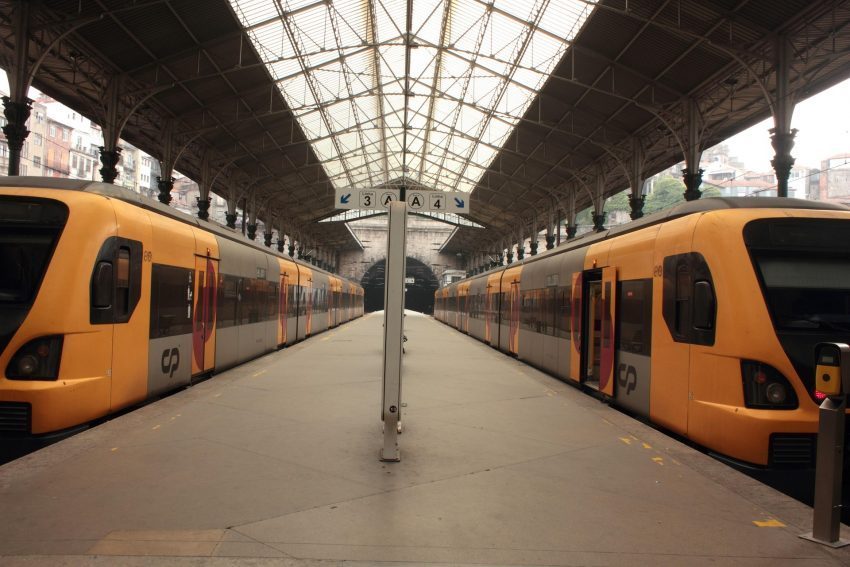
High-speed trains are often faster door-to-door than driving, especially when you factor in traffic and parking. They drop you in the city center, and you can read, snack, or play Uno with the kids instead of white-knuckling a ring road.
Where cars shine in Europe:
- Villages, countryside, and nature (Tuscany, the Dordogne, the Scottish Highlands, rural Spain)
- Food and wine trips, castles, remote beaches, mountain cabins
- Flexible,
let’s see where we end up
itineraries
Despite the hype around trains, Europeans themselves mostly vacation by car. It’s still the dominant way to reach small towns and rural areas (source).
Now layer in group size for your Europe train vs car cost comparison:
- Solo or couple: trains are usually cheaper and easier.
- Family of 4–5: a rental car often beats four or five train tickets, especially on multiple legs (source).
For us, the sweet spot has been a hybrid approach when renting a car in Europe with kids:
- Use trains for the long, expensive city-to-city jumps.
- Pick up a car for a short countryside loop (3–6 days) and return it before you re-enter a big city.
This avoids the worst of both worlds (city driving + multiple train tickets) and keeps the best (fast trains + rural freedom). Several travel experts now recommend exactly this pattern (source).
3. The Hidden Costs of Rental Cars (US and Europe)
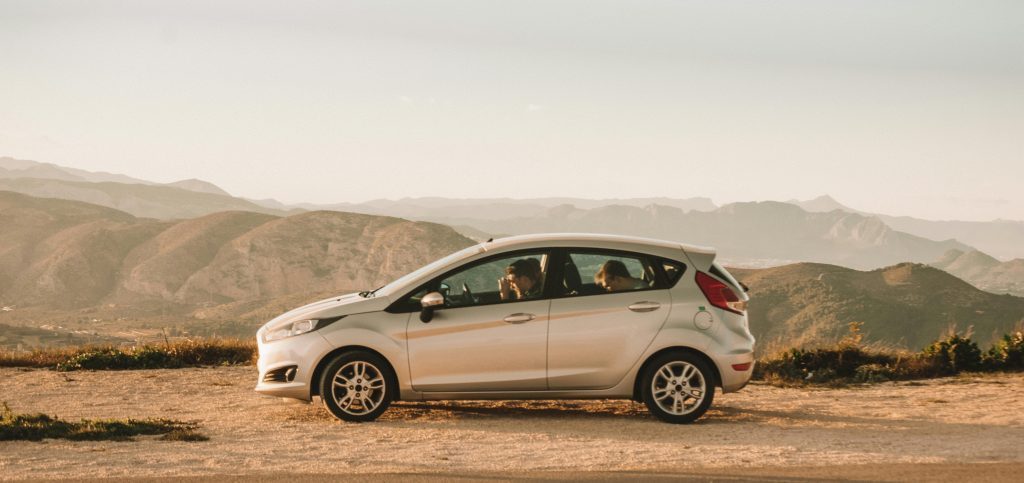
Rental cars look cheap until you add everything you actually pay. When I build a family vacation budget for transportation, I never use the advertised daily rate. I use the real
daily rate.
Here’s what quietly piles up:
- Base rate – the number you see in big font.
- Taxes & airport surcharges – often 20–40% on top.
- Insurance – $15–$35/day in the US; in Europe, mandatory coverage can be baked in or added.
- Fuel – especially painful in Europe, where gas is much pricier.
- Parking – $20–$60/night in many cities; several nights of parking can exceed your fuel costs.
- Tolls & congestion charges – think London, Milan, or certain US toll roads.
- One-way drop fees – especially when crossing borders in Europe.
One analysis found that the real cost of a rental car in major cities is often about 73% higher than the advertised rate, landing in the $75–$120/day range once everything is included (source).
For families, there are extra wrinkles and hidden rental car fees for families to watch for:
- Car seats: renting them adds up; bringing your own is cheaper but more hassle. Compact or inflatable boosters can be a smart middle ground.
- Vehicle size: many European cars have tiny trunks. Hard-shell suitcases often don’t fit well. Duffel bags are your friend.
- Transmission: automatics are rarer and more expensive in Europe. Manuals are cheaper but not ideal if you’re also dealing with opposite-side driving and steep hills.
My rule before I commit to a car:
Calculate a realistic all-in daily cost and then ask:
Will we actually use the car enough to justify that number every single day?
If the answer is not really, we’re mostly in one city
, I drop the car and look harder at a car free family vacation in Europe or a transit-first plan in US cities.
4. US Family Trips: When a Car Is Essential vs. Optional
In much of the US, the conversation is simpler: outside a few corridors, you either drive or you don’t go.
Places where a car is basically mandatory:
- National parks (Yellowstone, Yosemite, Zion, etc.)
- Scenic road trips (Pacific Coast Highway, Utah’s Mighty 5, New England fall)
- Rural beach towns, lake cabins, mountain resorts
Public transit is sparse, and rideshare coverage can be thin or nonexistent. For these trips, the real question isn’t car or no car?
It’s:
Do we rent a car just for the days we truly need it, or for the whole trip?
For example, on a US family road trip cost breakdown you might:
- Fly into a city, use transit/rideshare for 2–3 days, then rent a car only for the national park portion.
- Return the car before your final city days to avoid parking and downtown driving.
Where a car is optional or even a liability:
- New York City, Boston, Washington DC, San Francisco, Chicago, Seattle
- Any trip where you’re mostly in one dense downtown with good transit
In these places, a car adds cost and stress without adding much value. Parking alone can blow your budget. You’re usually better off with a mix of:
- Subways, buses, trams
- Rideshare for late nights or tired kids
- Occasional commuter rail for day trips
If you’re wondering about the cost of getting around US cities without a car, this combo is often cheaper than paying for a rental plus parking and toll costs on US road trips that include big cities.
So for US trips, I start with a blunt question:
Are we mostly in cities, or mostly chasing scenery?
If it’s cities, I default to no car and only add one for specific side trips that truly need it.

5. Rideshare vs. Rental Car: The Short-Trip Trap
Families often assume renting a car is cheaper than using Uber or Lyft. Sometimes that’s true. But for short, city-focused trips, rideshare can quietly win and save your transportation budget for a European family trip or a US city break.
Here’s the pattern that shows up in the data (source):
- Trips under ~4 days in a city with good rideshare coverage
- Fewer than 4–5 rides per day (hotel–museum–dinner–back)
In that scenario, rideshare often saves $150–$250 compared to renting a car once you include:
- Airport surcharges and taxes on rentals
- Parking fees
- Fuel
- Optional insurance
Remember: rideshare costs scale per ride, while rental costs are mostly fixed per day. As your trip gets longer and you drive more, the rental car becomes more economical. There’s usually a crossover point around 5–6 days for typical urban vacations.
For families of 3–4, splitting rideshare fares can make it even more competitive. A $20 ride is only $5 per person. Compare that to a $100 all-in rental day plus $30 parking.
My rule of thumb:
- 2–4 day city break: price out rideshare seriously before defaulting to a car.
- 5–7+ days with lots of driving or side trips: a rental car usually wins.
If you’ve made family travel mistakes renting a car in the past (paying for a car that mostly sat in a garage), this is where you fix it.
6. Time, Stress, and Energy: The Costs You Don’t See on a Receipt
Money isn’t the only cost. With kids, time and energy are just as valuable.
When I compare options, I ask:
- Who is doing the work? Driving, navigating, parking, dealing with tolls and unfamiliar rules.
- What are we giving up? Sleep, patience, flexibility, or a relaxed evening.
A few examples:
- Trains in Europe: low stress, no parking, kids can move around, you can read or nap. High-speed and night trains can replace a hotel night and a long drive (source). For public transport with kids in Europe, this is hard to beat.
- Long US road days: may require an extra hotel night en route. That’s a hidden cost many people forget to add to their
driving is cheaper
calculation (source). - Arrival day in Europe: driving after an overnight flight is a bad idea. Most experts recommend taking a train or transfer first and renting a car later in the trip (source).
Ask yourself:
Who in our family will be exhausted by this choice, and is that worth the savings?
If the answer is the driver will be wrecked
, I lean toward trains or transit, even if they cost a bit more. A calmer parent is worth a lot.
7. A Simple Framework: How to Decide for Your Next Trip
Let’s turn all of this into a quick decision tool you can actually use for your next car vs public transport family vacation, whether it’s the US or Europe.
Step 1 – Map your trip type
- Mostly big cities? (Paris, London, NYC, Rome, DC) → Start with no car.
- Mostly countryside / national parks / small towns? → Start with car.
- Mixed? → Plan a hybrid: trains/transit for cities, car for rural segments.
Step 2 – Count your people
- 1–2 travelers: trains and transit usually win in Europe; rideshare + transit often win in US cities.
- 3–5 travelers: car costs are spread out; rentals become competitive or cheaper, especially outside big cities.
Step 3 – Price the real numbers
- For cars, include: base rate + taxes + insurance + fuel + parking + tolls + any one-way fees.
- For trains/transit, include: per-person tickets + occasional taxis/rideshare to/from stations.
- For long drives, add: potential extra hotel nights.
This is where your family vacation budget for transportation stops being a guess and starts being a real comparison.
Step 4 – Add the non-money costs
- How much do you value flexibility and spontaneous detours?
- How much do you value low stress and not driving?
- Is anyone in your group uncomfortable driving abroad or in heavy traffic?
Step 5 – Make a deliberate choice
Instead of defaulting to what you did last time, decide:
- All-in on transit/trains for dense, city-heavy trips.
- All-in on a car for national parks, rural loops, and road trips where you truly need wheels every day.
- Hybrid for most family trips that mix cities and countryside in both the US and Europe.

8. The Real Question to Ask Before You Book Anything
Forget the slogans. Before you book your next family trip, ask this instead:
On how many days of this trip will a car actually make our lives better, not just different?
If the answer is almost every day
, rent the car and budget for it properly. If the answer is only for that one part in the middle
, design your trip around a short, targeted rental. And if the answer is honestly, not really
, give yourself permission to skip the car entirely and lean into trains, buses, and rideshare.
That’s how you stop guessing and start using transportation as a tool to shape the trip you actually want—whether that’s a high-speed hop between European capitals, a slow meander through Tuscan villages, or a week chasing sunsets in the American West.