I used to assume a carry-on was always cheaper than checking a bag. Then I started digging through baggage charts, calculators, and all the tiny footnotes for major U.S. airlines. The truth? It’s messy. Sometimes that “free” carry-on ends up costing more once you factor in fare type, family size, and last-minute airport fees.
Here’s how I now decide, step by step, whether a carry-on or a checked bag actually saves money on U.S. airlines.
1. Start With the Real Question: What Does Your Fare Actually Include?
Before you compare carry-on vs checked bag cost, you need to know what your specific ticket includes. Not what the airline usually does. Your exact fare type.
The same airline can treat bags very differently depending on whether you bought Basic Economy, a standard Main Cabin fare, or some kind of bundle.
- Most standard economy fares on big U.S. airlines (American, Delta, United, JetBlue, Alaska) usually include:
– 1 personal item (under the seat)
– 1 carry-on (overhead bin)
–Checked bags extra, typically from about $35–$40 each way for the first bag.
- Basic Economy & ultra-low-cost carriers often include:
– Personal item only (sometimes even that is tightly restricted)
– Carry-on may cost extra or be banned entirely on the cheapest fares
– Checked bags are never free unless you have status or a card benefit
One big gotcha: United Basic Economy on many routes does not include a full-size carry-on at all. Show up at the gate with one and you can get hit with the checked bag fee plus a gate-handling fee. That “cheap” ticket stops being cheap very quickly.
So my first move is simple: I open the airline’s baggage page or fee calculator and confirm, in writing, what my fare includes. If I can’t clearly see that a carry-on is free, I assume it isn’t.
2. Compare the Actual Dollar Numbers: Carry-On vs Checked
Once I know what’s included, I run the numbers. Not vibes. Not assumptions. Actual math.
On most major U.S. airlines right now, here’s the rough baseline for domestic economy with no status and no credit card perks:
- Checked bags
– First checked bag: usually around $35–$40 each way
– Second checked bag: often $45–$50 each way
– Example: American Airlines lists $40 for the first checked bag and $50 for the second on many U.S. and nearby international routes, or $35/$45 if you pay online in advance (AA baggage fees). - Carry-on bags
– On legacy carriers (American, Delta, United, Alaska, JetBlue standard fares): usually free
– On ultra-low-cost carriers (Spirit, Frontier, Allegiant): often more expensive than a checked bag, especially if you pay late.
Here’s where the carry-on vs checked bag cost comparison gets interesting: on airlines like Spirit and Frontier, a carry-on can cost $10–$40 more than a checked bag if you wait until check-in or the gate. Their online calculators show this clearly once you plug in your route and timing.
So I ask myself:
- If my carry-on is free, is it actually big enough for everything I need?
- If I’m on a low-cost carrier, is a checked bag cheaper than paying for a carry-on?
- Am I traveling round-trip with multiple people? Because those fees multiply fast.
For a solo traveler on a legacy airline, carry-on only usually wins. For a family of four on a budget airline, one or two shared checked bags can be cheaper than paying for four individual carry-ons.
3. Factor in When You Pay: The Timing Penalty
Airlines quietly reward people who decide early. Wait until the airport and you often pay more for the exact same bag.
Across U.S. airlines, here’s what I see most often:
- American, United, JetBlue, Hawaiian often knock about $5 off per checked bag if you pay online in advance instead of at the airport.
- Ultra-low-cost carriers like Spirit and Frontier use dynamic pricing: the earlier you add a bag (during booking), the cheaper it tends to be. At the gate, it can be brutal.
- Some airlines vary checked bag prices by season, route, and demand. JetBlue is a good example, especially on transatlantic and peak dates.
So I treat baggage fees as part of the ticket price, not an afterthought. I decide before I buy the ticket:
- How many bags will I realistically bring?
- Can I share checked bags with my travel companions?
- Is it cheaper to pay a bit more for a fare that includes a bag?
Then I add the bags during booking or at least during online check-in. I almost never wait until the airport counter anymore. That’s where the “surprise” baggage fees live.
4. Don’t Ignore Weight & Size: The Silent Budget Killers
This is where people get ambushed. You think you’re saving money by checking one big bag instead of two smaller ones. Then the agent puts it on the scale.
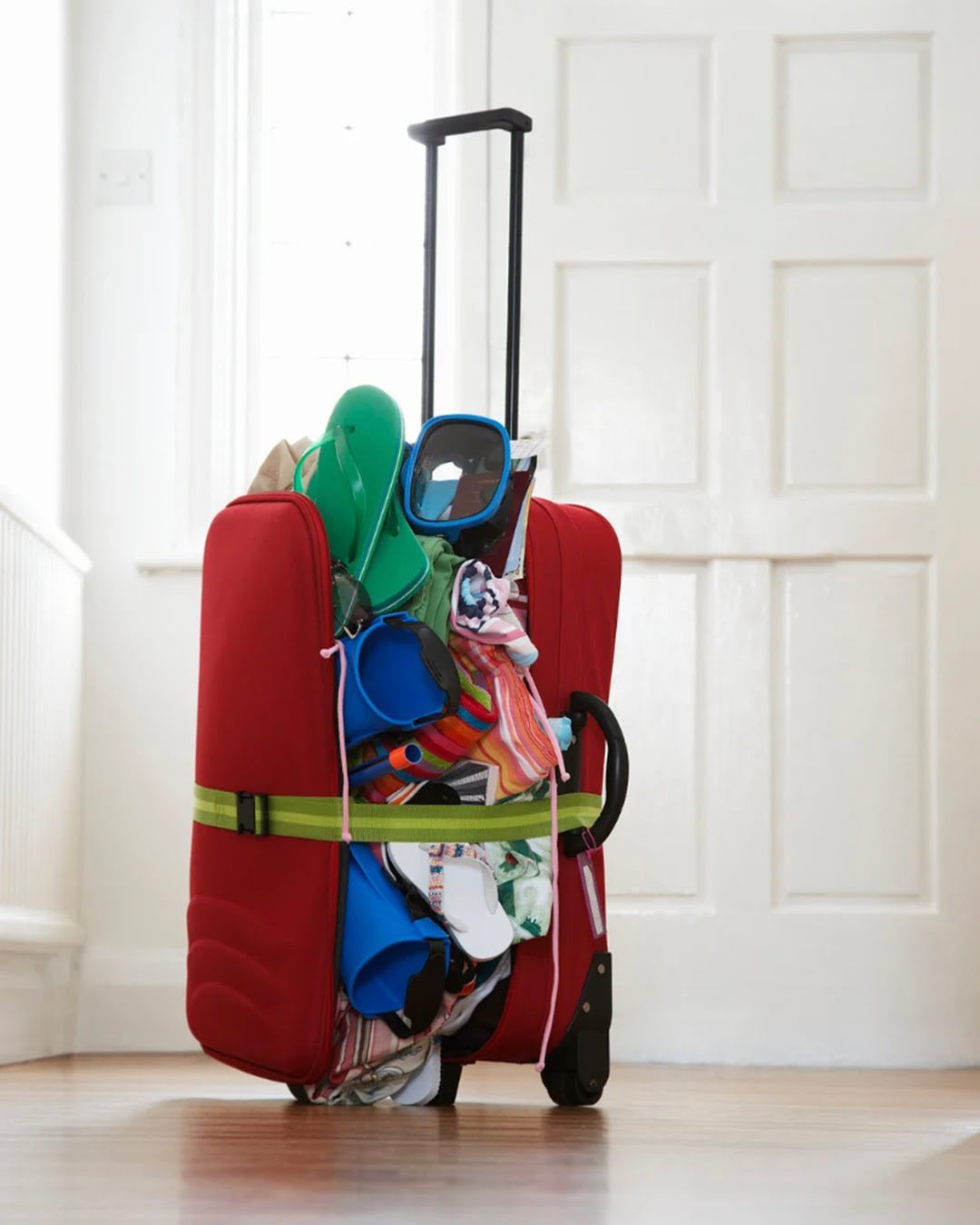
Typical U.S. airline rules for economy:
- Checked bag weight limit: usually 50 lbs (23 kg)
- Checked bag size limit: usually 62 linear inches (length + width + height)
Go over those limits and you’re in a different world:
- Overweight or oversized fees can easily run $100–$200 per bag, per direction.
- Some low-cost carriers set a lower standard weight (for example, 40 lbs instead of 50) and start charging overweight fees sooner.
- On American, if a bag is both oversize and overweight, you usually pay only the higher of the two surcharges—but that’s still on top of the base checked bag fee.
So I ask a blunt question: Can I keep this bag under 50 lbs? If the answer is “probably not,” I rethink the plan. Two lighter checked bags might be cheaper than one monster bag with overweight fees.
Carry-on rules matter too. Size limits are strict, and handles and wheels count. If your bag doesn’t fit the sizer, you may be forced to gate-check it and pay whatever checked baggage fees apply to your fare.
5. Consider Your Travel Style: Stress vs Savings
Money isn’t the only variable. There’s also your sanity.
Here’s how I think about it when I’m comparing carry-on vs checked bag cost on domestic flights:
- Carry-on only is usually best if:
– You’re on a legacy airline with free carry-ons on your fare
– You’re comfortable packing light
– You hate waiting at baggage claim
– You have tight connections and don’t want to risk a misrouted bag - Checked bag can be smarter if:
– You’re traveling with kids or a group and can share bags
– You’re on a low-cost carrier where checked is cheaper than carry-on
– You’re bringing liquids, gear, or bulky items that don’t work in a small carry-on
– You don’t want to fight for overhead bin space or worry about boarding early
There’s one more wrinkle. Even if your carry-on is technically allowed, you can still be forced to gate-check it on full flights or smaller aircraft. If you’re in a late boarding group, overhead space may be gone. That “free” carry-on might end up checked anyway—sometimes with a fee, sometimes without, depending on the airline and your fare rules.
So I ask: What’s my tolerance for hassle?
On a short trip with just a backpack, I’ll fight for carry-on space. On a longer trip with connections, I sometimes pay for a checked bag just to move through the airport with less friction.
6. Use Status, Credit Cards, and Bundles to Hack the Math
This is where the game changes. If you fly even a few times a year, the right perks can flip the carry-on vs checked equation completely and help you avoid common airline baggage fee mistakes.
Here’s what I look for:
- Elite status
– Many airlines give at least one free checked bag to elites.
– Often the benefit extends to companions on the same reservation (huge for families).
– Example: American’s AAdvantage elites and oneworld Emerald/Sapphire members often get extra free checked bags, especially in premium cabins. - Co-branded credit cards
– A lot of airline cards include a free checked bag for the cardholder and sometimes companions, as long as the ticket is purchased with that card.
– For a family that checks bags even once a year, this can easily offset the annual fee. - Fare bundles
– Some airlines sell slightly more expensive fares that include a checked bag, seat selection, or priority boarding.
– If you know you’ll check a bag, paying a bit more upfront can be cheaper than buying the rock-bottom fare and adding bags later.
When I’m traveling with family, I always:
- Book everyone on one reservation so any status or card benefits apply to all of us.
- Check whether a card I already have quietly includes a free checked bag.
- Compare: basic fare + bag fees vs. bundled fare with a bag included.
Sometimes the “more expensive” ticket is actually cheaper once you add in the full carry-on luggage cost breakdown and checked bag fees.
7. Run a Quick Scenario Check Before You Book
By this point, I don’t guess. I run a simple scenario for each airline I’m considering. It takes five minutes and can save a lot, especially when I’m comparing American, Delta, and United baggage fees or looking at hidden baggage fees on U.S. airlines.

Here’s the process I use:
- Pick your route and dates.
- Estimate your bags. For example: 1 personal item + 1 carry-on, or 1 checked bag per person, or 2 shared checked bags for a family of four.
- Check each airline’s baggage page or calculator.
– Delta, United, Frontier, Spirit, and others have online tools that show route-specific fees.
– Third-party luggage fee tools can give a quick U.S. airline baggage fees comparison across carriers. - Price out the full trip cost.
– Ticket price + bag fees (round-trip) + any realistic overweight/oversize risk. - Compare apples to apples.
– A $40 cheaper ticket on a bag-unfriendly airline can easily be wiped out by one checked bag fee.
When I do this honestly, I often end up switching airlines or fare types. The “cheapest” ticket on the search page is rarely the cheapest once baggage is included and you’re budgeting for airline luggage costs properly.
8. So Which Is Cheaper: Carry-On or Checked?
After looking at the numbers and the fine print across major U.S. airlines, here’s where I’ve landed:
- Carry-on is usually cheaper if:
– You’re on a major U.S. airline with free carry-ons on your fare
– You can pack light and avoid overweight issues
– You’re traveling solo or as a couple
– You’re willing to board earlier or accept the risk of gate-checking - Checked bags can be cheaper if:
– You’re on a low-cost carrier where carry-ons are pricey
– You’re traveling as a family or group and can share 1–2 checked bags
– You have elite status or a credit card that gives free checked bags
– You’re carrying items that don’t work in a small carry-on (liquids, gear, bulky clothing)
The real trick is to stop thinking of carry-on vs checked
as a universal rule. Instead, think in terms of your specific airline, fare, route, and baggage needs—and the basic economy baggage rules in the USA if you’re buying the cheapest tickets.
Before I book any U.S. flight now, I run through four quick questions:
- What does this fare actually include?
- How many bags will I bring, and how heavy will they be?
- What are the fees if I pay now vs at the airport?
- Do I have any perks (status, cards, bundles) that change the math?
Once I answer those, the cheaper option—carry-on or checked—usually becomes obvious. And it’s often not the one I would have guessed from the ticket price alone.