

I used to book the cheapest bed I could find and call it a win. Then I started adding up my receipts. Late-night taxis from the outskirts. Extra metro rides. Lost hours in traffic. Suddenly that “cheap” hotel didn’t look so cheap.
This guide breaks down how your choice of neighborhood quietly changes your total vacation cost – and how to compare a central area with a cheaper district or the outskirts without getting fooled by a low nightly rate.
1. The Big Trap: Nightly Rate vs. Total Trip Cost
When you search for a place to stay, your eye goes straight to the price per night. Mine too. But that number is only one line in a much bigger equation.
What really matters is your total trip cost – not just the room:
- Room rate (including taxes and fees)
- Daily transport to sights, meetings, or nightlife
- Airport transfers
- Food costs driven by location (tourist traps vs. local spots)
- Your time – the hours you spend commuting instead of enjoying the city
Central hotels often look expensive, but they can quietly save you money because you walk more and ride less. Outskirts or airport hotels look cheap, but you pay in rideshares, trains, and lost time. As Monde du Voyage points out, the real cost only appears when you add transport, time, and local rules (like city-center taxes or restricted zones).
Here’s a quick way to compare the cost of staying in the city center vs outskirts:
Quick mental test: if you’re going to the same central area every day, assume at least two paid rides per day from a cheaper neighborhood outside the center. Multiply that by your group size and number of days. Still cheaper than staying central? Sometimes yes. Often, no.
2. Time vs Money: What Is an Hour of Your Trip Worth?
A “cheap” hotel that steals two hours of your day in commuting is not cheap. You’re paying with the only thing you can’t get back.
Think about:
- Commute time: 30–60 minutes each way from suburbs or airport areas is common.
- Frequency: You’re doing this twice a day, maybe more if you go back to rest.
- Energy: Long rides and transfers drain you. You arrive at sights already tired.
Writers at Explore make a good point: you don’t travel to sit in traffic. You travel to actually be
in the city – wandering, getting lost, discovering places you didn’t plan for.
Before you book, ask yourself:
- How many hours per day will I spend commuting from this neighborhood?
- If I priced my vacation time at $20–$50/hour, would the savings still be worth it?
On a short trip (2–4 days), I almost always stay central. On a longer stay, I’m more willing to trade some time for savings – but only if the transport is reliable and frequent. That’s where the real transport vs hotel cost trade off shows up.

3. Central vs Outskirts: When Each One Actually Wins
There’s no universal “right” answer. The trick is matching your location to your trip style and the city’s infrastructure. The real cost of staying outside the city center depends on how you travel.
Central neighborhoods usually win when:
- You have a short stay (weekend or 3–4 days).
- Your main goals are sightseeing, museums, nightlife, food.
- You want to walk most places and pop back to your room easily.
- You’re traveling with kids, older relatives, or anyone with mobility issues.
Staying central usually means:
- Less money on daily transport.
- More spontaneous evenings (“Let’s go out again after a nap.”)
- Fewer “we’re too far, let’s just skip it” moments.
Outskirts or suburban areas can win when:
- You’re staying longer (a week or more).
- The city has excellent public transport (think metro every few minutes).
- You’re okay planning your days in chunks instead of popping in and out.
- You want a quieter, more residential feel and maybe more space.
For business travelers, Cheapism notes that suburban hotels can be significantly cheaper than downtown, even after commuting costs – especially midweek in big business cities where central rates spike. But that only works if your meetings aren’t all downtown and you’re not burning hours in transit.
Key question: Is the city built for car-free travelers? In places with strong metro systems, staying slightly out can be a smart budget travel neighborhood strategy. In car-heavy cities with weak transit, “cheap and far” often becomes “expensive and frustrating.”
4. Airport vs Downtown Hotels: The Hidden Food & Transport Costs
Airport hotels are a special case. They often look like a bargain, and sometimes they are. But you need to be ruthless with the math.
According to The Bob Hotels:
- Airport hotels are often 10–30% cheaper per night than downtown.
- Downtown hotels can be 25–50% more, especially boutique or luxury.
Sounds like a clear win for the airport, right? Not so fast.
What can erase those savings:
- Daily rideshares or trains into the city (multiply by people, not just trips).
- Parking fees if you rent a car to compensate for distance.
- Time lost commuting back and forth.
- Food prices: airport-area restaurants and hotel dining are often 15–20% pricier and more limited.
Downtown, you might pay more for the room but less for everything else: you walk to sights, grab cheap lunches, and have endless dining options. You also avoid the mental tax of planning every move around a long commute. That’s where the city center hotel vs budget area comparison often flips.
When an airport hotel makes sense:
- You land late and leave early, with no real time in the city.
- Your trip is airport-focused (conferences, layovers, airline training, etc.).
- You’re on a tight overnight budget and don’t plan to go downtown at all.

5. Safety, Comfort & Vibe: The Costs You Don’t See on Booking Sites
Price and distance are easy to measure. Safety and atmosphere are not – but they still affect your budget and your sanity.
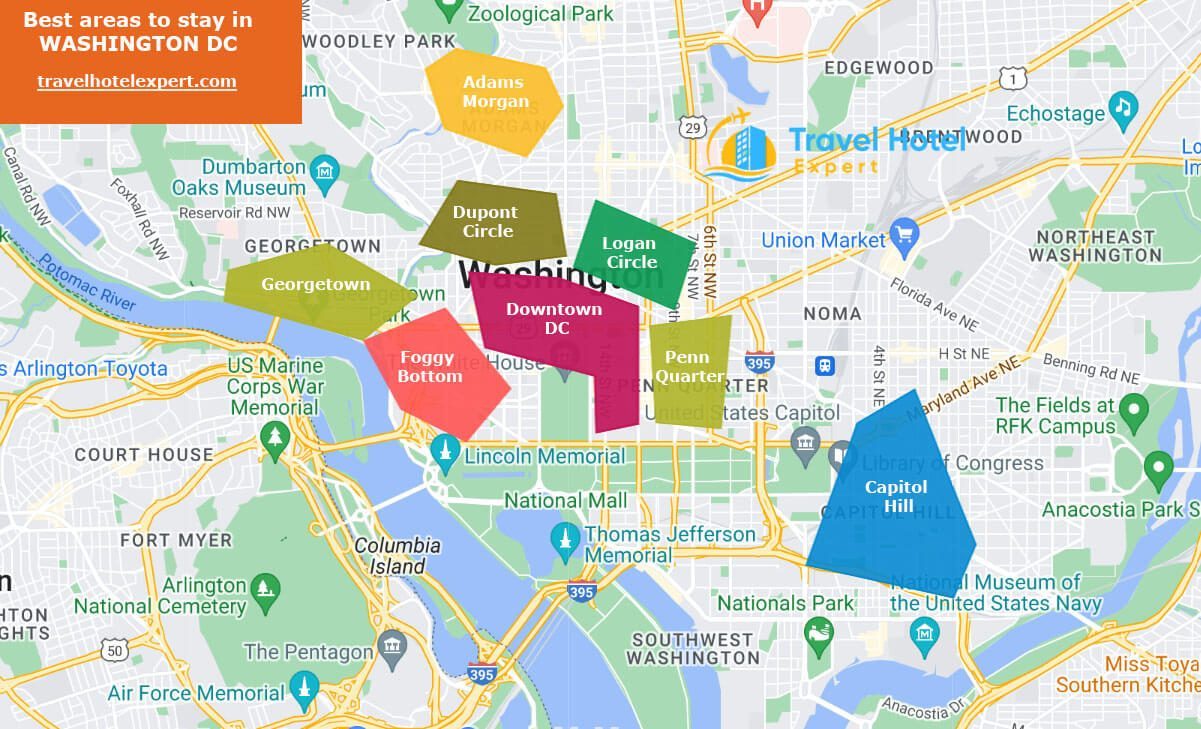
Take Washington, D.C. as an example. A local guide on Travel Hotel Expert recommends central, well-patrolled areas like Downtown, Foggy Bottom, Dupont Circle, Logan Circle, Georgetown, Adams Morgan, and Capitol Hill for first-timers. They specifically warn against staying in certain higher-crime areas, especially at night.
Why this matters for your wallet:
- If you don’t feel safe walking, you’ll spend more on taxis, even for short distances.
- If the area is noisy or sketchy, you might cut nights short instead of enjoying the city.
- If you’re far from restaurants, you’ll default to overpriced hotel food.
On the flip side, a central but touristy area can be its own trap: high restaurant prices, souvenir shops, and “convenience” everything. Sometimes a slightly off-center, local neighborhood with good transit is the sweet spot: safe, authentic, and not gouging you at every corner.
Before you book, I’d always:
- Check a map of recommended vs. avoid areas for that city.
- Read recent reviews mentioning
safe
,walk
,night
,noise
. - Look at street view around the hotel – does it feel like somewhere you’d walk at 10 p.m.?
6. How to Run a Quick “Location Cost” Calculation
Let’s make this practical. Here’s a simple way I compare a central area with a cheaper neighborhood on the edge of town. It’s a quick accommodation location cost comparison you can do in a few minutes.
Step 1: Estimate your daily transport from each option.
- Central: maybe 0–2 metro rides per day.
- Outskirts: likely 2–4 rides or 2 taxi trips per day.
Multiply by:
- Average cost per ride
- Number of people
- Number of days
Step 2: Put a value on your time.
- Estimate commute time per day from each location.
- Multiply by your own “hourly value” of vacation time (even $20/hour is eye-opening).
Step 3: Add food effects.
- Central: more choice, more cheap eats, local markets.
- Outskirts/airport: fewer options, more hotel meals.
Ask yourself: Will I likely spend more per meal because I’m stuck with limited options? Those are the hidden costs of cheap neighborhoods that don’t show up in the nightly rate.
Step 4: Compare total.
Rough formula:
Total cost = (Room rate x nights) + transport + “time cost” + food premium
You don’t need perfect numbers. You just need to see whether that “cheap” place is actually saving you anything once you factor in reality. This kind of trip cost breakdown by neighborhood is often enough to change your mind.
Tools like MoneyCrashers suggest another smart move: play with dates. Sometimes shifting your trip by a day or two drops central hotel prices enough that you don’t need to compromise on location at all.

7. Smart Ways to Afford a Better Location Without Blowing the Budget
Let’s say you’ve done the math and a central neighborhood clearly improves your trip. How do you afford it without doubling your budget? How do you handle that central accommodation price premium without giving up the whole trip?
Here are levers I actually use:
- Shift your dates: Midweek vs. weekend can flip prices, especially in business-heavy cities like New York or D.C. MoneyCrashers notes that business cities are often cheaper on weekends, leisure cities the opposite.
- Travel in shoulder season: Off-peak or shoulder months can cut hotel prices by 50% or more. Slightly worse weather, much better location.
- Book early, but watch prices: Many hotels offer free cancellation. Book a good central option, then monitor rates and rebook if they drop.
- Trade space for location: Smaller room, shared bathroom, or simpler hotel in a great area beats a huge room in the middle of nowhere.
- Use cash-back and points: Stack credit card rewards, cash-back plug-ins, and loyalty programs to offset the higher central rate.
- Cut elsewhere, not on location: Cheaper restaurants, fewer paid attractions, or a slightly shorter trip – but a better base.
Also, don’t forget the basics from budget-focused guides: free breakfast, included parking (if you drive), and sharing rooms can all make a central stay more realistic. It’s often smarter to trim your activity list than to stay so far out that every day feels like a commute.
8. Decide Like a Pro: A Simple Checklist Before You Book
Before you hit “reserve,” run through this quick checklist. It will help you avoid common mistakes choosing cheap hotel locations and see the total vacation cost by location choice more clearly.
- Trip length: Short trip? Lean central. Long trip? Consider well-connected outskirts.
- Main activities: Are your sights, meetings, or events clustered in one area? Stay near that cluster.
- Transport quality: Is public transit frequent, safe, and easy? Or will you rely on taxis?
- Daily commute cost: Calculate rides x people x days. Compare central vs. cheap.
- Time cost: How many hours per day will you spend commuting from each option?
- Safety & vibe: Would you feel okay walking back at night? Are there normal shops and cafes around?
- Food options: Can you eat like a local nearby, or are you stuck with hotel restaurants?
- Flexibility: Can you change or cancel if you find a better central deal later?
If a central neighborhood scores high on time, safety, and experience – and the total cost difference is smaller than it first looked – I’d seriously consider paying more per night. You’re not just buying a bed. You’re buying how your entire trip feels.
In the end, the real question isn’t Is this hotel cheap?
It’s “Is this location worth what it will do to my time, my wallet, and my experience?” Once you start thinking in terms of central vs cheap neighborhood travel costs instead of just the nightly rate, your trips change – and usually for the better.