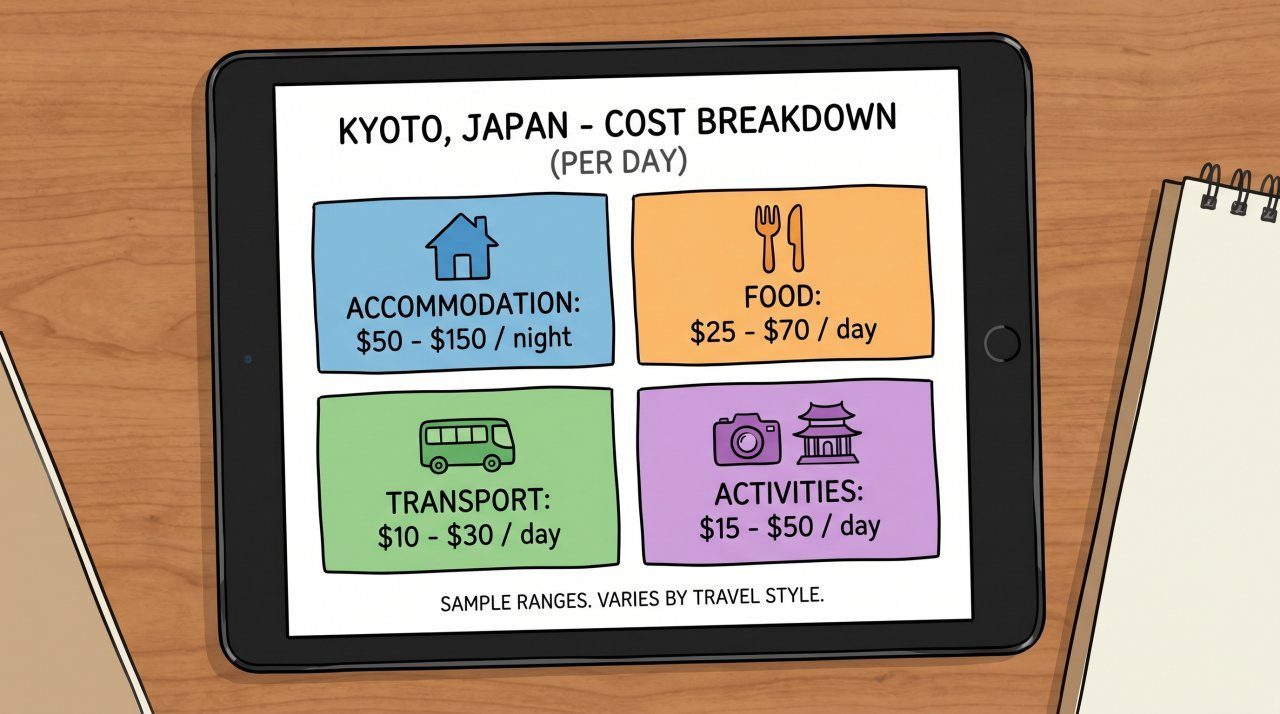

I don’t care what the big booking sites say: the price you see first is almost never the price you actually pay. Different cities, different taxes, different fees, different loyalty schemes – it all turns a “$120 night” into a puzzle.
In this guide, I’ll walk you through a simple, repeatable hotel price comparison method you can use across cities and booking sites. The goal: find the true hotel cost per night – not the pretty headline rate.
1. Decide What You’re Really Comparing (Not Just the Nightly Rate)
Before you open a single tab, decide what “cheaper” actually means for you. Otherwise, you’ll chase fake savings and misleading deals.
When I compare hotel prices across booking sites or cities, I always start with three questions:
- Am I optimizing for cash today or total value? A non-refundable rate might be cheaper now but expensive if plans change.
- Do I care about loyalty points and perks? A slightly higher rate on a site that gives strong rewards can be a better long-term deal.
- What’s my minimum comfort level? Location, safety, and reviews matter more than saving $8 a night.
Once that’s clear, I define what I’m actually comparing:
- Same city vs. different cities: Now you’re comparing more than hotels. You’re comparing tax rules, resort-fee culture, parking costs, and local “extras.” A proper hotel cost breakdown by city has to include all of that.
- Same hotel across sites: Here you’re testing how Booking.com, Expedia, Hotels.com, and others package the
same
room – and how honest they are about hidden hotel fees and taxes.
Only after that do I move on to the next step: building a short list of real contenders.

2. Shortlist Smart: 3–5 Real Contenders, Not 30 Tabs
Most people open 20 tabs and then drown in them. I do the opposite: go wide for a minute, then narrow down fast.
Here’s how I shortlist without losing my mind:
- Start with a hotel aggregator app or site.
Tools like Trivago, Kayak, HotelsCombined, or Skyscanner act like search engines. They pull live prices from multiple booking sites at once, so you see a rough range for each hotel in one place. They’re not perfect, but they’re a great first filter for a quick multi city hotel cost comparison. - Apply hard filters.
I set my non-negotiables: neighborhood, rating (e.g., 8.0+ or 4+ stars), free Wi‑Fi, and sometimes breakfast included. This instantly cuts the noise and keeps only realistic options. - Pick 3–5 hotels max.
I choose a mix: one “value” option, one “comfortable” option, and maybe one “treat yourself” option. That’s it. Everything else gets closed. No 30-tab chaos.
At this stage, I’m not trusting any price yet. I’m just deciding which
hotels are worth the effort of a deeper, fairer comparison.
3. Force a Fair Fight: Same Room, Same Rules, Same Dates
This is where most people make mistakes when comparing hotel prices. They line up a flexible rate on one site against a non-refundable rate on another and think they’ve found a bargain. They haven’t.
To compare hotel rates fairly, I always match three things across every site:
- Same dates (obvious, but double-check check-in/check-out times and time zones).
- Same room type (not just “double room” – check size, view, bed type, and occupancy).
- Same cancellation policy (non-refundable vs. free cancellation until a specific date).
Then I open each hotel on 2–4 major booking sites:
- Booking.com (with Genius discounts if I’m logged in)
- Expedia / Hotels.com (which now share the OneKey program)
- Possibly Agoda, Priceline, or the hotel’s own website
Because of rate parity, the base room rate is often similar across sites. The real differences usually come from:
- Member-only or
secret
rates (10–20% off for logged-in users) - Loyalty programs (Genius vs. OneKeyCash vs. hotel points)
- Promo codes and flash sales (Expedia is especially aggressive here)
- Packages (flight + hotel bundles can bypass standard rate parity)
At this point, I still don’t trust the numbers. I’m just lining up the contenders for the real test: the total hotel stay cost, not the teaser rate.
4. Strip the Illusion: Build a True Total Cost per Night
This is the heart of the method. Ignore the big bold nightly rate. That’s marketing. You’re after the real cost of a hotel night.
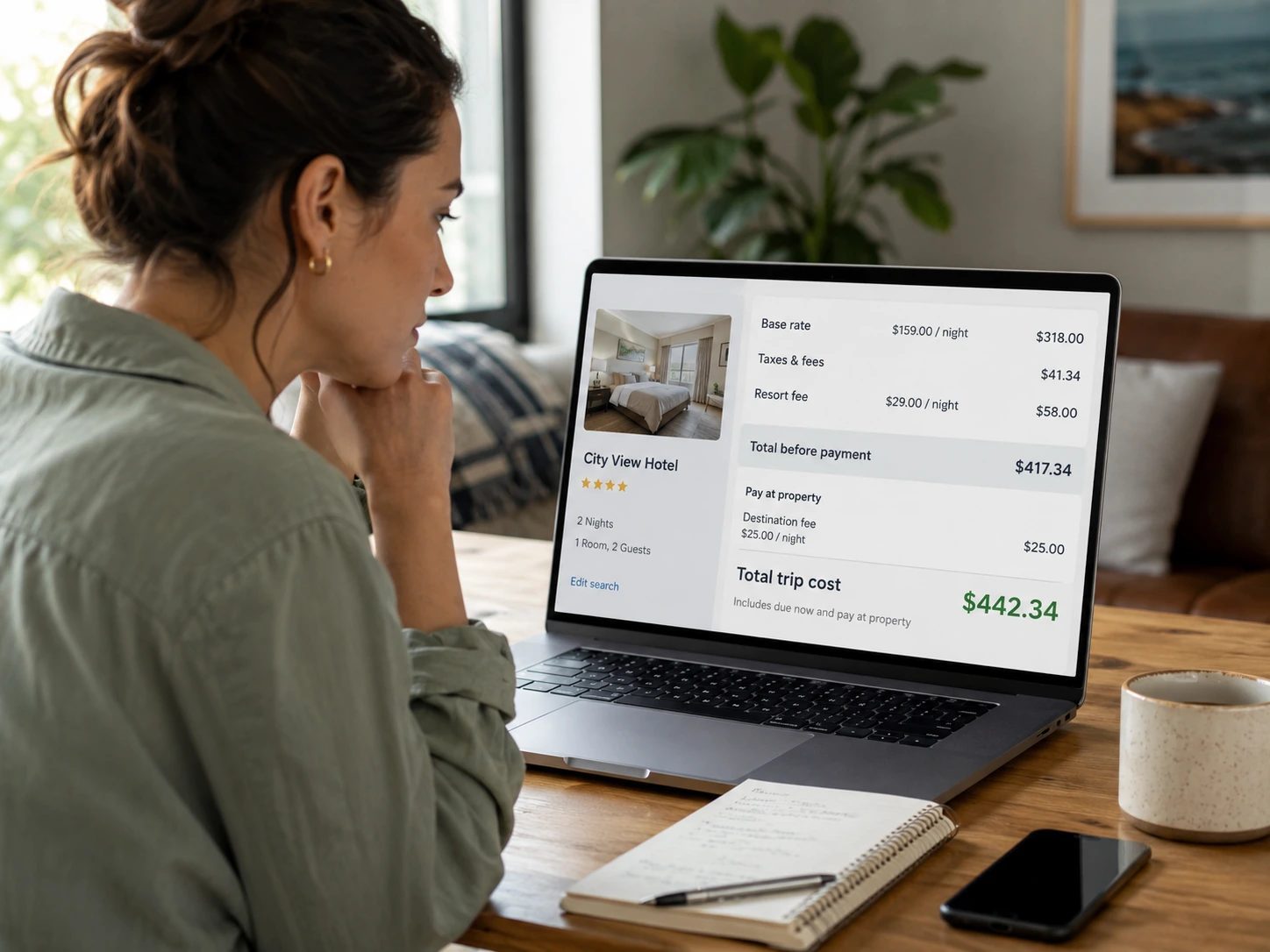
For each site and each hotel, I click all the way through to the final checkout page (right before payment). That’s where the truth lives and where the hotel fees included vs excluded pricing finally shows up.
I write down (or drop into a quick spreadsheet) these line items:
- Base room cost (for the full stay)
- Taxes (city, state, occupancy, VAT, etc.)
- Resort / destination / amenity fees (often per night, sometimes per stay)
- Service or booking fees from the platform
- Parking (nightly, if I’m driving)
- Mandatory extras (e.g., cleaning fees in apartments)
Then I calculate my own total hotel stay cost calculator numbers:
- Total stay cost = everything above, for all nights
- True cost per night = total stay cost ÷ number of nights
Only now do I compare across sites and cities. And the differences can be huge. One site might show a lower nightly rate but hide a bigger resort fee or service fee. Another might look more expensive upfront but include taxes and breakfast.
Here’s the mindset that keeps me honest: the cheapest-looking option is often the most expensive once you add the hidden layers. I don’t care what the first number says; I care what my card will actually be charged over the whole stay.
5. Adjust for City & Country: Taxes, Fees, and Local “Gotchas”
Comparing New York to Lisbon or Tokyo to Mexico City? You’re not just comparing hotels. You’re comparing tax systems, fee culture, and how honest each place is about hotel resort fees and extra charges.
Here’s what I watch for when comparing across cities or countries:
- Local taxes: Some cities add a per-night city tax that’s only payable at the property. Others bake it into the online total. I always check if the booking page says
payable at property
. - Resort/destination fees: Common in U.S. cities and resort areas. These can easily add $20–$50 per night and are often excluded from the first price you see.
- Currency conversion: If the hotel charges in a different currency, the final cost depends on your bank’s rate and fees. I assume a small buffer (2–4%) for FX costs.
- Parking norms: In some cities, parking is free or cheap; in others, it’s $30–$60 per night. That alone can flip which city is “cheaper.”
When I compare cities, I always build a simple scenario for each one:
- Hotel true cost per night (as calculated above)
- Typical daily transport cost (public transit vs. rideshares vs. parking)
- Any mandatory local fees or tourist taxes
Only then do I say, City A is actually cheaper than City B for this trip.
Without that, you’re just comparing marketing, not reality.
6. Factor in Loyalty, Points, and Packages (Without Fooling Yourself)
Now we get to the subtle part: value that doesn’t show up in the checkout total but still affects the true hotel cost per night.
Booking sites play a long game with loyalty:
- Booking.com Genius: Simple, instant discounts (often 10–20%) plus perks like free breakfast or late checkout once you’ve booked a few stays.
- Expedia / Hotels.com OneKey: Typically ~2% back in OneKeyCash on hotels, plus better perks at higher tiers, and you can use rewards across flights, hotels, and rentals.
- Hotel chains’ own programs: Points, elite status, upgrades, and late checkout if you book direct.
Here’s how I handle this without getting lost in the weeds:
- Put a rough cash value on rewards.
If I’m getting 2% back in usable credit, I treat that as a 2% discount on the true total cost. If Genius gives me free breakfast worth $15 per day, I subtract that from what I’d otherwise spend. - Check for packages.
If I’m booking flights and hotels together, I always test a flight + hotel package on Expedia or similar. Packages can bypass standard rate parity and sometimes beat separate bookings by a lot. - Stay honest about your habits.
Points are only valuable if you actually use them. If you travel once a year, a tiny future credit might not matter. If you’re on the road monthly, it absolutely does.
My rule: compare the true cash cost first, then adjust for rewards. Never the other way around. That’s how you keep your hotel price transparency intact.
7. Use Tools to Track Prices and Catch Drops (Before and After Booking)
Hotel prices move. A lot. If you only check once, you’re playing on hard mode.
Here’s how I make the system work for me instead:
- Before booking: I use aggregators to see the current range, then plug a few promising options into a price-tracking tool that monitors rates over time and sends alerts when they drop. Some tools even show price history and a calendar of cheaper dates, which is gold if your dates are flexible.
- After booking (if my rate is flexible): I keep tracking the same room and dates. If the price drops significantly and my booking allows free cancellation, I cancel and rebook at the lower rate.
Done right, this can shave 20–30% off without changing hotels or cities – just by timing your booking better and being willing to rebook.

8. Final Checklist: A 5-Minute Method You Can Reuse Every Trip
Let’s turn all of this into a quick, repeatable checklist you can run before you commit your card. Think of it as your personal hotel price comparison method for every trip.
For each trip:
- Define your goal: lowest cash now, best value, or loyalty/status?
- Use an aggregator to find 3–5 serious hotel contenders in each city.
- Open each hotel on 2–4 booking sites (plus the hotel’s own site).
- Match same room, same dates, same cancellation policy on every site.
- Click to the final checkout page and record:
base rate, taxes, resort/amenity fees, platform fees, parking, mandatory extras. - Calculate the true total stay cost and true cost per night for each option.
- Adjust for city-specific taxes, fees, currency conversion, and typical hotel parking and city tax costs.
- Optionally adjust for loyalty rewards, free breakfast, and packages.
- Set up price tracking for your top 1–2 options and rebook if prices drop.
Do this a couple of times and you’ll start to see patterns. You’ll know which sites tend to hide fees, which cities love resort charges, and where your loyalty actually pays off.
So the next time a site flashes a Tonight only: $99!
deal at you, you’ll know exactly what to ask:
“$99 for what, exactly – and what will my card really see?”