

I don’t trust exchange rates. They drift around in the background and then, suddenly, your “cheap” trip isn’t cheap at all. So when I build a daily travel budget, I assume the rate will move against me and plan as if it will.
This is the system I actually use in real life: step by step, with buffers, tools, and a healthy dose of skepticism about banks, cards, and anything advertised as “fee-free.” It works whether you’re dealing with a stable currency or trying to budget travel in countries with unstable currency.
1. Start in your home currency, not theirs
I always start with one question: How much can I comfortably burn per day in my own currency?
Not in euros, yen, or pesos. In the money I earn, save, and think in.
Here’s the basic process I use for realistic daily travel cost planning:
- Set a hard daily cap in your home currency. For example, I might decide on $120/day for everything except flights.
- Break it into categories: accommodation, food, transport, activities, “life stuff” (SIM, laundry, tips), and a small “whatever” fund.
- Use real local prices to sanity-check that number. I’ll look at menus on Google Maps, hostel/hotel prices, and cost-of-living sites like Numbeo.
Only after that do I convert to the local currency. If I skip this step and start in the foreign currency, I tend to underestimate because the numbers feel abstract.
Then I compare my budget to reality:
- If my $120/day only buys me a dorm bed and street food, I either raise the budget or lower my standards.
- If it buys more than I need, I keep the budget and treat the difference as a built-in buffer.
The key idea: your real budget is in your home currency. Everything else is just a translation layer that can shift under your feet. That’s the foundation of any daily travel budget with exchange rates constantly moving.
2. Use the real
rate as your anchor (and ignore the noise)
When I say “rate,” I mean the mid-market rate – the one you see on Google, XE, or Wise. That’s the interbank rate, the fair baseline. You’ll never get exactly that rate, but it’s your benchmark for travel budgeting in foreign currency.
Here’s how I treat it:
- Check the mid-market rate a few times in the weeks before the trip. I’m not trying to predict the future; I just want a feel for the range.
- Expect a markup in the real world:
– ATMs / banks: usually +1–3%
– Exchange offices: often +3–7%
– Airports & hotels: sometimes +7–15% (yes, really) - Ignore “fee-free” signs. If the rate is bad, the fee is baked in.
So if the mid-market rate is 1 USD = 0.90 EUR, I assume I’ll actually get something like 0.87–0.88 EUR after fees and markups. That’s the rate I use in my budget spreadsheet when I plan a travel budget for fluctuating currency.
One more thing: I don’t obsess over tiny daily moves. A 0.2% wiggle doesn’t matter. I care about trends and big swings (3–5%+), because those are the ones that can wreck a tight budget.
3. Build a daily budget with a built-in FX shock absorber
Exchange rates will move. I assume they’ll move against me. So I bake that into the numbers from day one and treat it as a travel cost buffer for exchange rate changes.
Here’s the framework I use:
- Start with your base daily budget in home currency.
Example: $120/day for 14 days = $1,680. - Add a 5–10% FX buffer.
I usually go with 10% if the currency is volatile or the trip is far away.
– 5% buffer: $1,680 × 1.05 ≈ $1,764
– 10% buffer: $1,680 × 1.10 ≈ $1,848 - Convert using a realistic rate, not the perfect one.
If mid-market is 1 USD = 0.90 EUR, I might budget at 0.87 EUR.
– $1,848 × 0.87 ≈ €1,608 total
– Daily: €1,608 ÷ 14 ≈ €115/day
Now I have a daily budget in local currency that already assumes:
- Rates won’t be perfect.
- Fees will exist.
- The currency might move a bit against me.
If the currency actually moves in my favor? Great. I get an automatic upgrade: better meals, nicer rooms, or just more money left over when I get home.
This is how to budget for currency fluctuations without trying to outsmart the market: you build the shock absorber into your numbers from the start.
4. Decide how much to pre-convert vs. keep flexible
This is where it gets interesting. Do you convert a chunk of money before you go, or wait and use ATMs and cards on the ground?
I treat it like this:
Step 1: Lock in the big, fixed costs in advance.
- Flights, long-distance trains, major tours, and most accommodation I pay in advance in my home currency or at a known rate.
- This removes a huge chunk of exchange rate risk for travelers. If the currency spikes later, my big costs are already locked.
Step 2: Split the rest into “hedge now” and “flex later.”
- If my total on-the-ground budget is, say, $1,200, I might:
– Convert 30–50% early (via a multi-currency account or travel card) if the rate looks decent.
– Leave the rest in my home currency and convert gradually during the trip. - This way, I’m not gambling on one perfect moment. I’m averaging out the rate over time.
Step 3: Avoid panic conversions.
- I keep a small stash of local cash for day one (ordered from my bank or from a decent ATM on arrival).
- That prevents me from getting ripped off at airport kiosks because I’m tired, hungry, and just want to get to the hotel.
The mental model: I don’t need the best rate. I just need to avoid the worst ones.
That mindset alone will save you from a lot of travel money mistakes with exchange rates.
5. Choose your payment mix: credit, debit, cash (and what each really costs)
Most people underestimate how much fees eat into their daily budget. I assume every payment method is guilty until proven innocent.
Here’s how I stack them when I’m managing travel expenses in a foreign currency:
Credit card (no foreign transaction fee)
- My default for restaurants, hotels, tickets, online bookings.
- Usually gives a rate close to mid-market, plus purchase protection and rewards.
- I always check: Is there a foreign transaction fee? If yes (often 2–3%), that card stays home.
Debit card
- Used mainly for ATM withdrawals.
- I check:
– Foreign ATM fee from my bank
– Local ATM fee (often shown on screen)
– Any foreign transaction percentage on top - Then I withdraw larger amounts less often to spread the fixed fee over more cash.
Cash
- Great for markets, small shops, tips, rural areas.
- Terrible if you carry too much: theft risk, no fraud protection, and often worse exchange rates.
- I treat cash as a budgeting tool: if I give myself €50 cash for the day and it’s gone, I’m done spending.
Multi-currency / travel cards & digital wallets
- Useful for locking in rates and avoiding repeated conversions.
- Good ones show you the mid-market rate and the exact markup or fee.
- I like them for trips with multiple currencies, where normal cards can get messy.
Whatever mix you choose, the rule is simple: know the fee structure before you leave. If you don’t, your carefully planned daily travel budget with exchange rates in mind can quietly leak 5–10% in friction.
6. Beat the worst traps: airports, hotels, and dynamic currency conversion
Some money traps are so consistent that I just treat them as off-limits unless I’m desperate.
Airport and hotel exchanges
- They combine bad rates + high fees. It’s the worst of both worlds.
- If I absolutely must use them, I exchange just enough for a taxi, a snack, and maybe the first night’s small expenses.
Tourist-zone exchange kiosks
- Some are fine. Some are scams. I don’t like those odds.
- Common issues: sleight-of-hand, hidden commissions, or terrible rates disguised as “0% fee.”
- If I use one, I:
– Check the effective rate (how much local currency I actually get)
– Count the notes in front of the teller
– Walk away if anything feels rushed or confusing
Dynamic Currency Conversion (DCC)
- This is when a card terminal or ATM asks:
Pay in your home currency?
- It sounds friendly. It’s not. It usually adds an extra 3–8% markup on top of everything else.
- My rule: Always choose to pay in the local currency. Every time.
Dodging these three traps alone can be the difference between staying on budget and wondering where your money went. It’s one of the simplest travel budget strategies for volatile exchange rates.
7. Track your spending in real time (and adjust fast)
A daily budget is only useful if you actually know what you’re spending. I don’t wait until I’m home to find out I blew it.
Here’s how I keep it under control and avoid nasty surprises when exchange rates move mid-trip:
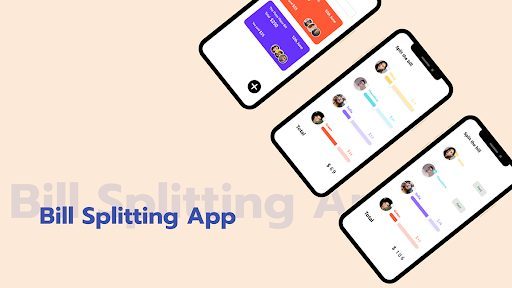
1. Use apps that handle multiple currencies
- Many budgeting and expense-splitting apps let you log expenses in local currency and see totals in your home currency.
- This matters when rates move mid-trip. You want to see the real cost, not just a pile of foreign numbers.
2. Do a quick daily check-in
- At night, I look at three numbers:
– What I planned to spend today
– What I actually spent
– How many days are left - If I’m overspending early, I tighten up: cheaper meals, fewer Ubers, more free activities.
3. Keep a small emergency cushion
- Separate from the FX buffer, I like a cash emergency fund in local currency for things like medical visits, last-minute transport, or card issues.
- This stops me from having to convert money at terrible rates in a crisis.
The goal isn’t to track every cent obsessively. It’s to catch problems early, while you can still fix them without ruining the trip. That’s how adjusting your travel budget mid trip stays manageable instead of stressful.
8. Put it all together: a simple daily-budget playbook
Let’s pull this into something you can actually use before your next trip.
Before you go
- Decide your daily budget in home currency.
- Research real local prices and adjust that number if needed.
- Check the mid-market rate and add a 5–10% buffer for FX swings.
- Lock in big costs (flights, major accommodation, tours) as early as makes sense.
- Choose your cards and accounts based on fees, not just convenience. Watch for currency conversion fees in your travel budget.
- Arrive with a small amount of local cash or a plan to hit a reputable ATM immediately.
During the trip
- Always pay in local currency (decline DCC).
- Use credit cards with no FX fees for most purchases.
- Use debit cards only for ATM withdrawals, and do them strategically.
- Avoid airport/hotel exchanges except for tiny amounts in emergencies.
- Track spending daily and adjust quickly if you’re drifting over budget.
If you do all this, you don’t need to predict exchange rates. You just need to respect them. Build a daily travel budget that assumes the rate will misbehave, and you’ll be pleasantly surprised when it doesn’t.
In the end, managing travel expenses when exchange rates move isn’t about perfection. It’s about having a clear plan, a bit of contingency for your travel budget, and the discipline to avoid the obvious traps.