
I used to plan trips by looking only at flight prices. Big mistake. The real cost of a multi‑city trip is door‑to‑door: home to airport, airport to hotel, hotel to train station, station to the next hotel, and so on.
If you’ve ever come home thinking, Where did all my money go?
this is probably why. In this guide, we’ll build a realistic door‑to‑door transport budget for multi‑city itineraries in the US, Europe, and Asia—without drowning in spreadsheets.
1. Start With the Route: How Many Cities Can You Actually Afford?
Before you compare taxis vs trains vs rideshares, you need one thing: a sane route.
Every extra city means more airport transfers, more train rides, more taxis, more time lost. Your multi‑city trip transport costs don’t just rise—they multiply.
I start with two simple questions:
- What’s the main goal of this trip? Culture, beaches, food, work, family, or a mix?
- How many full days do I really have? Ignore late arrivals and early departures.
From there, I use a rough capacity rule (adapted from multi‑city planning advice like this):
- 10 days → 2–3 cities
- 14 days → 3–4 cities
- 21 days → 4–6 cities
This isn’t just about energy. It’s about your local transport budget. Each new city adds:
- Another airport or station transfer (often $20–$80 each time)
- Another inter‑city ticket (train, bus, flight, or car segment)
- Another chance to get hit by surge pricing or last‑minute fares
I also try hard to avoid backtracking. Open‑jaw flights (fly into one city, out of another) are often similar in price to round‑trip tickets but can eliminate an entire extra train or flight from your door to door transport budget. That’s real money and hours saved.
Takeaway: Decide your route and number of cities first. Every extra stop is a transport multiplier.
2. US vs Europe vs Asia: How Door-to-Door Costs Behave Differently
Door‑to‑door budgeting only works if you understand how each region behaves. The same itinerary can have very different city to city transport expenses in the US, Europe, and Asia.
United States
In the US, distances are huge and public transit is patchy outside big cities. That changes the math for your travel budget for local transportation:
- Airports are often far from downtown. Expect $30–$80 for a rideshare in many cities, more in New York, San Francisco, or LA at peak times.
- Driving is often the default. For multi‑city trips, you’ll compare flights vs driving vs even shipping your car if you’re relocating or staying a while.
- Intercity trains are limited. Amtrak works on some corridors (like the Northeast), but it’s nothing like Europe or parts of Asia.
If you’re considering driving, sanity‑check fuel costs with tools like Travelmath’s driving cost calculator. It estimates fuel based on real routes, local gas prices, and your car’s efficiency. Then I add:
- +10–20% for detours, traffic, and city driving
- Tolls and parking (which can quietly rival your fuel cost in big cities)
Only after that do I compare the total against flights plus airport transfer costs for tourists and local rideshares.
Europe
In Europe, the equation flips completely. Your taxis vs trains cost comparison often comes out in favor of rail.
- High‑speed rail is king for sub‑500‑mile routes. Once you factor in airport transfers and security, trains are often faster door‑to‑door.
- Airport transfers vary wildly. Some cities have cheap, fast trains (Zurich, Copenhagen). Others push you toward pricey taxis.
- Dense networks. You can chain multiple cities with rail passes or advance tickets, but you need to book smart.
For multi‑city trips in Europe, I usually:
- Use open‑jaw flights into and out of different hubs
- Fill the middle with trains booked 60–90 days ahead for better fares
- Budget airport/station transfers per city (often €5–€50 each way)
This is where an intercity train vs flight cost Europe comparison really pays off. Once you add transfers and baggage fees, trains often win on both time and money.
Asia
Asia is more mixed, and your asia city transport cost guide will look different country by country:
- Some countries are rail‑heavy (Japan, parts of China), where high‑speed trains rival or beat flights door‑to‑door.
- Others are flight‑heavy (much of Southeast Asia), where low‑cost carriers dominate but airport transfers and baggage fees add up fast.
- Ride‑hailing apps (Grab, Gojek, etc.) can make airport transfers cheaper than in the US or Europe, but traffic can destroy your time budget.
Takeaway: Don’t copy‑paste a US strategy into Europe or Asia. The cheapest and fastest door‑to‑door option changes by region—and often by city.
3. The Hidden Killer: First and Last Mile Costs
Most people budget the big legs (flights, trains) and forget the “little” ones: home → airport, airport → hotel, hotel → station, and so on. Those are your first and last mile costs, and they quietly wreck many a door to door transport budget.
Here’s how I estimate them without going crazy:
- Home ↔ airport (your city): Check rideshare estimates at the time you’ll actually travel. Add 20% for surge or traffic.
- Airport ↔ hotel (each destination): Look up three options: public transit, airport bus, and taxi/rideshare. Budget for the middle option, not the absolute cheapest.
- Hotel ↔ station (for trains): Often a short metro or taxi ride. I assume $10–$20 in the US, €5–€15 in Europe, and $3–$15 in much of Asia, then adjust by city.
Now multiply that by the number of cities. A 5‑city itinerary can easily mean:
- 2 home‑airport legs
- 5 airport/station → hotel legs
- 5 hotel → airport/station legs
That’s 12 small transfers. At $20–$40 each, you’re suddenly staring at $240–$480 that never showed up in your flight search. These are the hidden transport fees on international trips that people complain about later.
Takeaway: For each city, add a line item for local transfers
and multiply by the number of legs. Don’t let them stay invisible.
4. When Driving or Shipping a Car Actually Makes Sense
Sometimes the cheapest door‑to‑door option isn’t flying or taking trains. It’s using your own car—or even shipping it.
Driving your own car (US‑heavy, but also road‑trip‑friendly regions)
For driveable routes, I treat the trip as a road trip with multiple stops, not a flight‑based itinerary. The cost pillars are:
- Fuel (use a calculator like Travelmath as a baseline)
- Tolls
- Parking (especially in big cities)
- Wear and tear (I mentally add $0.10–$0.20 per mile as a rough proxy)
Then I compare that to:
- Flights or trains between cities
- Airport/station transfers
- Local transit or rideshares in each city
On some US routes, driving wins. On others, especially where parking is brutal (NYC, SF, central Boston), it doesn’t. Your multi destination trip transportation planning should always include this comparison, not just flight prices.
Shipping your car (for relocations and long stays)
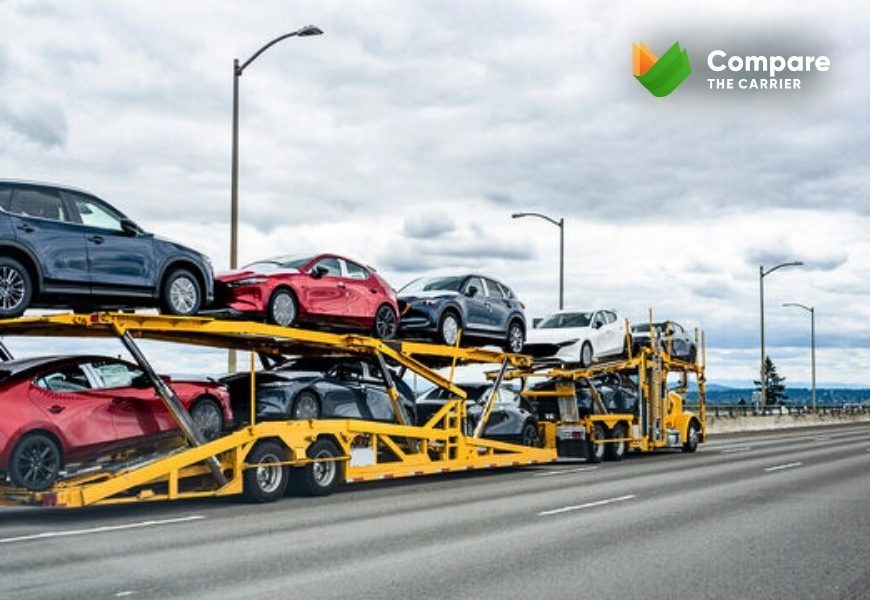
If you’re doing a long multi‑city trip that’s really a relocation (or a seasonal move), shipping your car can be surprisingly rational.
Typical US car shipping costs, based on industry ranges like those from Bold Auto Transport:
- About $500–$2,500 for standard sedans on open carriers
- National average around $1,150 for common routes
- Enclosed carriers cost roughly 40–60% more but protect high‑value cars
Key cost drivers:
- Distance: Total cost rises, but per‑mile cost drops on longer routes.
- Vehicle size: SUVs and trucks cost more because they take more space and weight.
- Route popularity: Major metro corridors are cheaper than rural or unusual routes.
- Seasonality: Summer and January are peak and pricey; spring/fall can be 10–20% cheaper.
Door‑to‑door auto transport is often the default now. Companies like Navi Auto Transport treat it as standard, not a paid upgrade, as long as the truck can safely access your street. If not, you meet at a nearby safe spot.

To budget this, I ask:
- How many weeks or months will I be in the destination region?
- What would a rental car cost for that same period?
- What’s the cost of shipping my car door‑to‑door vs driving it myself (fuel, hotels, time off work)?
If I’m staying long enough, shipping can beat renting by a wide margin, especially for families or people who need specific vehicles.
Takeaway: For relocations or long multi‑city stays, compare three numbers: fly + rent, drive yourself, and ship your car. One of them will usually stand out.
5. Door-to-Door vs Terminal: How Much Is Convenience Worth?
Door‑to‑door isn’t just for cars. It’s a mindset: How much am I willing to pay to avoid extra hops?
Auto transport is a clean example of this trade‑off.
With car shipping, you often choose between:
- Door‑to‑door: The carrier picks up and delivers as close as safely possible to your addresses.
- Terminal‑to‑terminal: You drive to a depot on each end.
According to industry ranges (e.g., Navi Auto Transport and others):
- Terminal‑to‑terminal can be about 5–10% cheaper because it removes first/last‑mile work.
- Door‑to‑door may add roughly $50–$150 in some cases, or be priced as the standard service in others.

Now translate that logic to your own trip and your ride share vs public transit prices decisions:
- Is it worth saving $20 by taking a slow bus instead of a direct airport train when you’re jet‑lagged?
- Is it worth saving $40 by connecting through a distant airport that adds two extra transfers and 4 hours of dead time?
- Is it worth saving $60 by flying into a secondary airport with terrible late‑night transport?
My rule: I’m willing to pay a modest premium for true door‑to‑door simplicity on the most stressful legs—late‑night arrivals, tight connections, or when I’m traveling with kids or heavy luggage.
But I don’t upgrade everything. For example:
- I’ll take a taxi on arrival at 11 p.m.
- I’ll happily take the metro on departure at 2 p.m. with plenty of time.
Takeaway: Put a number on your convenience threshold. Maybe it’s $20, maybe $50. Above that, you accept a bit of friction. Below it, you buy the easy option.
6. Trains vs Flights: The Door-to-Door Time Trap
We love comparing flight times: It’s only a 1‑hour flight, the train is 4 hours, so flying is faster.
Door‑to‑door, that’s often wrong—and it affects both your time and your multi city trip transport costs.
Here’s how I compare them, especially in Europe and parts of Asia:
Step 1: List the real steps for flying
- Hotel → airport (30–90 minutes)
- Arrive early (90–120 minutes for short‑haul, more for long‑haul)
- Flight time (e.g., 1 hour)
- Taxiing, deplaning, immigration (if needed), baggage (30–60 minutes)
- Airport → hotel (30–90 minutes)
That 1‑hour flight
is suddenly 4–6 hours door‑to‑door.
Step 2: List the steps for trains
- Hotel → station (10–30 minutes in many cities)
- Arrive early (20–30 minutes is usually enough)
- Train time (e.g., 3–4 hours on high‑speed routes)
- Walk or short ride to hotel (often 10–20 minutes)
That 4‑hour train
might be 5–6 hours door‑to‑door—basically the same as flying, but with less stress, more comfort, and often a lower total cost once you add airport transfers and baggage fees.
Advice from multi‑city planning guides is spot‑on here: for sub‑500‑mile routes, high‑speed rail is often faster door‑to‑door than flying. I’ve found that true again and again in Europe and Japan.
Takeaway: When comparing trains vs flights, always calculate door‑to‑door time and cost, not just the headline travel time.
7. How to Build a Simple, Honest Door-to-Door Transport Budget
Now let’s turn all this into a practical method you can reuse for any us europe asia travel cost breakdown.
Step 1: List your cities in order
Use geography and open‑jaw flights to avoid backtracking. For each city, note:
- Arrival method (flight, train, car)
- Departure method
Step 2: For each leg, write down three numbers
- Inter‑city cost (flight, train, bus, fuel, or car shipping)
- First mile (hotel → airport/station)
- Last mile (airport/station → hotel)
Do this for every hop: home → City 1, City 1 → City 2, and so on, all the way to last city → home. This is the backbone of a realistic door to door transport budget.
Step 3: Add a small buffer
I add:
- +10–15% for price fluctuations, surge pricing, and small detours
- A separate line for local daily transport (metro passes, occasional taxis, short rideshares)
That buffer is your protection against reality.
Step 4: Stress‑test your plan
Now ask yourself:
- What if one flight time changes—does it break my train connection?
- What if I arrive late at night—do I have a safe, realistic transfer option?
- What if I’m exhausted—where have I allowed for a more expensive but easier transfer?
This is where I sometimes cut a city. Not because the flight is expensive, but because the cumulative door‑to‑door friction is too high for the budget and energy I have.
Takeaway: A good door‑to‑door budget is simple: every leg has three numbers (inter‑city, first mile, last mile) plus a buffer. If you can’t afford the buffer, the itinerary is probably too ambitious.
8. Final Thought: Spend on Movement That Actually Improves Your Trip
Transport is not just a cost; it’s part of the experience. A scenic train through the Alps, a Shinkansen ride in Japan, a night train in Europe—those are worth paying for. A miserable 5 a.m. airport transfer to save $40? Usually not.
When I budget now, I ask:
- Does this extra city add enough value to justify the extra transfers?
- Does this more expensive option meaningfully reduce stress or time?
- Am I paying for convenience where it matters most, not everywhere?
If you’re honest about door‑to‑door costs—all of them—you’ll spend less on pointless movement and more on the parts of travel you actually care about.
That’s the real win.