

I’ve lost count of how many travelers have told me, I thought healthcare was cheap there
right after getting slapped with a five‑figure bill. The problem isn’t just the price of a surgery or an ER visit. It’s the hidden medical costs abroad that don’t show up when you book the flight or read the clinic’s brochure.
If you’re planning a big trip, thinking about medical tourism, or just want to avoid a surprise hospital bill overseas, this guide is for you. We’ll walk through how healthcare pricing really works by region, what prescriptions and follow-up care can cost, and how to build a realistic travel healthcare budget that includes emergencies and evacuations.
1. The Real Price of Care Abroad: Beyond the Headline Number
Most travelers fixate on one number: the surgery quote, the clinic’s package price, or the cost of a single ER visit. That’s exactly how you end up blindsided by the cost of emergency medical care overseas.
From what I’ve seen (and what platforms like Wupdoc and other medical tourism guides back up), the headline price is usually the best-case scenario. The real bill is a stack of smaller charges that quietly pile up:
- Pre-op tests and diagnostics: blood work, imaging, specialist consults.
- Extra hospital nights if recovery is slower than expected.
- Post-op medications and dressings that aren’t in the package.
- Follow-up visits (both in-country and back home).
- Translation or coordinator fees in non-English-speaking countries.
- Local transport between hotel and clinic.
Medical tourism can still save you up to 50% compared to home, but only if your travel medical budget planning covers the full journey, not just the procedure. Many clinics price for no complications, minimum stay
. Anything beyond that is extra.
My rule: if a package sounds too neat and round (e.g., All-inclusive rhinoplasty: $3,000
), I assume it’s missing at least three line items until proven otherwise. That’s how you avoid those unexpected hospital bills abroad.
2. Region-by-Region Reality Check: What Costs What?
Not all destinations are equal. Some countries genuinely offer high-quality, low-cost care. Others look cheap on paper but feel like the U.S. once you walk into a private hospital. When I’m planning, I think in terms of healthcare pricing differences by country and region.
Europe
Europe looks safe and predictable, but there are traps:
- Public vs private: Public hospitals can be cheaper but may not be accessible to non-residents or may involve long waits. Private clinics in places like Switzerland or Scandinavia can approach U.S.-level prices.
- Package structure: In countries like Portugal or France, medical and hospitality costs are often separated. You’ll see a base surgery price, then add-ons for tests, anesthesia, and hospital stay.
- Medical visas: New medical visas in parts of Europe let you combine treatment with a short vacation. Great idea, but they extend your stay and accommodation costs.
Budget move: Ask clearly: Is this price for the procedure only, or does it include hospital stay, tests, and medications?
It’s a simple question that can save you thousands and help you avoid medical bill surprises when traveling.
Asia (e.g., Thailand, Malaysia, India, Japan)
Asia is often marketed as the bargain hub of medical tourism. That’s partly true, but you still need to be precise when comparing medical expenses by region for tourists:
- Thailand, Malaysia: Packages often bundle more services (hotel, transfers, some meds). Still, check what happens if you need extra nights, extra tests, or a revision procedure.
- India: Procedure prices can be very competitive, but factor in longer flights, visas, and sometimes more complex logistics.
- Japan: High-quality care, often cheaper than U.S. prices, but not “cheap.” Billing is usually clear and regulated, yet you still need to budget for language support and insurance gaps.
Budget move: For Asia, I usually add a 10–20% contingency on top of the quoted medical cost for extra nights, tests, and meds. Think of it as a cushion against the real-world version of that tidy quote.
North America & High-Cost Destinations (US, Canada, Singapore, Australia)
This is where people really get burned by the cost of doctor visit abroad for tourists and hospital stays:
- US & Singapore: Private care can be as expensive as, or more than, U.S. prices. A single hospital stay can easily hit $20,000–$30,000+.
- Australia, Canada: Public systems exist, but non-residents often pay full freight. Don’t assume you’ll be treated like a local.
- Business travelers: Often assume their company or domestic insurance will cover everything. It usually doesn’t.
Budget move: In these regions, travel health insurance is non-negotiable. Without it, you’re gambling with five- or six-figure numbers and risking massive overseas medical emergency costs.
Emerging & Remote Destinations
Think trekking in Nepal, safaris in Africa, or island hopping in the South Pacific. The care itself might be affordable, but:
- Local facilities may not handle serious cases.
- Evacuation to a major city or home country can cost $150,000–$300,000.
- Delays (weather, logistics) can extend stays and costs.
Budget move: For remote or high-risk destinations, I look for medical evacuation coverage of at least $250,000, ideally more. It’s one of the few things that can stop a bad day from turning into a financial disaster.
3. The Hidden Travel Costs That Turn a Cheap Procedure into an Expensive Trip
Even if the clinic is honest and transparent, the travel side can quietly wreck your budget. This is where a lot of people slip, especially when they only focus on the medical bill and ignore the rest of their travel healthcare budget.

Here’s what I always factor in:
- Flights: Prices swing wildly by season and how early you book. Last-minute changes due to complications or rescheduled surgery can be brutal.
- Accommodation: You’ll likely need days or weeks near the clinic. Recovery-friendly lodging (quiet, elevator, private bathroom) costs more than a basic hostel.
- Airport transfers: In some cities, a taxi from the airport can cost as much as a night in a mid-range hotel. Multiply that by multiple legs or follow-up visits.
- Resort and hotel fees: Taxes, resort fees, parking, early check-in, late checkout. These rarely show up in the headline price.
- Currency and banking fees: Poor exchange rates, ATM fees, and foreign transaction charges can quietly add 3–5% to everything.
To keep things under control, I build a separate “non-medical” line in my budget that includes flights, accommodation, transfers, and daily living costs. Then I add a buffer for an extra week of stay in case recovery is slower than expected. It’s a simple way to avoid underestimating the real cost of emergency medical care overseas.
If you want to go deeper on general travel costs, guides like this one are worth a skim before you book.
4. Prescriptions, Follow-Up, and Long-Tail Costs You’ll Feel Back Home
The bill doesn’t end when you board your flight home. In some ways, that’s when the slow leak
starts. This is where international prescription costs for travelers and follow-up care sneak into your budget.
Here’s what people often forget to plan for:
- Post-op medications: Painkillers, antibiotics, anticoagulants, dressings. Some are included for a few days; long-term meds usually aren’t.
- Chronic prescriptions: If you have ongoing conditions (hypertension, diabetes, mental health), you may need to buy extra meds before you go or pay out-of-pocket abroad. Prescription medication prices abroad can be higher or lower than at home, but they’re rarely free.
- Follow-up consultations at home: Your local doctor may need to review your surgery, adjust meds, or order new tests. These visits may not be covered if the procedure abroad is considered “elective.”
- Revision or corrective procedures: If something isn’t right, you might need a revision surgery either abroad (another trip) or at home (often at full price).
- Medical records and translations: Getting detailed records in English (or your home language) can involve fees and time.
Budget move: I always ask the clinic:
How long will I need medications after discharge, and what do they typically cost?
What follow-up schedule do you recommend, and can my local doctor handle it?
What happens if I need a revision? Is there a discount or warranty period?
Then I add a post-trip medical budget for 3–6 months: follow-up visits, extra meds, and potential complications. It’s not glamorous, but it’s the part of your international travel healthcare cost guide that keeps you from bleeding money slowly after you get home.
5. Insurance: How Much Coverage Do You Really Need?
This is where the stakes jump from annoying to catastrophic. A single emergency abroad can easily cross $50,000 once you add hospital care and evacuation. Many travelers carry policies with limits that look decent on paper but collapse in real life.

Here’s how I break it down when I’m doing a travel health insurance cost comparison.
Know What Your Existing Insurance Actually Covers
Before you buy anything new, call your health insurer and ask:
- Is emergency care abroad covered? If yes, up to what limit?
- Do I have to pay upfront and claim later?
- Are evacuations or repatriation covered? (Usually not, or only partially.)
- What about high-risk activities? Skiing, diving, trekking, etc.
Most U.S. plans offer little or no coverage overseas. Public systems in other countries may not cover non-residents at all. Assuming free healthcare
abroad is one of the most expensive mistakes you can make.
Travel Health Insurance vs Evacuation Insurance vs Assistance Memberships
Different tools cover different risks:
- Travel health insurance: Covers medical treatment abroad (ER visits, hospital stays, some prescriptions). Common limits: $50,000–$100,000. In practice, that’s often too low if evacuation is involved.
- Medical evacuation insurance: Specifically covers transport to a better facility or back home. Costs can range from $25,000 (Caribbean–U.S.) to $150,000–$300,000 (remote or long-distance evacuations).
- Emergency assistance memberships: Programs like Global Rescue or Medjet focus on arranging and paying for transport and logistics. They don’t always cover hospital bills but can save you from paying huge sums upfront.
Case studies from sources like Jetset Protect and the CDC’s Yellow Book show the same pattern: travelers with comprehensive coverage walk away from six-figure bills; uninsured travelers end up crowdfunding.
My personal threshold:
- For short, low-risk trips to cities with good care: at least $100,000 medical + $250,000 evacuation.
- For remote or high-risk trips: I aim for $250,000–$500,000 medical + high-limit evacuation, plus an assistance membership if I’m doing anything adventurous.
And no, credit card travel protections are not enough on their own. They’re a nice bonus, not your main safety net.
6. How to Read Medical Tourism Packages Without Getting Trapped
Medical tourism packages can be fantastic value. They can also be a masterclass in fine print. I treat every package like a contract negotiation, especially when I’m trying to avoid hidden medical costs abroad.
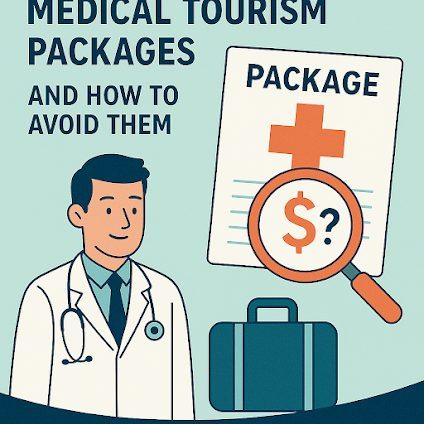
Here’s the checklist I use when a clinic sends me a quote:
1. Demand an Itemized Breakdown
I ask for a line-by-line list that covers:
- Procedure fee (surgeon, anesthesiologist, operating room)
- Pre-op tests (labs, imaging, consults)
- Hospital stay (how many nights, what happens if I need more)
- Medications (which ones, for how long)
- Transfers (airport–hotel–clinic)
- Hotel or guesthouse (how many nights, what category)
- Follow-up visits (how many, what’s included)
If they can’t or won’t itemize, that’s a red flag. You can’t build a solid travel medical budget around guesswork.
2. Clarify the Complication Policy
I ask directly:
If there’s a complication, what costs are mine and what’s covered?
Is there a revision policy or warranty period?
Do you have a maximum cap for additional charges?
Many packages are priced for the best-case scenario. You need to know the worst-case numbers too, especially if you’re trying to avoid unexpected hospital bills abroad.
3. Compare Multiple Clinics and Countries
Platforms like Wupdoc and other comparison sites let you request multiple quotes for the same procedure. I don’t just compare prices; I compare what’s included:
- Does Clinic A include meds and transfers while Clinic B doesn’t?
- Does Country X bundle hotel stays while Country Y charges separately?
- Is one clinic transparent about complications while another is vague?
Sometimes the more expensive
package is actually cheaper once you factor in everything it includes. That’s the kind of detail that separates a smart international travel healthcare cost guide from a marketing brochure.
7. Building a Realistic Medical Budget for Your Trip
Let’s turn all of this into something you can actually use. When I plan a trip where medical costs might be significant—elective procedure, adventure travel, long stay—I build a simple budget with these categories:
- Core medical cost
- Quoted procedure or expected ER/hospital costs.
- Pre-op tests and diagnostics.
- Post-op follow-up visits.
- Travel and stay
- Flights (with a buffer for date changes).
- Accommodation (including a week of extra nights as a contingency).
- Airport transfers and local transport.
- Daily living costs (meals, incidentals).
- Insurance and protection
- Travel health insurance premium.
- Evacuation coverage or assistance membership.
- Any riders for high-risk activities.
- Post-trip costs
- Medications for 3–6 months.
- Follow-up visits at home.
- Potential revision or corrective care.
- Contingency fund
- At least 10–30% of the total, depending on how risky or complex the trip is.
Then I ask myself a blunt question: If the worst-case scenario happens, can I still pay for this without wrecking my finances? If the answer is no, I either scale back the plan, delay it, or increase my insurance coverage. That’s how you turn a rough travel healthcare budget into a realistic one.
8. Final Takeaways: How to Stay Healthy and Solvent Abroad
Traveling without a plan for medical costs is like driving without brakes. You might be fine—until you’re not.
Here’s what I want you to remember:
- Don’t trust headline prices: Whether it’s a surgery package or a cheap flight, assume there are add-ons until you see an itemized list.
- Think regionally: Europe, Asia, North America, and remote destinations all have different cost patterns. Budget for the region you’re actually visiting, not the one you wish you were in.
- Include prescriptions and follow-up: The real cost of care often shows up months after you get home, especially with international prescription costs for travelers.
- Buy enough insurance: $50,000 coverage sounds big until you see a $166,000 bill with evacuation. Aim higher.
- Plan for complications: Extra nights, extra tests, and the possibility of revision work should be part of your budget, not a surprise.
If you remember nothing else, remember this: the cheapest option is the one that still protects you when everything goes wrong. Build your budget around that idea, and you’ll travel with a lot more confidence—and far fewer nasty financial surprises.