
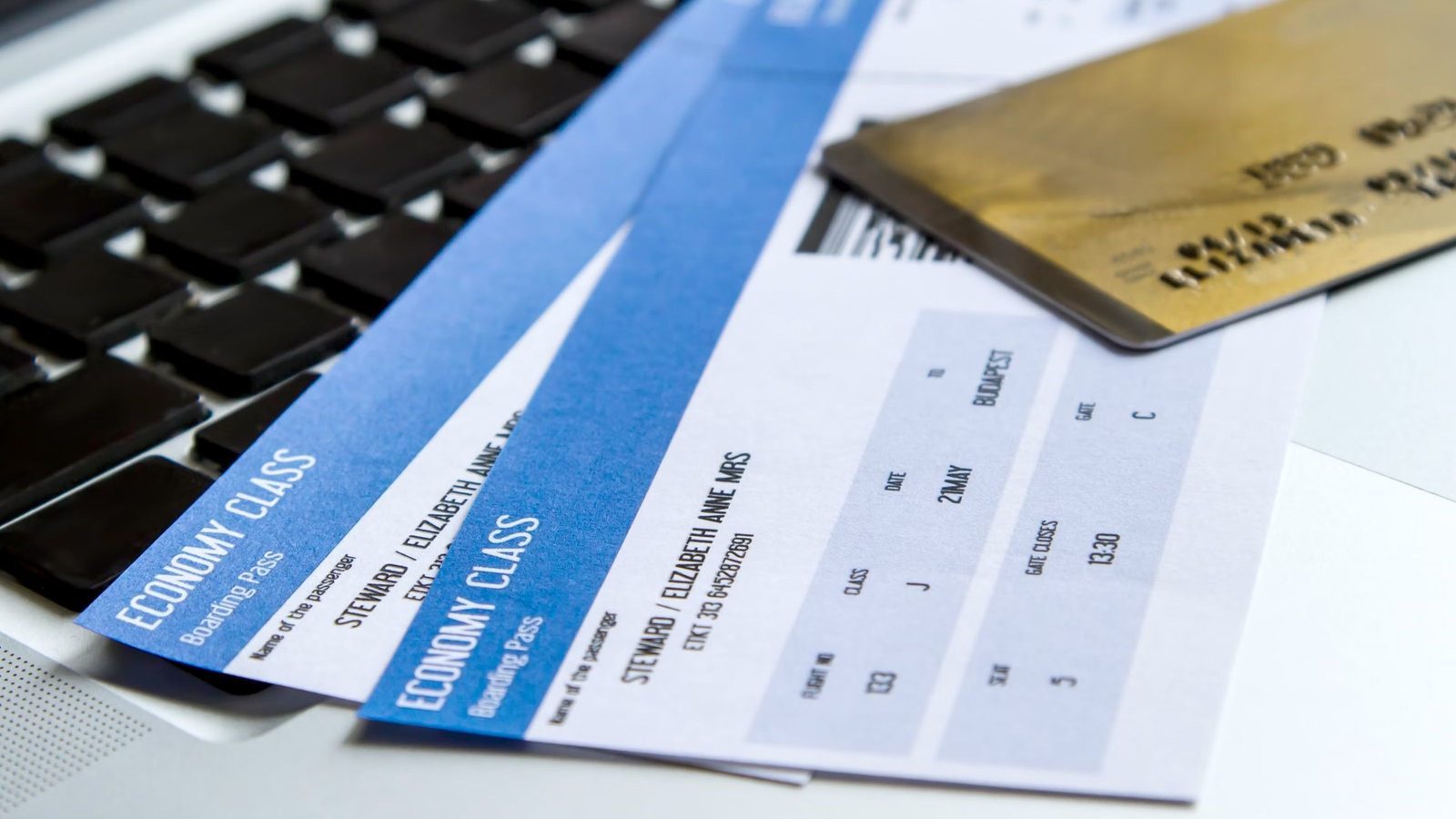
If you’ve ever watched a fare jump $80 in an hour and thought, this has to be rigged,
you’re not alone. Most of us assume airlines use a simple formula: distance + fuel + a bit of profit. That’s not how it works. The real system looks a lot more like Wall Street trading than a price tag in a store.
In this guide, we’ll walk through how airlines set ticket prices in practice, why the person in your row probably paid something completely different, and which parts of airline revenue management you can quietly use to your advantage.
1. From Government Charts to Algorithms: Who Really Sets the Price Now?
Start with this idea: airfares aren’t really “set” anymore. They’re constantly managed.
Before deregulation (in the U.S., that was 1978), governments controlled routes and fares. Prices were stable, predictable, and often high. After deregulation, airlines were thrown into a brutal free market. That’s when airline revenue management and fares became a science, and algorithm-driven pricing took over.
Today, instead of a human deciding, this flight costs $350,
airlines use systems that constantly ask things like:
- How many seats are left?
- How fast are they selling compared to past years?
- What are competitors charging right now?
- Is there a holiday, big event, or storm coming?
Those systems adjust which fares are available, sometimes many times a day. The price you see is just the current answer to a moving equation. That’s airline dynamic pricing in action.
So when you see a sudden jump, it’s usually not someone targeting you. It’s a machine reacting to new data.
2. Fare Buckets: Why the Same Seat Has 10+ Different Prices
Here’s the part airlines rarely explain clearly: you’re not really buying a seat, you’re buying a “fare bucket” that includes a seat.
Inside each cabin (economy, premium, business), airlines create multiple booking classes or fare buckets. Each one:
- Has its own price
- Has its own rules (refunds, changes, mileage earning, baggage, etc.)
- Is limited to a certain number of seats
In economy, you might see codes like Y, B, M, H, Q, V, W, T, S, K, L, G. You won’t usually see these letters when you book, but they’re there in the background, controlling what you pay and how flexible your ticket is.
When a flight first opens for sale, the airline might decide something like:
- 10 seats in the cheapest bucket
- 15 in the next-cheapest
- 20 in a mid-range bucket
- And so on, up to fully flexible, expensive fares
As the cheaper buckets sell out, the system simply stops offering them. To you, it looks like the price jumped
. In reality, you just moved up a bucket.
Sometimes, if a flight is selling poorly, the system will quietly reopen a cheaper bucket. That’s when you see a random price drop on the same flight you checked yesterday.
The key takeaway: people in identical economy seats can easily be sitting in 5–10 different fare buckets, all with different prices and rules. That’s not a glitch. That’s the design—and it’s a big part of any economy flight pricing breakdown.
3. Time, Demand, and the “Perishable Seat” Problem
Airlines think of seats the way grocery stores think of fresh food: perishable. Once the plane takes off, an empty seat is worth exactly $0.
So the core problem is simple to say, hard to solve: How do we sell every seat for the highest total revenue, not just the highest single price?
That’s where timing and demand come in:
- Early on: Airlines release some cheaper buckets to attract price-sensitive travelers (mostly leisure).
- As departure nears: Cheaper buckets close, and more expensive, flexible fares dominate (aimed at business travelers and last-minute bookers).
- Close to departure: If the flight is too empty, the system may drop prices or reopen cheaper buckets. If it’s nearly full, prices spike.
In practice, you’ll often see patterns like:
- Booking 3–8 weeks in advance often hits a sweet spot for many routes.
- Last-minute is usually expensive, especially on business-heavy routes.
- Holidays, big events, and school breaks burn through cheap buckets fast. Wait too long and you’re stuck with the top tiers.
Notice what’s missing from this flight pricing factors list? Distance. A short business route like LAX–SFO can cost more than a longer leisure route like LAX–LAS. The system cares more about who is likely to fly than how far they go.
4. Myths vs Reality: Are Airlines Watching Your Searches?
You search a flight, come back an hour later, and the price is higher. It feels personal, like the airline is punishing you for hesitating.
But when you look at how airline ticket price calculation actually works, a different picture shows up.
What’s mostly myth:
They raised the price because I searched twice.
Incognito mode guarantees cheaper fares.
Clearing cookies will reset the price.
Multiple industry analyses and travel sites (for example, SmarterTravel) point to the same conclusion: the big price moves are driven by fare buckets and demand, not your individual browser history.
What is real:
- Airlines and OTAs do track overall search volume and market demand.
- Some sites use dynamic front-end pricing and A/B testing, which can make things look inconsistent.
- Prices can change multiple times per day as algorithms update inventory.
So yes, you might see a higher price on your second search. But the most likely explanation is boring: a cheaper bucket just closed while you were thinking, or the system updated based on new bookings.
Use incognito if it makes you feel better, but don’t treat it as a magic trick. If you want to understand why flight prices change, focus on timing, flexibility, and route choice. That’s where the real leverage is.
5. Competition, Fuel, and Events: The Hidden Levers Behind the Scenes
Even the smartest algorithm can’t escape basic economics. A few big levers quietly shape the price floor and ceiling long before you ever search for a ticket.
1. Competition on the route
- Multiple airlines on the same route? Expect fare matching and occasional price wars.
- Only one or two carriers? They can often charge more, especially on regional or monopoly routes.
2. Fuel prices and hedging
- Fuel is one of an airline’s biggest costs.
- When fuel spikes, airlines may raise fares or add surcharges.
- Some airlines hedge fuel (locking in prices in advance), which can delay or soften fare increases.
3. Seasonality and events
- Summer, Christmas, New Year, major festivals, big conferences: cheap buckets vanish fast.
- Weather disruptions and storms can suddenly push prices up as everyone scrambles to rebook into the same destinations.
4. Passenger mix
- Routes with lots of last-minute business travelers support higher fares.
- Leisure-heavy routes need more low fares to fill seats early.
All of this feeds into the forecasting models behind airline ticket pricing. The system isn’t just asking, Can we sell this seat?
It’s asking, Given fuel, competition, and demand, what’s the best price we can get for this seat over time?
6. Day of Week, Time of Day, and the “When Should I Book?” Trap
You’ve probably heard some version of: Always book on Tuesday at 3 p.m.
It’s a comforting idea. It’s also outdated and oversimplified.
Here’s the more honest version:
- Yes, fares can change throughout the day as airlines update inventory and respond to demand.
- Yes, some analyses have found slightly lower average prices on Tuesdays and Wednesdays, both for booking and flying.
- No, there is no magic hour that guarantees the lowest fare.
What actually matters more when you’re hunting for the cheapest time to book flights:
- How far in advance you book (often 3–8 weeks for many routes, longer for peak seasons).
- Which days you fly (mid-week flights are often cheaper than Friday evenings and Sunday nights).
- How flexible you are with airports and times.
Dynamic pricing means a single seat can change price dozens of times before departure. You’re not trying to hit the absolute bottom; you’re trying to hit a good value point before the curve turns sharply upward.

7. Ancillary Fees: The Quiet Way Airlines Shape “Cheap” Fares
Another piece of the puzzle: the ticket price is no longer the whole product. Airlines have shifted a lot of revenue into extras, also called ancillaries.
Think about:
- Checked bags
- Carry-on bags (on some airlines)
- Seat selection
- Priority boarding
- Change fees (where they still exist)
Basic economy is the clearest example. It’s often the lowest visible fare, but:
- You may not get a seat assignment until check-in.
- Changes or refunds may be impossible or very expensive.
- Bags and even mileage earning can be restricted.
From the airline’s perspective, this is strategic:
- They can advertise a low base fare to compete in search results.
- They can then upsell bundles (seat + bag + priority) using the same dynamic pricing logic.
So when you compare prices, don’t just ask, Which ticket is cheaper?
Ask, What will this actually cost me once I add the things I realistically need?
That’s where airline fare classes and prices really start to matter.

8. How to Use All This to Actually Pay Less
Knowing the theory behind how airlines set ticket prices is useful, but how do you turn it into real savings?
Here’s how to play the game, based on how the system really works:
1. Think in buckets, not single prices
- If you see a good fare, assume it’s tied to a limited bucket.
- Waiting might bring a drop, but it’s more likely to push you into a higher bucket, especially for busy dates.
2. Be flexible where the algorithms are rigid
- Shift your trip by a day or two (especially avoiding Friday night and Sunday returns).
- Try nearby airports if that’s realistic.
- Consider early-morning or late-night flights, which often sit in cheaper buckets longer.
3. Use tools, but don’t worship them
- Set fare alerts and watch trends over a few days.
- When you see a price that’s clearly below the recent average, that’s your signal.
4. Respect peak periods
- For holidays, school breaks, and big events, book earlier than you think you need to.
- Cheap buckets on those dates disappear fast and rarely come back.
5. Look at the full cost, not just the headline fare
- Compare basic economy vs standard economy with all fees included.
- Sometimes the
more expensive
ticket is cheaper once you add bags and seat selection.
In the end, airline pricing isn’t random, and it’s not purely evil. It’s a ruthless optimization problem. Once you understand the logic—fare buckets, demand curves, competition, ancillaries, and how seat availability affects flight cost—you stop taking price jumps personally and start treating them as signals from a system you can learn to read.
The next time you see a fare change, ask yourself: Which bucket just opened or closed?
That one question alone will make you a much sharper traveler—and make all those flight price fluctuations feel a lot less mysterious.