
I don’t plan trips around exchange rates. But I do let exchange rates decide how nice my trips feel.
Same flight. Same hotel. Same number of days. Yet one year I feel rich, the next I feel broke. The difference? My currency got weaker.
If you’re not from the US, you don’t have the luxury of a globally dominant currency. A 5–15% swing against the dollar or euro can quietly erase your restaurant meals, your day trips, even that one splurge experience you were excited about. That’s how exchange rates affect your travel budget in the real world, not just on a chart.
In this guide, I’ll walk through how I think about exchange rates before, during, and after booking a trip. The goal is simple: stop FX from wrecking your budget and start using it to your advantage.
1. First Decision: Is This Destination Even “On Sale” For You Right Now?
Before I book anything, I ask a blunt question: Is this country cheap or expensive for my currency right now?
Exchange rates aren’t just numbers on a screen. They decide whether your 2,000 EUR, 200,000 INR, or 10,000 BRL feels like a luxury budget or a survival budget abroad. For non‑US travelers, currency fluctuations can change a trip from comfortable to stressful without you changing a single plan.
Here’s how I sanity‑check it in 5–10 minutes:
- Open a reliable FX site or app and look at the 1‑year chart for your currency vs. the destination’s.
- Ask:
Am I near the best, worst, or middle of the last year?
- If your currency is near its strongest point, the destination is effectively on sale.
- If it’s near its weakest, you’re paying a quiet premium on everything.
Example: You’re from South Africa planning Europe. If ZAR/EUR has dropped 10% since you first dreamed of the trip, your 3,000 EUR budget now effectively buys 2,700 EUR of value. That’s a whole chunk of your trip gone before you even land. That’s how currency fluctuations hit travel costs in a way you actually feel.
My rule of thumb:
- 0–5% move: I ignore it. That’s noise.
- 5–10% move: I adjust my budget and cut some non‑essentials.
- 10%+ move: I seriously consider changing dates, shortening the trip, or picking a different country where my currency is stronger.
If that sounds extreme, remember: a 10% currency hit on a 2,500 USD‑equivalent trip is 250 USD. That’s not a rounding error. That’s your food budget for several days.
Takeaway: Treat exchange rates like flight prices. Sometimes you go now, sometimes you wait, sometimes you pivot to a better‑value destination where your money goes further.
2. Second Decision: Are You Letting Banks Quietly Tax Your Trip?
Even if the headline rate looks fine, the real
rate you get is often 3–8% worse once banks, bureaus, and card networks take their cut. That’s where a lot of people lose money without realizing it.
There are three layers you need to watch:
- The mid‑market rate – the real interbank rate you see on Google or XE.
- The provider’s spread – the hidden markup they bake into the rate.
- Explicit fees – foreign transaction fees, ATM fees, “service charges.”
Many “no commission” airport kiosks simply give you a terrible rate instead. A 3–5% markup on 1,000 of your home currency is 30–50 gone in seconds. Do that a few times and you’ve paid for a nice dinner you’ll never eat.
What I do instead to protect my trip budget from these quiet currency taxes:
- Check the mid‑market rate on an independent site.
- Compare it to what my bank, card, or app is offering in real time.
- If the difference is more than ~2–2.5% including fees, I look for a better method.
Multi‑currency fintech accounts (Wise, Revolut, etc.) often use the mid‑market rate plus a small transparent fee. On 1,000 converted, that can save you roughly 30–40 compared with a traditional bank. That’s not theory; that’s a couple of museum tickets and a good lunch.
Takeaway: Before you convert, always ask: What’s the mid‑market rate right now, and what am I actually getting?
If you don’t know, you’re probably overpaying.
3. Third Decision: When Do You Convert – All At Once or In Batches?
Timing your exchange is where most travelers either get lucky or get burned. I prefer not to rely on luck.
You will never hit the perfect rate. That’s fine. The goal is to avoid the worst ones and smooth out the swings.
My approach looks like this:
- Step 1 – Price the trip in destination currency.
I estimate big costs (accommodation, transport, key activities) in the local currency first. That’s myreal
budget and the base for any exchange rate planning. - Step 2 – Add a 5–10% buffer.
If my destination currency suddenly strengthens, I’m not panicking. If it doesn’t, I just come home under budget. - Step 3 – Split conversions over time.
Instead of converting everything in one shot, I convert in 2–4 batches over a few weeks or months. This averages out volatility and is a simple way of hedging exchange rate risk as a traveler.
For larger trips, I sometimes treat FX like a mini investment decision:
- If my currency is currently strong vs. the destination, I convert a bigger chunk early.
- If it’s weak, I convert the minimum I need and wait, unless I see signs it might get even worse.
For very big, fixed future expenses (like a long language course abroad or a multi‑month rental), some people use forward contracts or fixed‑rate products to lock in today’s rate. That’s more common for businesses, but if your bank or broker offers it and the amount is large, it can be worth asking about.
Takeaway: Don’t gamble your whole trip on one exchange date. Convert in stages and build a buffer so FX swings become an annoyance, not a crisis.
4. Fourth Decision: Cash, Card, or Both – What Actually Costs You Less?
How you pay can matter as much as when you convert. Two travelers in the same city, same day, can end up with very different bills just because they used different payment methods.
Each method has a different hidden price tag:
- Cash from home
Convenient, but banks and bureaus often add spreads. Good for a small starter amount, not your whole budget. - Cash from ATMs abroad
Often a decent rate via major networks (Visa/Mastercard), but watch for ATM fees and local markups. Some ATMs add 10–15% in terrible rates and fees. - Credit/debit cards
Usually competitive FX rates, but foreign transaction fees (often 2–3%) can quietly stack up. Some travel cards waive these entirely and give you a better overall exchange rate than cash. - Multi‑currency accounts / prepaid travel cards
Let you convert when rates are good and spend later. Great for locking in costs and avoiding surprises.
My personal mix on most trips:
- One no‑foreign‑transaction‑fee card for most purchases.
- One backup card from a different network (Visa + Mastercard).
- A multi‑currency app/card where I pre‑convert some money at good rates.
- A small amount of local cash for tips, markets, and places that don’t take cards.
On ATMs, I follow two rules:
- Use ATMs from major banks, not random independent machines in tourist zones.
- Withdraw moderate amounts – enough to reduce fees per withdrawal, but not so much that I’m carrying a security risk.
Takeaway: Design a payment mix that minimizes fees and spreads, not just what feels convenient at the airport.
5. Fifth Decision: Do You Fall for Dynamic Currency Conversion (DCC)?
If you remember only one thing from this article, let it be this:
When a card terminal abroad asks, “Pay in your home currency or local currency?” always choose local currency.
That offer to pay in your home currency is called Dynamic Currency Conversion (DCC). It sounds friendly. It’s not.
Here’s what usually happens with DCC:
- The merchant’s provider sets a terrible exchange rate, often 5–8% worse than your bank’s.
- They may add extra fees on top.
- You see a familiar currency on the screen and feel safe, while quietly overpaying.
Multiply that 5–8% over a week of hotels, restaurant bills, and shopping, and you’ve just tipped a faceless payment processor a big chunk of your travel budget. It’s one of the most common exchange rate traps on vacation.
What I do at every terminal:
- If the screen is confusing, I ask:
Local currency, please.
- If the staff insists on my home currency, I cancel and ask them to redo it in local currency.
- I check the receipt; if it shows my home currency, I know DCC was applied.
Takeaway: DCC is almost always a bad deal. Pay in the local currency and let your card handle the conversion.
6. Sixth Decision: How Much FX Risk Do You Want to Carry While You Travel?
Even after you land, exchange rates keep moving. The question is: Who carries that risk – you, or your bank/app?
You have two basic approaches:
Option A – Float with the market
You keep most of your money in your home currency and let your card convert at the time of each purchase.
Pros:
- Simple. No pre‑planning.
- You benefit if your currency strengthens during the trip.
Cons:
- You pay more if your currency weakens mid‑trip.
- Harder to know your
true
daily budget in advance.
Option B – Lock in a rate
You pre‑convert a chunk of money into the destination currency using a multi‑currency account or prepaid card, ideally when the rate looks good.
Pros:
- You know exactly how much you have to spend in local currency.
- You’re protected if your currency weakens later.
Cons:
- If your currency strengthens, you miss out on the upside.
- You need to plan and monitor rates a bit.
Personally, I like a hybrid:
- Lock in core costs (accommodation, some transport, a base daily budget) via pre‑conversion or prepayment.
- Leave discretionary spending (shopping, extra activities) floating with the market.
That way, a bad FX move can shrink my shopping, but it won’t threaten my ability to eat or sleep comfortably.
Takeaway: Decide consciously how much FX risk you’re willing to carry. Don’t let it be an accident.
7. Seventh Decision: Will You Actually Track What You’re Spending?
Exchange rates don’t just affect what you pay. They also affect how you perceive what you pay.
When you’re juggling two or three currencies in your head, it’s easy to lose track. That’s how people come home to a painful card statement and wonder where the money went.
What I do to stay sane:
- Before the trip, I set a daily budget in local currency (with that 5–10% buffer baked in).
- On the trip, I use an expense‑tracking app that supports multiple currencies and converts everything back to my home currency.
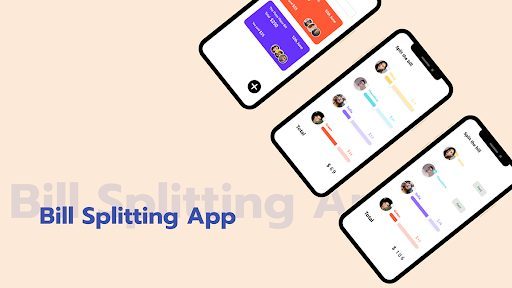
- If I’m traveling with friends, we use an app that can split costs in different currencies so no one gets stuck doing mental gymnastics.

Then I ask myself one simple question every evening: If the exchange rate got 5% worse overnight, would I still be comfortable with how I’m spending?
If the answer is no, I tighten up the next day. That’s much easier than trying to fix it when I’m already back home.
Takeaway: FX risk is manageable if you can see it. Track your spending in both local and home currency so rate moves don’t blindside you.
8. Putting It All Together: A Simple FX Game Plan for Non‑US Travelers
Let me wrap this into a practical checklist you can actually use. Think of it as a quick, practical guide to currency for non‑US travelers who don’t want to obsess over charts but also don’t want to burn money.
1–2 months before your trip:
- Check 6–12 month exchange rate charts for your currency vs. the destination.
- Decide if the destination is
on sale
oroverpriced
for you right now. - Price your trip in local currency and add a 5–10% buffer.
- Open or set up a multi‑currency account or travel card if you don’t have one.
2–4 weeks before:
- Start converting in small batches when rates look decent.
- Prepay some big costs (accommodation, trains) in local currency if the rate is favorable.
- Confirm which of your cards have no or low foreign transaction fees.
During the trip:
- Always pay in local currency (decline DCC).
- Use major bank ATMs for cash, avoid random tourist ATMs.
- Track expenses in an app so you see the impact of FX in real time.
- Adjust your daily spending if your currency weakens noticeably.
After the trip:
- Review your statements and note where you lost money to spreads, fees, or DCC.
- Use that as a baseline to improve your strategy for the next trip.
You don’t need to become a forex trader to travel smart. You just need to stop treating exchange rates as background noise.
Ask yourself, before your next trip: Am I letting exchange rates happen to me, or am I using them?
The answer will show up in how far your budget really goes once you land.