
I don’t plan off-season trips because I “can’t afford” peak season. I plan them because the trip itself feels different. The rhythm, the people you meet, the way you move through a city – it all shifts when you’re not squeezed between school holidays and selfie sticks.
But you can’t just copy-paste a July itinerary into November and hope it works. When you skip peak dates, your whole planning logic has to change. That’s what this guide is for: how to design an off season itinerary that actually fits the season you’re traveling in.
1. First Decision: Are You Chasing Savings or a Different Experience?
Before you even open a flight search, decide what you’re really optimizing for. An off season travel itinerary can easily cut hotel costs by 30–40% and flights by a few hundred dollars, especially for families or groups. Tools like the simple calculators described in this off-season savings breakdown show how quickly small nightly differences add up.
But if you only chase the lowest price, you might land in a destination where half the things you care about are closed or washed out by rain. That’s the classic off season travel mistake.
So I ask myself three blunt questions before planning an off season trip:
- If prices were the same year-round, would I still choose these dates? If the answer is no, I’m purely price-driven and need to be extra careful about trade-offs.
- What’s the one thing that would ruin this trip for me? Constant rain? No beach time? No mountain views? That becomes my red line.
- What’s my minimum acceptable version of this destination? For example: “I don’t need perfect beach weather, but I do need at least two dry afternoons.”
Once that’s clear, you can use off-season strategically instead of blindly. You might not need true low season. Often the shoulder weeks just before or after peak give you most of the off season travel cost savings with far fewer downsides.

2. Timing the Trip: Redrawing the Calendar Around Real Off-Season
Off-season isn’t a universal November–March block. It’s hyper-local and often counterintuitive. When I’m planning an off season travel itinerary, I start by mapping three layers of seasonality for that destination:
- Tourism demand – when crowds and prices spike.
- Weather patterns – not just averages, but extremes and rainy seasons.
- School and holiday calendars – both local and your own.
Typical patterns look something like this:
- Europe: Broad off-season is roughly November–March. Cheaper, quieter, but darker and colder, especially in the north. Christmas markets and New Year’s are fake off-season – prices jump back up.
- Southeast Asia: Low season often overlaps with monsoon (roughly June–October). Lush landscapes, lower prices, but real risk of heavy rain and transport disruption.
- North America: Many places are cheaper November–March, but Thanksgiving, Christmas–New Year’s, and Spring Break are peak-priced islands inside that low season.
- Mexico & Caribbean: Generally cheaper from just after Easter to mid-December, except hurricane peaks and holiday weeks.
When I’m picking off peak travel dates, I deliberately:
- Shift a few days away from holidays. Even moving a trip from Easter week to the week after can noticeably drop off season hotel and flight prices.
- Check local events and conventions. A random trade show can turn a “quiet” city into a sold-out nightmare.
- Look for shoulder edges. The last week before peak or the first week after often gives you a sweet spot: fewer crowds, decent weather, and softer prices.
In other words, when you avoid peak dates, your calendar becomes a tool, not a constraint. You’re not just asking, “When can I get time off?” You’re asking, “When does this place make the most sense for the way I travel?” That’s the real difference between off season vs peak season travel.
3. Rewriting the Daily Plan: From Fixed Schedules to Flexible Blocks
Peak-season itineraries are usually rigid: timed tickets, pre-booked tours, restaurant reservations weeks in advance. Off-season flips that. You get fewer crowds and more availability, but also more uncertainty: shorter opening hours, random closures, and weather mood swings.
So instead of building hour-by-hour schedules, I build flexible blocks for my off season itinerary:
- Morning block: weather-sensitive or outdoor activity (hike, walking tour, scenic drive).
- Afternoon block: indoor or semi-indoor backup (museum, food tour, spa, cooking class).
- Evening block: flexible – local bar, casual restaurant, neighborhood wandering.
For each day, I try to have:
- Plan A: what I’d love to do if weather and opening hours cooperate.
- Plan B: a realistic alternative that still feels like the destination, not a consolation prize.
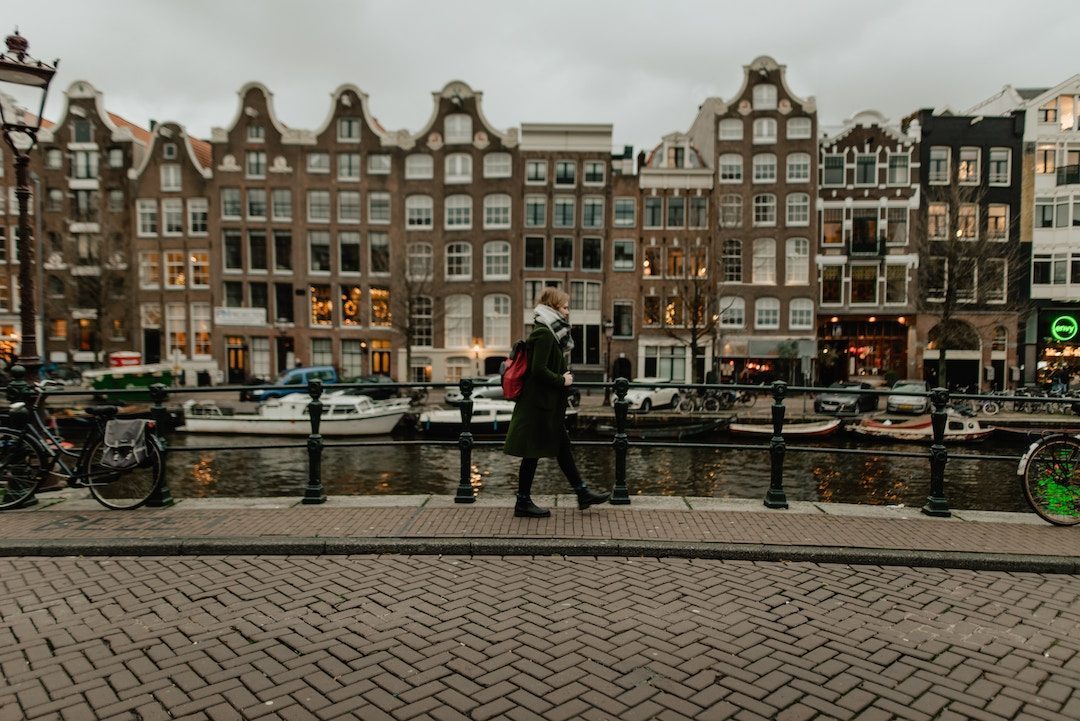
Example for a November city break in Amsterdam:
- Plan A morning: Canal-side walking loop + outdoor markets.
- Plan B morning: Extra museum time (Van Gogh, Rijksmuseum) and a long café stop if it’s pouring.
- Plan A afternoon: Bike ride to a nearby neighborhood.
- Plan B afternoon: Food tour or brewery visit.
The key off season itinerary planning tip here: don’t overbook. Leave deliberate gaps so you can say yes to the unexpected – a local festival, a last-minute tour, a conversation that turns into an invitation.
4. Weather & Packing: Designing a Trip That Can Survive a Bad Week
In peak season, you can often assume a baseline: beach trips will be warm, ski trips will have snow, city breaks will be walkable. Off-season? Not so much. You’re trading predictability for price and peace.
So instead of chasing perfect weather, I plan my itinerary around weather resilience. Adjusting your itinerary for off season weather is what keeps a rough forecast from wrecking the whole trip.
My process looks like this:
- Research the worst-case, not just the average. I look up historical extremes, not just “average highs and lows.” Can it flood? Snowstorm? Ten days of straight rain?
- Sort activities by weather sensitivity. Beaches, mountain viewpoints, boat trips = high risk. Museums, food, city walks with good cafés = low risk.
- Front-load the fragile stuff. I schedule weather-dependent activities early in the trip so I have room to reshuffle if the forecast changes.
Then I pack to support that flexibility:
- Layers over bulk: thin base layers, a warm mid-layer, and a compact waterproof shell instead of one giant coat.
- Waterproof, not just “water-resistant”: shoes and a jacket that can handle real rain, not just drizzle.
- Comfort items: a small umbrella, quick-dry socks, and a packable tote for shedding layers when the sun finally shows up.
The goal isn’t to beat the weather. It’s to make your off season travel itinerary weather-proof enough that a bad week is annoying, not trip-ending.
5. Open or Closed? Rethinking What “Available” Means
Off-season doesn’t just change prices; it changes what actually exists on the ground. Some restaurants shut for a month. Ferries run on reduced schedules. Tours only operate on weekends. If you plan like it’s July, you’ll hit a lot of locked doors.
When I’m building an off-season itinerary, I assume nothing is open until I verify it. It sounds dramatic, but it saves a lot of frustration and avoids classic off season travel mistakes.
Here’s how I sanity-check my plans:
- Check official websites and recent reviews. I look for updated hours, seasonal notes, and recent comments mentioning closures or reduced schedules.
- Email or message key places. If a specific restaurant, tour, or ferry is a make-or-break part of my trip, I contact them directly and ask: “Will you be open on these dates?”
- Plan by category, not just by name. Instead of pinning one “perfect” restaurant, I save 3–4 options in the same area and price range.
Then I adjust the itinerary style:
- Fewer one-shot experiences. I avoid building the trip around a single fragile event (like a once-a-week market) unless I have backups.
- More everyday life. I lean into things that are almost always open: supermarkets, neighborhood cafés, local gyms, public baths, libraries, community events.
This is where off season destination availability can actually feel like an upgrade. With fewer tourist performances running, you see more of the place’s normal rhythm. You’re not just consuming attractions; you’re slipping into daily life.

6. Money Strategy: Using Off-Season Savings Intentionally
Off-season doesn’t just make trips cheaper; it changes how you can use your budget. The question isn’t “How much can I save?” It’s “What do I want those savings to do for me?”
Here’s how I usually think about off season travel cost savings:
- Same budget, better trip. Upgrade to a boutique hotel that would be out of reach in peak season. Book a private guide instead of a group tour. Add a cooking class or spa day.
- Lower budget, same quality. Keep your standards the same and simply spend less. This is powerful if you’re trying to travel more often, not just bigger.
- Reallocate to flights or time. Use cheaper accommodation to justify a more comfortable flight or an extra day or two on the ground.
For families or groups, the math gets even more interesting. A modest $40/night hotel difference over 7 nights for 2 rooms is already $560. Add cheaper flights and attraction tickets, and you’re suddenly in “extra destination” territory.
When I’m planning an off season trip, I like to do a quick comparison before locking dates:
- Price out the trip for a peak week (flights + 7 nights + 2–3 key activities).
- Price out the same trip for an off-season or shoulder week.
- Look at the absolute difference (dollars saved) and the percentage difference (how much the destination punishes peak travel).
If the savings are small, I might decide the better weather or events are worth paying for. If the savings are huge, I start asking: “What could I do with an extra $800–$1,500?” The answer often reshapes the itinerary.
7. Crowd Levels & Pace: Designing a Slower, Deeper Trip
When you strip away peak-season crowds, the way you move through a place changes. You don’t need to sprint to the Eiffel Tower at 7 a.m. to beat the line. You don’t need to book every museum weeks ahead. That freedom is the real off-season luxury.
So I deliberately design a slower pace into my off-season itineraries:
- Fewer “must-sees” per day. Instead of 5–6 attractions, I aim for 2–3 anchors and leave the rest open.
- Longer stays in fewer places. Off-season is perfect for 4–5 nights in one city instead of 1–2 nights in three different ones. Less transit, more depth.
- More neighborhood time. I build in unstructured hours to just walk, sit in cafés, browse local shops, or watch a park wake up.
This is also when you get the most authentic interactions. Locals aren’t burned out from peak-season crowds. Small business owners have time to talk. You might stumble into a local festival that never makes it into tourist brochures.
While you’re sketching your off season travel itinerary, ask yourself: If I removed half the “famous” sights from this plan, would the trip still feel meaningful? Off-season is your chance to find out.

8. Final Check: Is This Off-Season Trip Actually Right for You?
Off-season travel isn’t automatically smarter. It’s just different. The trick is to be honest about your tolerance for uncertainty and your real priorities. The pros and cons of off season travel will land differently for everyone.
Before I book, I run through a quick gut-check:
- Weather: Am I genuinely okay with the worst realistic scenario, not just the average?
- Closures: If 20–30% of my “nice-to-have” list is closed, will I still enjoy the trip?
- Energy: Do I want a slower, more introspective trip right now, or do I want the buzz of peak season?
- Money: Am I using the savings in a way that actually matters to me (more time, better experiences, or less financial stress)?
If I can answer “yes” to those, I book the off-season dates and design the itinerary around flexibility, depth, and resilience instead of FOMO. That’s the heart of good off season itinerary planning.
Because when you skip peak dates, you’re not just saving money. You’re choosing a different version of the same place – one that might suit you a lot better than the glossy summer brochure.