

I don’t plan trips assuming everything will go wrong. But I also don’t trust travel enough to assume everything will go right.
Flights get cancelled. Bags disappear. Kids get sick. Borders change rules overnight. If you don’t have a financial Plan B
, those surprises can turn into debt, stress, and sometimes a ruined trip.
This isn’t about doubling your budget “just in case”. It’s about building a smart, lean plan b travel budget that keeps you covered without overspending on peace of mind.
1. How Much Plan B Money Do You Actually Need?
Most travelers either wildly overestimate or dangerously underestimate this number. The sweet spot sits in the middle: enough to sleep at night, not so much that you never leave home.
Here’s a simple way to size your travel contingency budget without guessing:
- Step 1: Price your main trip honestly. Add up transport, accommodation, food, activities, and a small buffer. Tools like PocketGuard’s travel budgeting guide can help you get realistic about the true cost of your trip.
- Step 2: Add an emergency percentage. Most sources land between 5–20% of your total trip budget. A simple way to think about your backup budget for trip disruptions:
- Low-risk, short trips: 5–10%
- Longer or more complex trips: 10–15%
- Remote, expensive, or high-risk destinations: 15–20%
- Step 3: Think in tiers, not one giant number. Break your Plan B into realistic chunks instead of one scary total.
- Minor issues (up to $100–$200): missed taxis, small fees, lost items.
- Moderate issues ($200–$600): extra hotel nights, rebooked flights, delayed luggage.
- Major issues ($600+): medical emergencies, last-minute flights home, serious disruptions.
Once you think in tiers, you stop planning for some vague disaster and start planning for specific, likely scenarios. That’s where trip disruption cost planning actually becomes useful.

Key takeaway: Aim for a Plan B fund of 5–20% of your total trip budget, adjusted for risk, and mentally split it into minor, moderate, and major disruptions.
2. Where Should Your Plan B Money Live?
Having a Plan B budget is pointless if it’s either too hard to access or too easy to blow on cocktails and souvenirs.
Here’s how I park my travel delay emergency fund so it’s there when I need it—and not when I don’t:
- Separate, but reachable. I keep it in a dedicated high-yield savings account labeled something obvious like
Travel Emergency Fund
. That label alone makes me think twice before raiding it for a new jacket. - Not mixed with daily spending. I don’t keep it in my main checking account. If it’s there, it will get spent. That’s just human nature.
- Layered access:
- Layer 1 – Cash cushion: A small amount of local currency plus a bit of USD/EUR for immediate issues (taxis, food, tips, small emergencies).
- Layer 2 – Debit or prepaid card: For moderate surprises like extra nights or rebooked trains.
- Layer 3 – Credit card: For large, time-sensitive costs like emergency flights or medical bills.
Articles like this one on emergency funds for travelers stress the same thing: don’t rely only on credit or only on cash. You want options, especially when the cost of travel emergencies spikes without warning.
Key takeaway: Keep your Plan B money separate from your main travel budget, but make sure you can access it quickly through a mix of savings, cards, and a little cash.
3. How Do You Build a Plan B Fund Without Delaying the Trip?
This is where a lot of people stall. They think, If I need an extra $1,000 just in case, I’ll never go.
That’s not the goal. The goal is a lean, realistic cushion built with small, consistent moves—not a giant number that keeps you stuck at home.
Here’s how I approach building a travel contingency budget without pushing the trip back forever:
- Start with a modest target. Instead of aiming for months of expenses, start with $500–$1,000 as a travel-specific emergency fund, like Joe’s Flights suggests. You can grow it over time.
- Break it into tiny chunks. $600 feels huge. $50 per paycheck for six paychecks doesn’t. Or $20 a week for 30 weeks. Same money, less mental resistance.
- Automate it. Set a recurring transfer from checking to your
Travel Emergency Fund
right after payday. If you never see it, you don’t miss it. - Cut one or two categories, not your whole life. Track your spending for 30–60 days. Then attack the obvious leaks: unused subscriptions, random takeout, impulse buys. Redirect those savings into your Plan B fund.
- Protect yourself from overdrafts. If you automate transfers, set balance alerts so you don’t get hit with fees when timing is off.
Even $5–$25 per transfer adds up faster than it seems. The point isn’t perfection; it’s momentum.
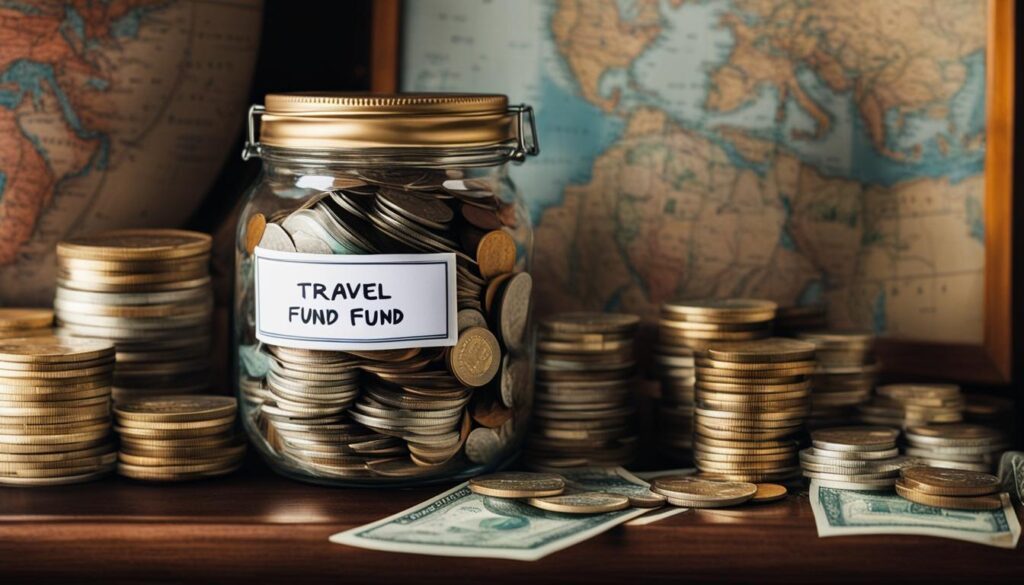
Key takeaway: You don’t need to be rich to have a Plan B. Start small, automate, and let tiny, boring habits quietly build your safety net.
4. What’s the Right Mix of Cash, Credit, and Insurance?
This is where the skeptical part of me wakes up. Everyone wants to sell you something: more insurance, more credit, more apps.
I prefer a simple, balanced setup—a kind of three-legged stool for your plan b travel budget.
Leg 1: Cash & Savings
- Use for: Small to moderate surprises – extra meals, taxis, a night or two of accommodation, minor medical visits.
- Pros: No interest, no claims, no paperwork.
- Cons: Once it’s gone, it’s gone. You need discipline not to burn through it on non-emergencies.
Leg 2: Credit (Used Intentionally)
- Use for: Large, urgent costs that exceed your savings – emergency flights, big medical bills, last-minute reroutes.
- Prep work:
- Know your credit limit and interest rate before you travel.
- Understand foreign transaction fees and cash advance fees.
- Have at least one backup card stored separately from your main wallet.
- Rule: Credit is a bridge, not a lifestyle. Use it to buy time, then pay it down aggressively once you’re home.
Leg 3: Travel Insurance
- Use for: Big, rare events – serious medical emergencies, trip cancellations, lost or delayed luggage, evacuation.
- Non-negotiable checks:
- What’s the medical coverage limit?
- Does it cover pre-existing conditions?
- What counts as a covered reason for cancellation?
- How do you actually file a claim while abroad?
- Practical tip: Keep digital and physical copies of your policy, claim instructions, and emergency numbers. When something goes wrong, you won’t want to dig through email.
If you’re torn between travel insurance vs backup budget, think of it this way: insurance is for rare, expensive disasters; your savings and credit handle the rest.
As Drift Travel points out, the power is in the combination: a cash buffer + pre-planned credit + the right insurance. None of them is perfect alone.
Key takeaway: Don’t overpay for insurance or over-rely on credit. Build a three-part Plan B: savings for small stuff, credit for big urgent costs, and insurance for rare disasters.
5. How Do You Keep Plan B from Quietly Becoming Plan A?
This is the sneaky problem. You arrive with a solid Plan B, then a few days in you’re dipping into it for nicer dinners, last-minute tours, or once in a lifetime
upgrades.
I’ve done it. Most people have. The trick is to build in a bit of friction so your travel contingency budget doesn’t quietly turn into a fun fund.
Here’s what helps me:
- Rename accounts clearly.
Travel Emergency Fund
is harder to raid thanSavings
. It sounds silly, but it works. - Use a daily spending cap. If your daily budget is $100, you might mentally allocate $70 for normal spending and $30 as a buffer. That way, you’re not constantly dipping into your emergency stash for every small surprise.
- Define what counts as an emergency before you leave. For example:
- Yes: Medical issues, lost passport, cancelled flight, unsafe accommodation, stolen wallet.
- No: Upgrading to business class, extra shopping, nicer hotel because you’re bored, another expensive tour.
- Use a simple question in the moment:
If I don’t spend this now, will I still be safe and able to continue the trip?
If the answer is yes, it’s probably not a Plan B expense.

Key takeaway: Your Plan B budget is for safety and continuity, not comfort upgrades. Decide your rules before you travel, not in the heat of the moment.
6. What Happens After You Actually Use Your Plan B?
Using your emergency fund isn’t failure. It’s literally what it’s for. The real mistake is not rebuilding it once you’re home.
Here’s the cycle I try to follow after I’ve dipped into my backup budget for trip disruptions:
- Document what happened. What went wrong? How much did it cost? Was it a one-off freak event or something you should plan for next time?
- Review your mix. Did you lean too heavily on credit? Did insurance actually pay out? Did you have enough cash for the first 24 hours of the disruption?
- Rebuild with intention.
- Set a clear target to refill your Plan B fund.
- Automate transfers again, even if they’re small.
- Temporarily cut non-essential spending until you’re back to your comfort level.
- Adjust your future Plan B. If you discovered that $300 wasn’t enough for a moderate disruption, maybe your new baseline is $500. Use real experience, not fear, to set the next number.
Some planners even create a dedicated travel subcategory inside their broader emergency fund, so a surprise trip or crisis doesn’t wipe out everything else. That way, your life emergencies and travel emergencies don’t compete for the same pot.
Key takeaway: After a disruption, treat your Plan B like a muscle: you used it, now you rebuild it stronger and smarter.
7. Putting It All Together: Your Personal Plan B Blueprint
If you want something concrete to walk away with, here’s a simple blueprint you can adapt for your own trip cost breakdown with contingency:
- Set your number. Take your total trip budget and allocate 5–20% as your Plan B, based on destination risk and trip length.
- Split it into tiers. Decide how much is for minor, moderate, and major issues so you’re not guessing in the moment.
- Choose where it lives.
- High-yield savings account labeled
Travel Emergency Fund
. - Small cash cushion + debit/prepaid card + credit card.
- High-yield savings account labeled
- Build it gradually. Automate small transfers, cut one or two spending categories, and aim for a realistic target like $500–$1,000 to start.
- Balance your tools. Use savings for small stuff, credit for big urgent costs, and travel insurance for rare, expensive disasters. This balance helps you avoid common mistakes in travel contingency planning.
- Set rules and stick to them. Decide what counts as an emergency before you go. Ask yourself if spending Plan B money will keep you safe and moving, or just more comfortable.
- Review after every trip. Adjust your numbers and strategy based on what actually happened, not what you imagined might happen.

You don’t need to double your travel budget to feel secure. You just need a clear Plan B: a small, intentional cushion, a few well-chosen tools, and a set of rules you actually follow.
The question isn’t What if something goes wrong?
It’s When it does, will you be ready without wrecking your finances?