
I don’t really care what a hotel price starts from
. I care what my credit card bill says when I get home.
That gap is what this guide is about: the difference between the headline nightly rate and the real cost of your stay once you add taxes, fees, transport, parking, and even the city you chose in the first place.
If you’ve ever booked a cheap
room that somehow turned into an expensive weekend, this is for you. Let’s walk through how to compare total hotel stay prices across cities and booking platforms so you stop getting ambushed by the final bill.
1. Start With the City, Not the Hotel: Some Destinations Are Just Expensive
Before you obsess over saving $15 a night on one hotel, zoom out. The city you pick can swing your budget by hundreds of dollars all by itself.
In a 2025 survey of 100 major cities worldwide, centrally located 3-star+ hotels in October averaged about $375 per night in Boston and $338 in New York City. Zurich, Milan, Paris, Rome, Vienna, Amsterdam, Detroit, and Washington DC also sit in the pricey tier. Meanwhile, cities like Phnom Penh averaged around $31 per night, and places like Doha, Manila, Bangkok, and Hanoi came in well under $50 for similar central, mid-range stays (source).
Same type of hotel. Same central location. Completely different baseline cost.
So when you’re planning and trying to understand the real cost of cheap hotels, ask yourself:
- Am I flexible on destination? Swapping Boston for a cheaper city could save more than any promo code ever will.
- Am I traveling in peak season? That survey looked at October, when rates spike. Your dates matter as much as your destination.
- Do I really need to be in the most expensive neighborhood? Central is convenient, but you pay for it.
The first smart move isn’t hunting for a deal on one property. It’s choosing a city where a deal
is even possible.

2. The Formula: How to Calculate the True Cost of a Stay
Once you’ve picked a city (or a shortlist), you need a simple way to compare options. To calculate the full hotel stay cost, I reduce every stay to one number:
Total hotel cost = (nightly rate × nights × rooms) + taxes + mandatory fees + parking + other must-pay charges
If a cost is unavoidable for the way you travel, it belongs in that equation. That’s how you avoid the classic hotel pricing traps on booking sites.
Here’s how I break it down when I’m doing a hotel price comparison across cities:
- Nightly rate: The base price you see first. Often the least honest number on the page.
- Taxes: Local bed, occupancy, or tourist taxes. In many U.S. cities, these now exceed 15% of the room rate.
- Mandatory fees: Resort, destination, facility, amenity, or urban fees. These can add $28–$59 per night in U.S. resort markets like Las Vegas and Miami.
- Parking: Often another $25–$50 per night at downtown, airport, and resort properties.
- Other must-pay charges: Service charges, city taxes, or cleaning fees (especially on vacation rentals).
Let’s say you see a room for $150/night for 3 nights:
- Nightly rate: $150 × 3 = $450
- Taxes (15%): $67.50
- Resort fee: $35/night × 3 = $105
- Parking: $30/night × 3 = $90
Total stay: $712.50
That’s a long way from the $150 a night
you thought you were paying. This is why I never compare hotels on nightly rate alone. I always compare total hotel stay price for my exact dates, with all the ugly numbers included.
3. Taxes and Fees: The Silent Budget Killers
Two identical rooms at $200 per night can have very different final prices once you add what the city and the hotel tack on top. This is where hidden hotel fees and taxes quietly wreck your budget.
Here’s what I watch for in the true total hotel cost breakdown:
Hotel taxes that quietly add 15%+ to your bill
Many U.S. destinations now have combined lodging taxes above 15%. For example:
- Washington DC: Around 15.95% hotel tax through 2027.
- San Diego: Transient occupancy tax rising up to 13.75% in some areas under Measure C.
- Hawaii: A statewide transient accommodations tax (moving from 10.25% to 11% in 2026) plus county surcharges and general excise tax, creating some of the highest effective lodging tax burdens in the U.S.
On a $250/night room for 4 nights, a 15% tax is an extra $150 you might not have mentally budgeted.
Resort & destination fees that fake a low rate
Resort fees are mandatory nightly charges that sit on top of the base rate. They’re often marketed as covering Wi‑Fi, gym access, pool, local calls, maybe a shuttle. In reality, they mostly cover the privilege of staying here
.
Typical U.S. resort fees: $28–$59 per night, and they usually don’t include parking, early check-in, late checkout, or upgrades. They also tend to spike during big events and holidays.
My rule: if a hotel has a resort or destination fee, I mentally add it to the nightly rate and compare that new number to other properties. That’s the only way to fairly compare a cheap hotel vs mid range cost without getting tricked by fake low rates.

4. Hotels vs Airbnb (and Friends): Which Is Actually Cheaper?
There’s a persistent myth that Airbnb is always cheaper.
The reality is messier, and it depends how you compare hotel prices correctly with rentals.
A comparison of major U.S. cities for a 1-night stay for 2 adults found:
- Private-room Airbnbs: Cheaper than hotels in every city studied. In some places, the savings were huge (around $269 in Las Vegas, $206 in Boston).
- Entire-place Airbnbs: Hotels were cheaper in 46 out of 50 cities. In Los Angeles, whole-unit Airbnbs were more than $300 more expensive than hotels on average (source).
Here’s the twist: most of Airbnb’s revenue comes from whole-unit rentals, which is exactly where travelers often overpay compared to hotels.
So when I’m deciding between a hotel and a rental, I ask:
- Do I need a whole place, or would a private room work? If I’m okay with a shared space, private rooms are usually the budget winner.
- What are the cleaning and service fees? A cheap nightly rate plus a huge cleaning fee can make a short stay terrible value.
- What’s included? Breakfast, daily cleaning, luggage storage, and 24/7 front desk support can be worth real money in a hotel.
Don’t assume the platform is the deal. Run the same total-cost formula on both and see who actually wins in your own hotel vs rental price comparison.

5. Booking Platforms, Aggregators, and Loyalty: Where You Click Matters
Even once you’ve picked a city and a property type, the platform you use can change the value of the stay. Booking platform price differences are real, and they add up.
Why I start with aggregators
Hotel aggregator apps (think Trivago, HotelsCombined, Kayak, etc.) act like search engines for rooms. They pull live prices from multiple booking sites, hotel chains, and sometimes alternative accommodations all at once.
That matters because:
- You see multiple platforms side by side for the same room and dates.
- You can compare room types, inclusions, and cancellation policies in one place.
- Interactive maps and filters help you weigh location vs price quickly.
I use aggregators to see the landscape of options, then I click through to see who’s offering the best total price and terms. It’s a quick way to spot mistakes people make when comparing hotel prices online.
When hotel sites and OTAs win
Once I’ve narrowed it down, I compare:
- Hotel’s own site: Often has member rates, free breakfast, or parking packages. Loyalty points can tilt the math.
- Online travel agencies (OTAs): Sometimes cheaper base rates, bundles with flights, or extra rewards.
The key is to compare the same room, same dates, same cancellation policy, with taxes and fees visible. A flexible rate on one site vs a nonrefundable on another is not a fair comparison.
Don’t forget star ratings and perks
Star ratings aren’t standardized globally. A 4-star in one country might feel like a 3-star in another. That’s why I look at:
- Recent reviews and photos.
- What the star level actually includes (pool, spa, breakfast, room size).
- Whether loyalty or VIP programs add real value (upgrades, spa credits, late checkout).
Interestingly, data from Hotels.com shows that in the U.S., 4-star hotels are often the sweet spot: about 38% more than 3-star, but 5-star properties cost roughly 118% more than 4-star. That jump from 4 to 5 stars is where value often dies.
6. Location, Transport, and Parking: The Hidden Line Items
A cheap room in the wrong place can quietly bleed your budget dry. You can’t really compare total hotel stay price without thinking about how you’ll move around.
Here’s how I think about location costs:
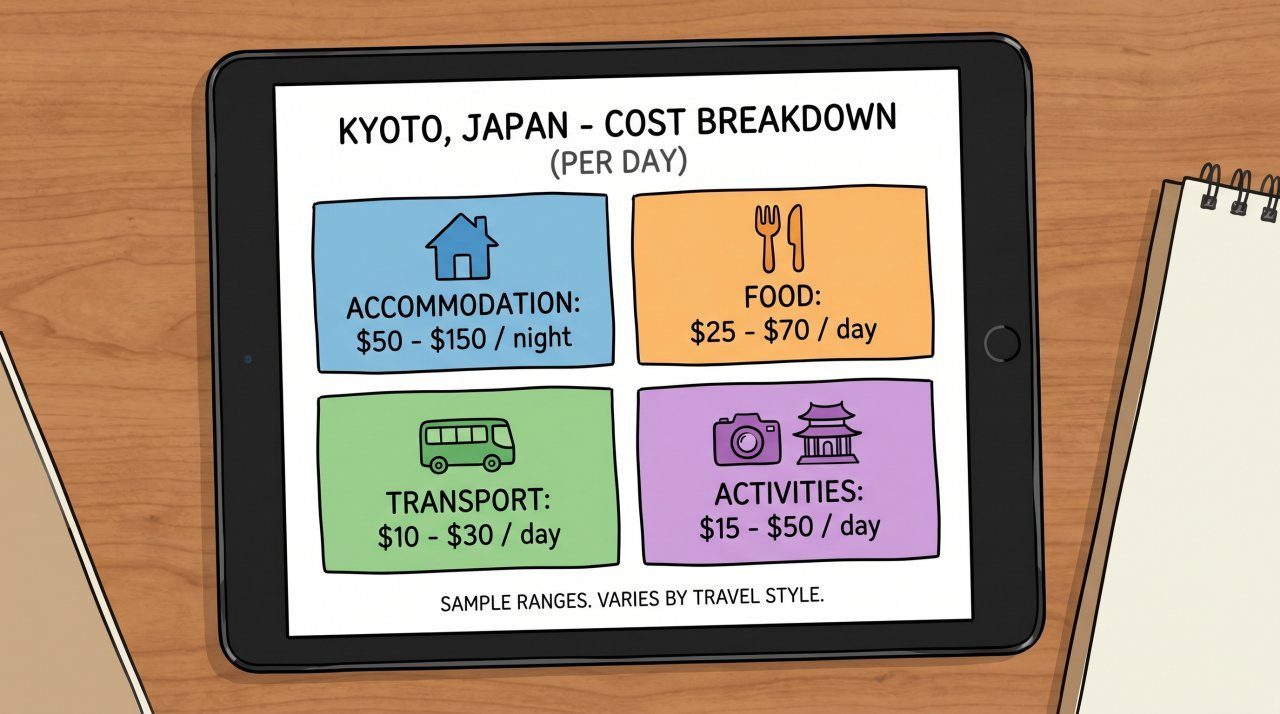
- Downtown vs outskirts: Central hotels cost more, but you might save on rideshares, transit, and time. Out-of-center properties can look cheap until you add $20–$40 a day in transport.
- Parking: Downtown and resort hotels often charge $25–$50 per night. Sometimes it’s cheaper to stay slightly outside the core with free parking and take transit in.
- Airport hotels: Great for one-night stays, but if you’re commuting into the city every day, the savings can evaporate.
When I compare two hotels, I don’t just ask Which is cheaper?
I ask:
- How much will I spend getting to where I actually want to be?
- Is parking included, or can I skip a rental car entirely?
- Is the neighborhood walkable and safe enough that I won’t be paying for rides late at night?
Sometimes the expensive
central hotel is actually the budget choice once you factor in everything else.
7. Fine Print, Payment, and Protection: The Last Things to Check Before You Book
By this point, you’ve probably narrowed it down to a couple of options. This is where I slow down and read the boring stuff that saves me money later.
Cancellation and flexibility
Nonrefundable rates are tempting, but plans change. I compare:
- Deadline for free cancellation.
- Whether I can change dates without penalty.
- How much I’d lose if something goes wrong.
Sometimes paying a bit more for flexibility is cheaper than eating the cost of a fully nonrefundable stay.
Amenities that affect your wallet
I don’t trust amenity lists blindly. Pools, shuttles, and restaurants can be seasonal or under renovation. If something matters to me (like a shuttle that saves me $40 in taxis), I’ll:
- Check recent reviews for mentions.
- Look at the hotel’s own site or call to confirm.
If the amenity isn’t available, I mentally add the cost of replacing it elsewhere. That’s part of a realistic budget hotel cost guide, not just wishful thinking.
Payment method and currency
Using the wrong card can quietly add 3% in foreign transaction fees and lose you valuable protections. I prefer:
- A travel credit card with no foreign transaction fees.
- Strong dispute and trip protection benefits.
- Rewards that actually matter to me (points I’ll use, not random coupons).
For international stays, I also check whether pay at property
means I’ll be charged in local currency or my home currency with a bad conversion rate. I always choose to pay in the local currency when I can.
8. A Simple Checklist to Compare Total Stay Prices
When I’m down to a few options, I run each one through this quick checklist. It keeps me from falling for shiny low nightly rates and helps me see the real cost of cheap hotels at a glance.
- City & timing: Is this a high-cost city in peak season? Could I shift dates or destinations?
- Base math: Nightly rate × nights × rooms.
- Taxes: What’s the actual percentage and total in the booking breakdown?
- Mandatory fees: Resort, destination, facility, service, or cleaning fees per night.
- Parking & transport: Nightly parking cost + estimated daily transport.
- Platform: Aggregator vs hotel site vs OTA – who offers the best total price and terms for the same room?
- Property type: Hotel vs private-room rental vs entire-place rental – which is truly cheaper once all fees are included?
- Flexibility: Cancellation rules and change fees.
- Amenities: Are the money-saving ones (breakfast, shuttle, kitchen, laundry) real and available?
- Payment: Am I using the right card and paying in the right currency?
Do this for each option, and you’ll see the real cheapest stay emerge. It’s rarely the one with the lowest headline rate.
In the end, a cheap
hotel is only cheap if the total cost makes sense for the experience you’re getting. Once you start comparing that way, you stop chasing fake deals and start booking trips that still feel good when the statement arrives.