I used to shrug and say, Well, that’s just airport prices
as I handed over $6 for a bottle of water. Then one day I added up what I’d spent on “just airport prices” over a year. Same with hotel lobbies, resort gift shops, and theme parks. Different locations, same pattern: convenience was quietly wrecking my travel budget.
This isn’t about feeling guilty for buying a snack. It’s about seeing the system for what it is—a setup that nudges you to overspend when you’re tired, rushed, or in vacation mode. Once you understand how these hidden travel costs and markups work, you can decide when convenience is worth it and when it’s just your budget leaking money.
1. Airport Markups: Why a $1 Water Becomes $5
Let’s start where the damage usually begins: the airport. Ever notice how a basic burger and fries can cost 50–100% more airside than in town? It’s not just greed. It’s the business model behind those airport convenience markups.
Airport tenants pay brutal rents and concession fees. Many contracts skim 15–30% of revenue, and once you add commissions and other charges, the effective cut can creep toward 50%. Then there are security-driven costs: every delivery has to be screened, staff need badges, and logistics are complicated. Every extra step costs money, and that cost ends up baked into your sandwich.
Most U.S. airports use a street-price plus
model. On paper, that means prices should match city levels plus maybe 10–15%. In reality, investigations at places like LaGuardia have found chocolate bars and snacks selling for more than double their street price, despite supposed caps. Oversight exists, but it’s patchy at best.
Then there’s limited competition. Many terminals are effectively controlled by one or two big concession companies. You see different brand names, but behind the scenes it’s the same operator. That’s not a real market; it’s a curated monopoly.
So what does this mean for you when you’re comparing airport vs city food prices?
- Expect essentials like water, snacks, and toiletries to be marked up 200–400% compared to supermarkets or online.
- Assume every impulse purchase inside the airport is the most expensive version of that item you’ll see all week.
- Remember that you’re paying for the airport’s business model, not just your own convenience.
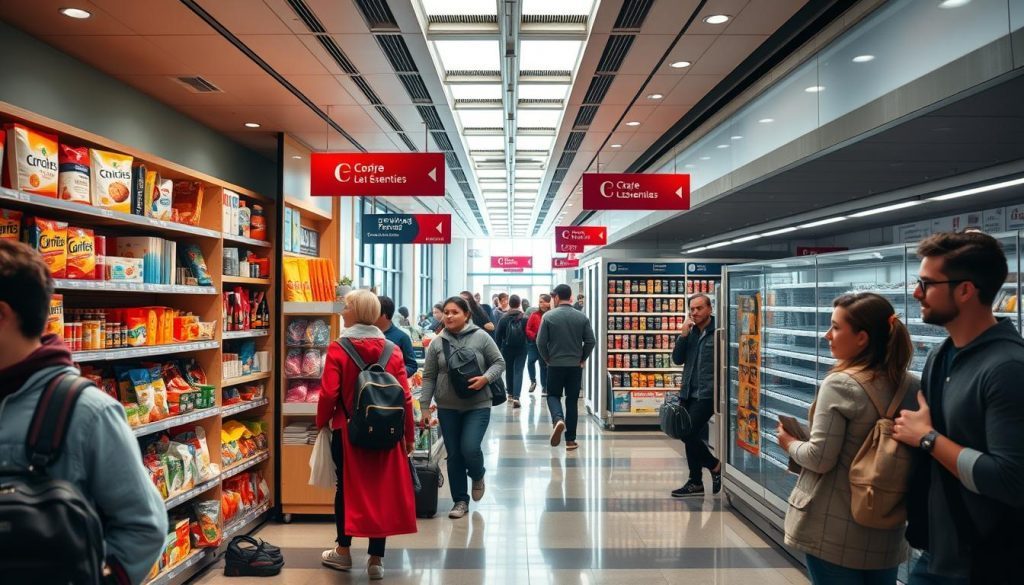
Once I started treating the airport like a high-end mall I didn’t really want to shop in, my behavior changed. I still buy things there—but only when I’ve decided, consciously, that the cost of convenience when traveling is worth it.
2. Duty-Free: Bargain or Expensive Souvenir Trap?
Duty-free has a halo. No tax! International! Shiny! But here’s the catch: no tax doesn’t automatically mean cheap.
Duty-free shops avoid VAT or sales tax, but they operate in some of the most expensive retail spaces on earth. They pay high rents, staff costs, logistics fees, and commissions to the airport. To cover that, they often raise the base price of the product. The tax saving becomes their margin, not your discount.
That’s why electronics, cosmetics, and fragrances are often cheaper online than in duty-free. Travelers compare duty-free prices to full retail plus tax back home, but the real benchmark is usually Amazon, warehouse clubs, or discount chains. When you compare against those, the supposed deal often evaporates.
There are exceptions. Heavily taxed goods—alcohol and tobacco in particular—can genuinely be cheaper duty-free, especially if your home country slaps big sin taxes on them. But even then, you need to factor in:
- Customs limits and duty-free allowances at your destination.
- The risk of paying extra duties or having items confiscated if you exceed those limits.
- Price differences between airports—some hubs are notorious for expensive booze and perfume.
My rule now is simple:
- Alcohol and cigarettes: I check prices at home first. If duty-free is clearly cheaper and within my allowance, I might buy.
- Perfume, cosmetics, electronics, sunglasses: I almost never buy these duty-free. I can usually beat the price online.
- Impulse gifts: I treat them as souvenirs, not bargains. If I’d be happy paying that price in a tourist shop, fine. If not, I walk away.
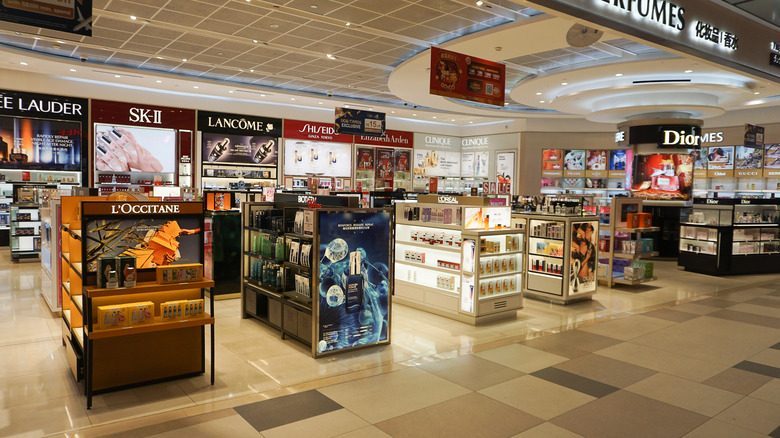
Duty-free started as a clever way to sell high-tax goods tax-free to international travelers. Today, with global e-commerce and discount retailers, its value is far more limited. If you still think of it as a guaranteed deal, you’re playing by rules that no longer exist.
3. Airport Design: How Layouts Nudge You to Spend More
Airports aren’t just transport hubs anymore; they’re carefully engineered shopping environments. Once you notice the tricks, you can’t unsee them.
After security, you’re often funneled into a recomposure zone
. It’s where you put your belt back on, repack your laptop, and breathe. You’ve just survived a mildly stressful process. Now, as you calm down, you’re guided—almost always—straight into retail.
Many airports force you through a mandatory duty-free route. Some even route you to the left so that, as a right-handed person, your dominant hand and field of view are aligned with the shelves. Displays are angled diagonally to catch your eye. Gate announcements are sometimes delayed so you spend more time in the central shopping area instead of sitting quietly at the gate.
On paper, airports talk about enhancing the passenger experience
. In practice, they’re maximizing dwell time in front of shops. The longer you wander, the more likely you are to buy something you didn’t plan to.
Here’s how I push back and avoid airport markups without turning into a miser:
- Set a micro-budget for the airport before I leave home. For example: $10 for coffee and a snack, nothing else.
- Walk with purpose. I go straight to my gate area first, then decide if I actually want to browse.
- Use my phone as a shield. If I’m tempted by a product, I quickly check its price online. The illusion of a bargain usually collapses in seconds.
Once you realize the layout is designed to make you spend, you stop taking it personally. It’s not that you’re bad with money; it’s that you’re walking through a machine built to separate you from it.

4. Essentials and Last-Minute Buys: The Silent Budget Killer
Most of us don’t blow our budget on a single outrageous purchase. We bleed out slowly on small, repeated, last-minute buys.
Think about your last trip. Did you buy:
- A neck pillow at the airport for $20+?
- A charging cable for $30–70?
- Travel-sized toiletries you already had at home?
- Multiple bottles of water and snacks because you were hungry and unprepared?
Research shows airport essentials like water, snacks, toiletries, neck pillows, and cables can be marked up 200–400% compared to city stores or online. Travelers often spend around $30 on airport items that would cost closer to $10 if bought in advance. That’s the kind of hidden travel costs and markups that quietly eat your budget.
Here’s the uncomfortable part: this is the most avoidable category of overspending. You’re not paying for scarcity or a unique experience. You’re paying for forgetting.
What I do now:
- Make a packing list that specifically includes airport traps: reusable water bottle, snacks, travel-sized toiletries, basic meds, charging cable, and a cheap neck pillow if I need one.
- Buy online or at a supermarket a few days before the trip. I get better quality, better prices, and time to read reviews.
- Use an empty bottle and refill it after security at water fountains or dispensers (many airports now have them).
Most travelers—about 84%—end up buying food at airports and spend an average of $38 per trip. Cut that in half by planning ahead and you’ve just freed up money for something you’ll actually remember.
5. Hotels and Resorts: The Lobby Convenience Premium
Airports aren’t the only places where convenience gets weaponized. Hotels and resorts run a similar playbook, just with better lighting and softer music.
Think about:
- Mini-bars with $6 sodas and $12 chocolate bars.
- Lobby shops selling sunscreen for triple the supermarket price.
- Room service with a 20–30% service charge plus delivery fees.
The economics are familiar: high rents for on-site retailers, revenue-sharing deals with the hotel, and a captive audience that doesn’t want to leave the property. You’re paying for the ability to get something without effort.
Then there are the extras that quietly creep in: resort fees and hidden hotel charges for things like “facility use,” “service fees,” or “mandatory gratuities.” They don’t feel like convenience fees, but they’re part of the same story—charging more because you’re already there.
I don’t think you should never use these services. Sometimes arriving late at night, exhausted, and ordering room service is absolutely worth it. But it should be a conscious choice, not a default.
Here’s how I balance it and keep hotel convenience fees from taking over:
- First stop: a nearby supermarket or convenience store. I stock up on water, snacks, and basic toiletries. Ten minutes of effort can save $30–50 over a few days.
- Set a mini-bar rule. Either I ignore it completely, or I decide in advance that I’ll use it once and accept the cost.
- Check the fine print on room service fees and resort charges. Sometimes the service charge plus delivery fee makes a $20 meal cost $35.
Hotels are selling you the fantasy of effort-free living. That’s fine—as long as you remember that every effort-free
decision has a price tag attached.
6. Theme Parks: The Ultimate Convenience Trap
If airports and hotels are convenience traps, theme parks are the full amusement-park version of the same idea. You’re inside a closed ecosystem, often with kids, heat, and long lines. Your willpower is already low. The park knows this.
Common markups include:
- Food and drinks that cost 2–4 times what you’d pay outside.
- Lockers, ponchos, and basic gear priced as if they’re souvenirs.
- On-site hotels that bundle convenience and early access into premium rates.
Again, the structure is similar: high operating costs, revenue-sharing with vendors, and a captive audience. But theme parks add another layer: emotional leverage. You’re there to make memories, especially if you have kids. Saying no to a $12 ice cream feels like you’re saying no to joy.
This is where a lot of theme park budget mistakes happen. You’re tired, the kids are melting down, and suddenly you’re paying top dollar for snacks, drinks, and gear you could have bought at a grocery store for a fraction of the price.
Here’s how I navigate it without turning into the fun police:
- Pre-decide a daily spend on food and treats. For example: $X for lunch, $Y for snacks, and one
yes
item per person. - Bring what you can. Many parks allow you to bring water bottles, snacks, or even full meals if you check the rules in advance. That alone can transform theme park food prices from painful to manageable.
- Separate souvenirs from essentials. I’m okay overpaying for a unique souvenir. I’m not okay overpaying for a poncho I could have bought for $3 at home.
Theme parks are designed to blur the line between special experience
and basic necessity
. Your job is to keep that line sharp in your own head.
7. A Simple Framework: When Is Convenience Worth Paying For?
Convenience isn’t the enemy. Mindless convenience is. The goal isn’t to nickel-and-dime yourself into misery; it’s to spend consciously so your travel budget isn’t destroyed by convenience.
Here’s the framework I use now, whether I’m at an airport, hotel, or theme park:
- Ask: What am I really buying?
Is it time, comfort, safety, or just laziness? Paying extra to avoid a 45-minute detour with luggage might be worth it. Paying extra because I didn’t pack a cable usually isn’t. - Estimate the markup
If I suspect something is 2–4 times the normal price, I treat it as a luxury purchase, not a default expense. That goes for hotel mini bar cost vs store, airport food, and theme park snacks vs grocery store. - Check alternatives
Can I wait until I’m outside the airport? Walk to a nearby store? Use what I already have? If yes, I usually skip the purchase. - Decide in advance where I’ll pay for convenience
Maybe I’ll budget for one airport meal, one room service order, or one theme park splurge. Everything else gets planned around.
The real cost of convenience isn’t just the extra $3 on a bottle of water. It’s the cumulative effect of dozens of small, unexamined decisions. Once you start examining them, something interesting happens: your trips don’t feel cheaper; they feel more intentional.
And that’s the point. You’re not just saving money. You’re taking back control from systems that quietly assume you’re too tired, too rushed, or too distracted to notice what they’re charging.
Next time you’re standing in front of an airport kiosk, hotel mini-bar, or theme park snack stand, ask yourself one question: Am I paying for convenience, or am I paying for not planning?
The answer will tell you exactly what to do.