
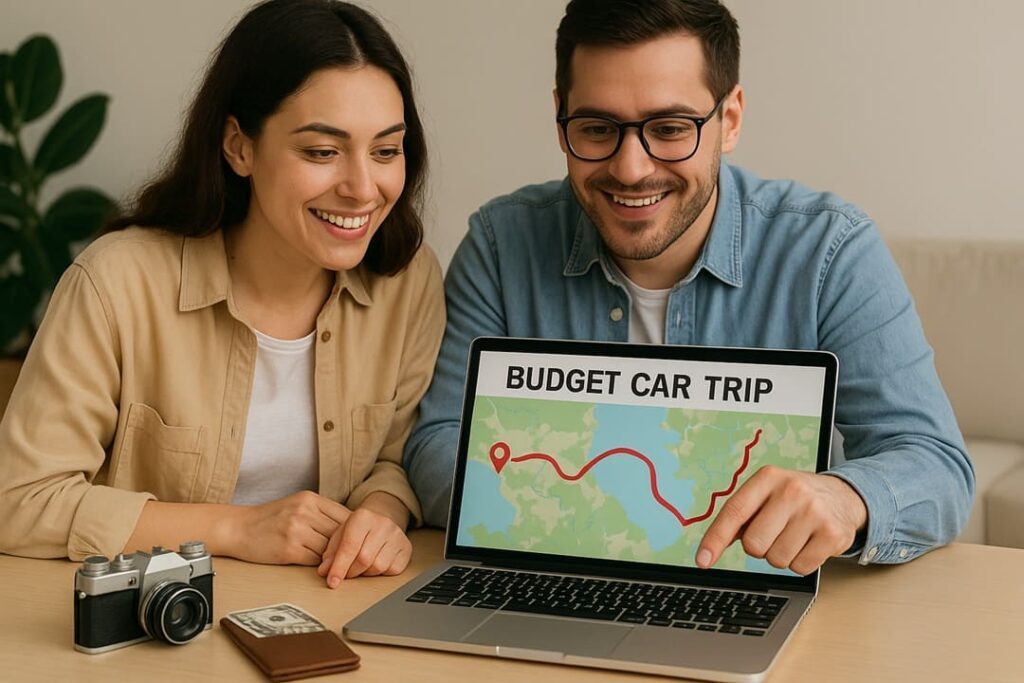
I love a good road trip. I don’t love coming home to a credit card bill that looks like I accidentally financed a small yacht.
If you’ve ever thought, We’ll just wing it and see how much it costs,
you already know how that story ends. Road trips bleed money in tiny, forgettable ways: one extra tank of gas here, a last-minute motel there, a few tolls, a parking fee, a souvenir mug you didn’t need.
This guide is about building a realistic road trip budget that’s simple enough to actually use, but honest enough to handle surprises. No 20-tab road trip budget spreadsheet required. Just a clear plan from rough idea
to keys in the ignition.
1. Start With One Number: How Much Can You Actually Afford?
Before you calculate a single mile, you need one brutally honest number: your total trip budget.
Not the fantasy number. The real one. The amount you can spend without wrecking rent, bills, or savings goals.
Think of it as a quick road trip cost breakdown:
- Current savings you’re willing to use
- + Extra income you’ll earn before the trip
- − Non‑negotiable bills (rent, debt, essentials)
- = Maximum road trip budget
If that number is lower than you hoped, that’s actually a win. You’ve just dodged the classic mistake: planning the dream route first and trying to justify the cost later.
Once you have that total, you can reverse-engineer the trip instead of guessing how to budget for a road trip:
- Shorter trip vs. longer trip
- Closer destinations vs. cross-country
- Camping and motels vs. boutique hotels
Think of this as your budget fence. Everything else happens inside it.

2. Break the Trip Into Daily Costs (So You Don’t Lose Control on Day 3)
A single big number is useless once you’re on the road. You need to know what too much
looks like per day, or your spending will drift by day three.
Here’s the simple structure I use, adapted from several solid road trip travel cost planning guides like The Road Trip Expert and others:
- Decide trip length: How many days on the road?
- Reserve 10–20% for surprises: Pull this out immediately as your road trip emergency fund.
- Divide the rest by days: That’s your daily spending limit.
Example:
- Total budget: $1,500
- Emergency/"surprise" buffer (15%): $225
- Remaining: $1,275
- Trip length: 7 days
- Daily budget: $1,275 ÷ 7 ≈ $180/day
Now split that daily number into three essentials:
- Lodging (hotel, motel, camping, etc.)
- Fuel
- Food (groceries + eating out)
Everything else—attractions, souvenirs, random detours—comes after those three are covered.
Each day, ask yourself: If I spend this now, will I still have enough for gas, a bed, and food?
That one question kills a lot of impulse buys and common road trip budgeting mistakes.
3. Fuel: The Cost You Underestimate First and Regret Fast
Fuel is the sneaky budget killer. It feels small per stop, but over 1,000+ miles it becomes one of your biggest line items.
So I don’t guess. I calculate.
Here’s a simple road trip cost calculator approach (also used in tools like the Road Trip Budget Calculator):
Total Fuel Cost = (Total Distance ÷ MPG) × Price per GallonExample:
- Planned distance (including detours): 1,500 miles
- Your car’s real-world MPG: 28 mpg
- Average gas price: $3.80/gal
Math:
- 1,500 ÷ 28 ≈ 53.6 gallons
- 53.6 × $3.80 ≈ $204
Then I add 10–20% for reality: hills, traffic, detours, and the fact that I’m not a robot driver. So I’d budget around $230–$250 for road trip gas and lodging costs planning.
To keep fuel from blowing up your realistic road trip budget:
- Use apps like GasBuddy or Upside to find cheaper stations along your route.
- Plan your route to avoid heavy stop-and-go traffic where possible; highways are often cheaper than city routes in fuel terms.
- Drive like you paid for the gas: steady speeds, cruise control when safe, no draggy roof box unless you truly need it.
If your route crosses areas with notoriously high fuel prices, don’t average them out. Budget for the higher end. Better to be pleasantly surprised than stuck at a $6/gallon pump.
4. Lodging: Where You Sleep Is Where You Save (or Bleed)
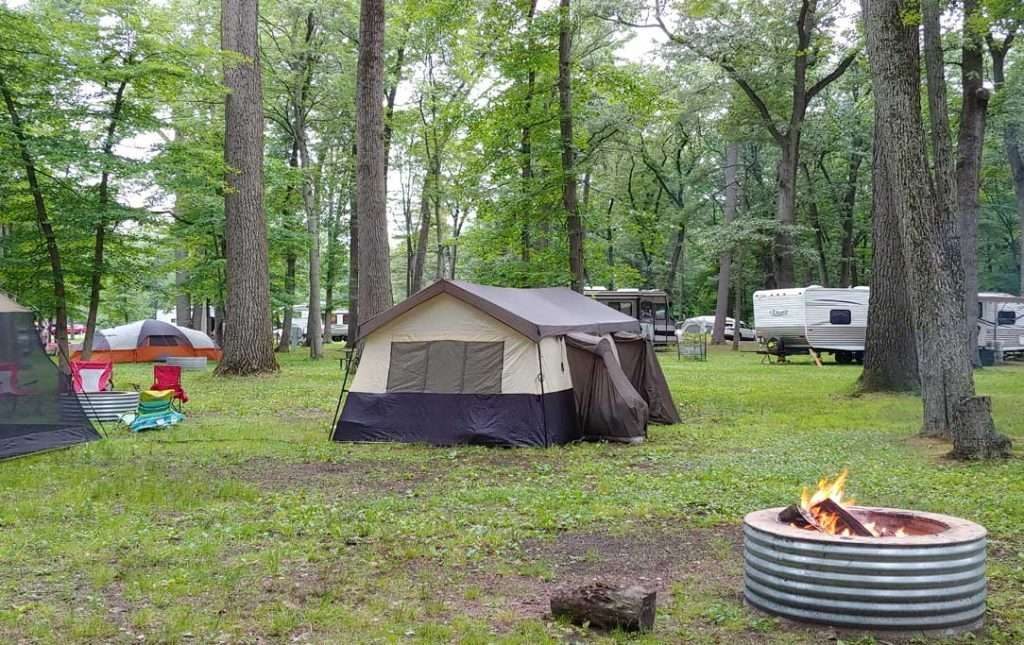
Lodging is usually the largest controllable cost. You can’t move the Grand Canyon closer to your house, but you can absolutely change how you sleep your way there.
I like to decide on a lodging strategy before I book anything:
- All budget: hostels, cheap motels, camping
- Mixed: mostly budget, with 1–2 planned splurge nights
- Comfort-first: mid-range hotels, fewer days on the road
Then I ask a few questions:
- Can I stay just outside the expensive city or attraction?
- Can I mix camping and motels to bring the average down?
- Do I really need to be in the center, or will a 15–20 minute drive save $50+ per night?
Some practical tactics:
- Book ahead in high-demand areas or peak season; last-minute rates can be brutal.
- Stay in smaller towns a bit off the main attraction; same region, lower price.
- Use filters (kitchenette, free breakfast, free parking) to cut food and parking costs.
Instead of asking, Can I afford this hotel tonight?
I ask, If I book this, what does it do to my average nightly cost for the whole trip?
One $220 night might be fine if you balance it with two $80 nights.
5. Food: The Quiet Budget Leak You Actually Control
Food is where people quietly double their road trip daily budget estimate without noticing. Three restaurant meals a day feels normal on vacation, but it adds up fast.
Here’s the rough reality per person, per day:
- Mostly groceries + simple meals: about $15–$25
- Eating out often: easily $40–$60+
I’m not suggesting you live on sad granola bars. I’m suggesting you decide your food pattern in advance so your road trip cost breakdown doesn’t get wrecked by snacks and drive-thrus.
- Breakfast: cheap and simple (hotel breakfast, yogurt, fruit, oatmeal)
- Lunch: picnic or grocery-based most days
- Dinner: where you choose to splurge selectively
Practical moves that actually work:
- Pack a small cooler and hit a grocery store on day 1.
- Keep car-friendly snacks so you’re not hostage to gas station prices.
- Decide in advance:
We’ll eat out X times this trip
and make those meals count.
Food is also where you can adjust mid-trip. Overspent on a hotel one night? Pull back with cheaper meals the next day. That flexibility only works if you’re loosely tracking what you’re spending.
6. Surprise Costs: Build a Buffer So Emergencies Don’t End the Trip
Every road trip has the thing
you didn’t plan for:
- A flat tire or unexpected oil change
- Parking fees and tolls you didn’t notice on the map
- A can’t-miss detour or attraction
- Weather forcing an extra night in a hotel
Instead of pretending these won’t happen, assume they will and fund them on purpose. Hidden road trip costs are only scary when you haven’t planned for them.
My rule: set aside 10–20% of your total trip budget as a separate emergency/misc fund. For longer or more remote trips, I lean closer to 20%.
Then I keep it slightly out of reach:
- On a separate card, or
- In a separate account, or
- As cash I don’t touch unless it’s truly needed
This buffer is not for cute mugs
. It’s for we need a tow truck
or the only open motel is $40 more than we planned
.
The psychological benefit is huge: when something goes wrong, you’re annoyed, not panicked. The trip survives, and your road trip emergency fund did its job.

7. Route and Itinerary: The Hidden Driver of Your Costs
Most people plan their route based on what looks fun on the map. Same. But I also ask, What does this line on the map cost?
Two big truths:
- Longer distance = more fuel, more nights, more food.
- Route choice can change your costs dramatically.
Some examples of smart route decisions:
- Choosing a nearby airport or starting city with cheaper rental cars and fuel, even if it means a slightly longer drive.
- Reordering stops so you’re not backtracking and burning fuel for no reason.
- Balancing scenic detours with your budget: maybe one epic scenic route instead of three.
When I map a trip, I usually:
- Use Google Maps (or similar) to lay out all the must-see stops.
- Reorder them to minimize backtracking.
- Check total mileage and adjust until the distance matches my budget reality.
Then I zoom in and look for low-cost extras: state parks, viewpoints, small towns. Often the best memories are free or cheap; you don’t need to pay for every experience to feel like the trip was worth it.
If you’re comparing road trip cost vs flying, this is where the math happens: add up fuel, lodging, food, and a share of car wear-and-tear, then compare it to flights plus local transport. Sometimes the drive wins on money, sometimes it wins on experience.
8. Keep It Simple on the Road: Tracking Without Killing the Vibe
A budget only works if you can actually follow it while you’re tired, hungry, and 200 miles from home.
I don’t log every cent. I track just enough to know if I’m on target and to spot unexpected expenses on a road trip before they snowball.
- At the end of each day, I quickly note what we spent on fuel, lodging, food, other.
- I compare that to the daily budget and adjust the next day if needed.
Traveling with friends? Use a bill-splitting app like Splitwise so one person can pay for gas, another for lodging, and it all evens out later. It keeps money conversations from getting weird.
For road trip expense tracking tips, the mindset that works best for me is this:
The budget is a guide, not a prison.
If something amazing comes up that blows one day’s budget, I don’t automatically say no. I ask, Am I willing to save in other areas over the next few days to make this worth it?
If yes, I do it—on purpose, not by accident.

Putting It All Together: From Spreadsheet to Suitcase
If you want a quick checklist before you hit the road, here’s the condensed version of a realistic road trip budget:
- Set a total trip budget you can actually afford.
- Pull out 10–20% immediately for emergencies and surprises.
- Divide the rest by your number of days to get a daily budget.
- Estimate fuel using distance, MPG, and gas price—then add a buffer.
- Decide your lodging strategy (budget, mixed, or comfort-first) and aim for an average nightly cost.
- Choose a food pattern (groceries + selective eating out) and stick roughly to it.
- Map your route to minimize backtracking and understand how distance affects cost.
- Track spending in broad categories each day and adjust as you go.
Do that, and your budget stops being a guilt trip and becomes what it should be: a quiet safety net in the background while you enjoy the actual trip.
The goal isn’t to spend as little as possible. It’s to spend intentionally, so you come home with great stories instead of financial regret.