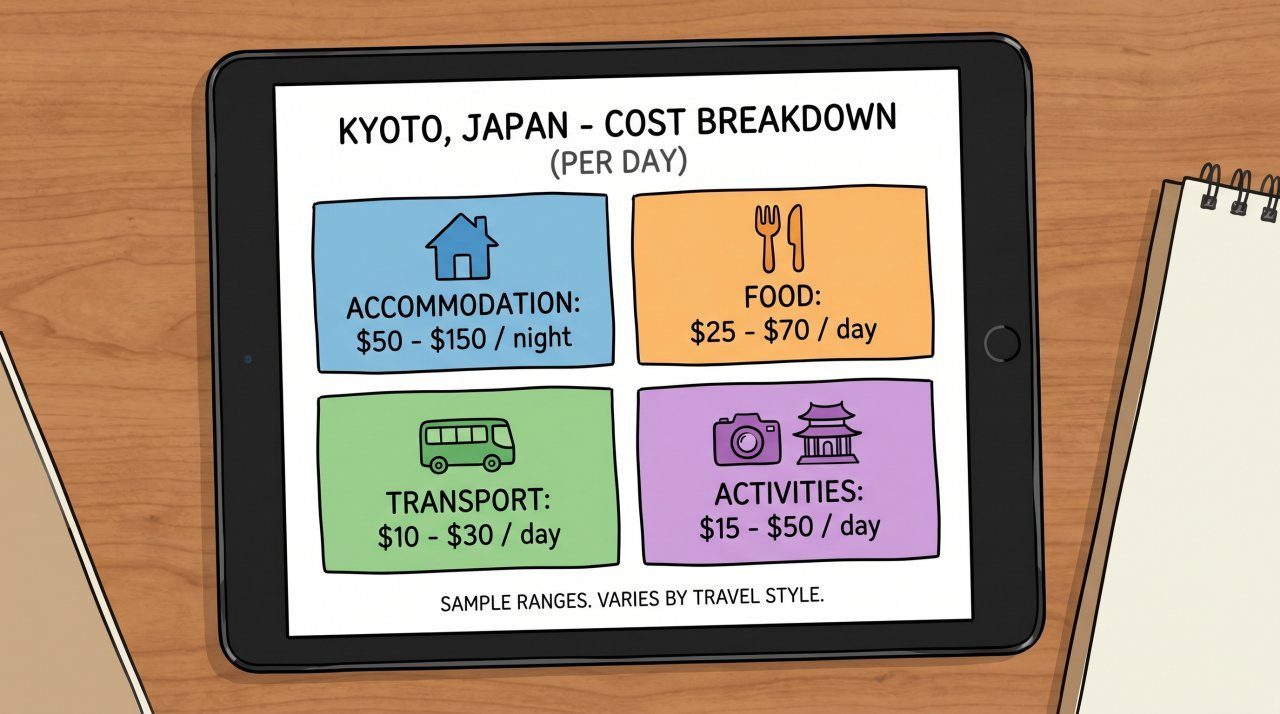

I used to assume self-catering was always cheaper than a hotel. Then I started adding up the receipts: supermarket runs, Ubers to big-box stores, the extra hour here and there spent cooking and cleaning instead of actually being on holiday. The gap shrank fast.
This isn’t an argument for or against self-catering. I use both. It’s a reality check. If you only compare nightly rates, you’ll almost always get the wrong answer. The real question is:
What does this stay actually cost me in money, hassle, and time I could spend enjoying the trip?
Let’s break that down.
1. Nightly Rate vs Total Trip Cost: Are You Really Saving?
When I compare a self-catering place with a hotel now, I don’t start with the nightly price. I start with a simple formula:
Total Trip Cost = (Accommodation + Food + Transport + Fees) − (Included Perks)
Most of us only look at the first number in brackets. That’s how we get fooled when we compare self catering vs hotel costs.
- Self-catering often looks cheaper per night, especially for families and longer stays. You get more space, a kitchen, maybe laundry. Articles on European rentals and Costa del Sol stays back this up: for a week or more, apartments and villas can undercut hotels once you share the cost across a group (Rick Steves, TravelSpain). That’s where a self-catering apartment cost breakdown usually looks good.
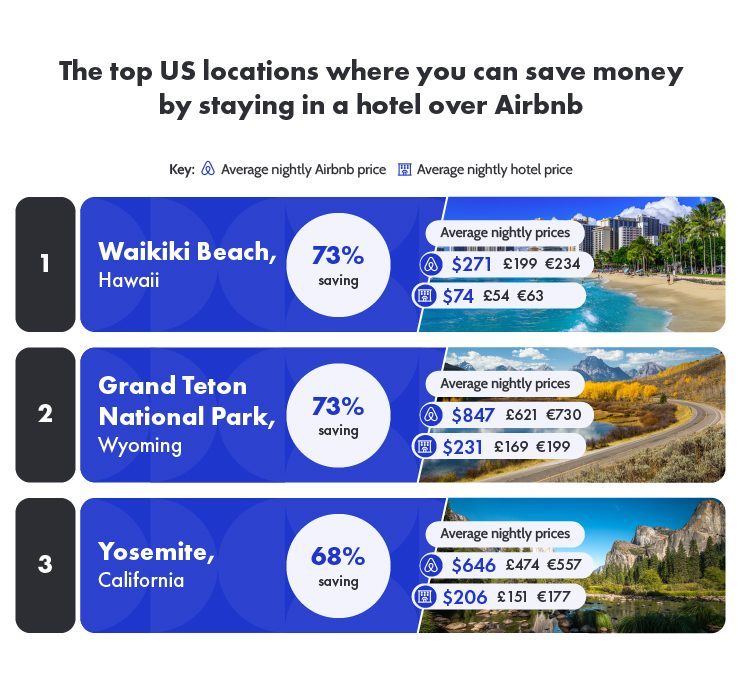
- Hotels can quietly win on short trips. Fixed cleaning and service fees on rentals spread badly over 2–3 nights. One study of 80 destinations found hotels were dramatically cheaper than Airbnbs in places like Waikiki and Yosemite, sometimes by 45–70% or more (Bounce). In a quick self catering vs hotel price comparison, hotels can surprise you.
So I ask myself:
- How many nights? Under 3–4 nights, hotels often win once you factor in fees, hidden costs of self catering stays, and your time.
- How many people? Solo or couple? A hotel room may be simpler and cheaper. Family of four or a group of six? Self-catering starts to shine.
- What’s included? Breakfast, shuttles, loyalty perks, late checkout in a hotel vs kitchen, laundry, and space in a rental.
If you don’t run this quick value check, you’re not comparing like with like. You’re comparing a headline price with a full-life cost.

2. Groceries vs Restaurants: When Does Cooking Actually Save Money?
Self-catering is sold on one big promise: You’ll save a fortune by cooking.
Sometimes that’s true. Sometimes it’s a myth.
Here’s what I’ve learned from my own trips and from the research about holiday food costs on self-catering stays:
- Groups and families really can save. You’re buying ingredients in bulk and splitting costs. One article notes that self-catering groups often cut food spend by around 20% compared with fully catered or all-inclusive stays, especially when they use local markets and cook simple meals. That’s where a realistic self catering grocery budget pays off.
- Solo travellers often don’t. Small portions, leftover ingredients, and the cost of basic staples (oil, spices, condiments) can make restaurant or ready-made food more sensible. One guide bluntly says that for solo travellers, buying prepared food is often cheaper and easier than self-catering.
- Realistic cooking patterns matter. Families rarely cook every meal. The sweet spot is usually: breakfast in, snacks in, maybe a couple of simple dinners, and then enjoy eating out for the rest. That’s where the savings are without turning your holiday into a catering job.
I use a quick mental check:
- Breakfast in is almost always worth it. Cereal, fruit, coffee, toast. Cheap, fast, and you avoid the morning scramble.
- One main meal out per day keeps you sane and lets you enjoy the local food scene.
- Snacks and drinks from the supermarket save a surprising amount, especially with kids.
If your self-catering plan involves elaborate recipes, multiple supermarket trips, and cooking three times a day, ask yourself honestly: Is this a holiday or a relocation?
3. The Transport Trap: Cheap Apartment, Expensive Commute
This is the hidden cost almost everyone underestimates: where your self-catering place is.
That cheaper apartment 30–40 minutes outside the centre looks great on the booking site. But then:
- You’re paying for daily metro/bus tickets or rideshares for everyone.
- You’re losing 1–2 hours a day commuting back and forth.
- You’re less likely to pop back for a rest, a nap for the kids, or a quick change.
Families feel this most. One value framework for Airbnb vs hotels points out that a cheaper rental outside the centre can lose its advantage once you factor in transit fares, time, and the friction of moving kids around the city. Self catering transport costs can quietly eat into any savings.
When I compare options now, I literally write this down:
- Hotel in centre: higher nightly rate, but I can walk almost everywhere, maybe use a free shuttle, and I’m close to restaurants.
- Self-catering further out: lower nightly rate, but I add daily transport costs, time, and the mental load of planning every move.
Then I ask:
Would I pay an extra £20–£40 a night to get 1–2 hours of my day back and avoid transit stress?
Often, the answer is yes. Sometimes, especially for longer stays where I’m not sightseeing every day, the answer is no. But I want that to be a conscious choice, not an accidental one.
If you’re doing self catering without a car, this calculation matters even more. A cheap place in the suburbs plus daily taxis can end up costing more than a central hotel.
4. Your Time vs Hotel Services: What Is Convenience Worth to You?
Self-catering doesn’t just cost money. It costs time and energy. That’s the part we rarely price in when we talk about self catering vs hotel costs.
In a self-catering stay, someone has to:
- Plan meals
- Shop for groceries (often more than once)
- Cook
- Wash dishes
- Take out trash and recycling
- Sometimes do laundry and basic cleaning
On a hotel stay, a lot of that disappears. You get:
- Daily housekeeping (beds made, towels changed, bathroom cleaned)
- On-site dining or room service
- Concierge help for bookings, directions, and problems
- Security and front desk if something goes wrong at 2 a.m.
One family-focused article put it well: in a hotel, parents outsource a big chunk of the domestic workload. In a rental, that workload comes with you. You might save money, but you pay in effort.
I like to put a rough value on my time. For example:
- If self-catering saves me £40 a day but costs me 1.5 hours of shopping, cooking, and cleaning, is that worth it?
- If a hotel costs more but gives me back those 1.5 hours to explore, rest, or spend with my family, how much is that worth to me?
That’s the time cost of self catering holidays that rarely shows up in a spreadsheet.
There’s no universal answer. Some people genuinely enjoy cooking on holiday and find it relaxing. Others (especially the default cook in the household) just end up working in a different kitchen.
Be honest about which one you are.
5. Space, Sleep and Sanity: Who Actually Needs the Extra Room?
Space is where self-catering usually wins hard. Apartments and houses give you:
- Separate bedrooms
- A living area to hang out in
- Somewhere to work if you’re remote or on a workation
- Outdoor space, gardens, or a pool in some cases
For families, this isn’t a luxury. It’s survival. Kids can sleep in one room while adults talk, read, or watch a film in another. Bedtime conflicts drop. Everyone’s sleep quality improves. That alone can make a rental worth it.
Hotels, on the other hand, offer:
- Predictable standards and safety
- On-site amenities like gyms, pools, and business centres
- Quieter, more controlled environments in well-run properties
So I ask myself:
- Do we actually need multiple rooms? If yes, a self-catering place or apartment-style stay often beats booking two hotel rooms.
- How important is sleep? If I’m travelling with kids or working remotely, I prioritise space and quiet over almost everything else.
- How much time will we spend indoors? If we’re out all day and just sleeping there, a simple hotel room might be enough.

6. Rules, Risk and Flexibility: What Happens If Plans Change?
Another hidden cost: how locked in you are.
Self-catering stays often come with:
- Minimum night requirements
- Stricter cancellation policies
- Security deposits
- Cleaning fees and sometimes extra charges for linen or mid-stay cleaning
Hotels usually offer:
- More flexible cancellation (especially if you book direct or choose a flexible rate)
- No cleaning fees
- Loyalty perks like free nights, upgrades, or breakfast
If your plans are uncertain, a strict rental policy can wipe out any savings the moment you need to cancel or change dates. For families, this is a big deal. Kids get sick. Work changes. Life happens.
Before I book a self-catering place, I now check:
- Cancellation terms: How late can I cancel without losing everything?
- House rules: Quiet hours, check-in windows, extra guest policies.
- Fees: Cleaning, service, local taxes, deposits. These are the self catering hidden fees and extras that can sting.
Then I compare that with a hotel’s flexibility. Sometimes I’ll pay a bit more for a hotel simply because I know I can cancel up to 24–48 hours before arrival without drama.
7. How to Decide: A Simple Checklist for Your Next Trip
Here’s the framework I actually use now when I’m choosing between self-catering and a hotel, or even self catering vs all inclusive.
Step 1: Trip basics
- How many nights?
- How many people?
- What’s the main purpose? (Sightseeing, work, family visit, pure relaxation?)
Step 2: Compare total value, not just price
I mentally score each option from 1–5 on:
- Space
- Sleep quality
- Food flexibility
- Location convenience
- Safety and support
- Amenities (pool, gym, laundry, kitchen)
- Flexibility (cancellation, check-in/out)
Then I divide that “value score” by the real total cost (accommodation + food + transport + fees). Whichever gives me more value per pound/euro/dollar usually wins.
Step 3: Be honest about your energy
- Who will actually cook and clean?
- Will that person still feel like they’re on holiday?
- Is saving £20–£40 a day worth the extra work for this particular trip?
This is where the time cost of self catering holidays really shows up. On some trips, the answer is yes. On others, not a chance.
Step 4: Decide what you’re optimising for
For this trip, is your top priority:
- Saving money? Lean towards self-catering, especially for longer stays and groups, but watch transport, cleaning and supplies costs, and other hidden extras.
- Saving time and effort? Lean towards hotels with breakfast and a good location.
- Space and comfort? Lean towards apartments or larger suites.
- Flexibility and low risk? Lean towards hotels with generous cancellation.

8. The Bottom Line: Don’t Let the Kitchen Fool You
A kitchen can be a money-saver. It can also be a very expensive prop if you barely use it, or if using it turns your holiday into unpaid labour.
Self-catering is brilliant when:
- You’re staying longer than a few nights
- You’re a family or group who will actually share cooking and cleaning
- You’ll use the space and kitchen daily
- The location doesn’t punish you with long, costly commutes
Hotels are worth the extra when:
- Your stay is short
- You value convenience and support over DIY
- You want flexibility to change plans
- You’d rather spend your time exploring than washing dishes
The key is to stop asking Is self-catering really cheaper than a hotel?
and start asking:
For this specific trip, with these people, in this place, what gives us the best balance of cost, comfort, and time well spent?
Once you answer that honestly, the choice usually becomes obvious.