I love a cheap fare as much as anyone. I mix and match airlines, I play with different airports, and I’ve booked more than my share of “clever” self-made connections. Over time, though, I’ve learned something the hard way: separate tickets plus tight layovers can quietly turn into the most expensive mistake of your trip.
If you’ve ever thought, It’s the same airport, I’ll be fine with 55 minutes
, this is for you.
1. Separate Tickets: The Small Detail That Changes Everything
Let’s start with the core problem. When you book flights on separate tickets, you’re creating separate contracts. Each airline is only responsible for getting you from A to B on their ticket. What happens after that? Not their problem.
On a single through ticket, your flights share one booking reference (PNR). If you miss a connection because the first flight was late, the airline usually has to help. They’ll rebook you on the next available flight, sometimes automatically. You’re “protected”.
On separate tickets, it’s the opposite. If your first flight is delayed and you miss the second, the second airline can calmly say:
We had your seat. You didn’t show up. You’ll need to buy a new ticket.
And legally, they’re usually right. Contracts of carriage and fare rules often spell this out in painful detail. You just don’t notice it until you’re standing at the counter with your credit card in your hand, suddenly learning the risks of separate flight tickets the hard way.
Key takeaway: If your flights are not on one ticket, assume no one is responsible for your connection except you.
2. Tight Layovers: Why 60 Minutes on Paper Isn’t 60 Minutes in Real Life
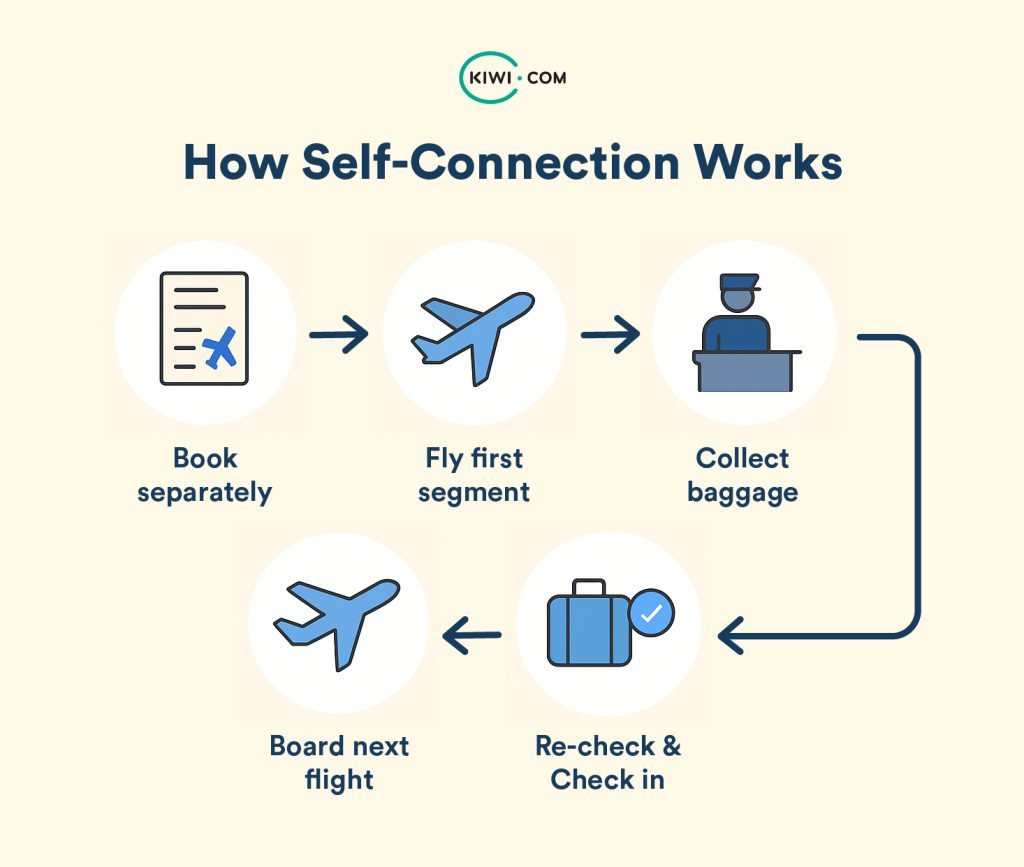
Most people underestimate how long a self-connection really takes. On a protected connection, you walk off one plane and head straight to the next gate. On a self-connection, you often have to:
- Deplane (sometimes via stairs and a bus gate)
- Clear immigration (if international)
- Wait at baggage claim
- Re-check your bag at the next airline’s counter
- Clear security again
- Find your gate (possibly in another terminal)
That “easy” 1-hour layover suddenly looks ridiculous.
From experience and what many guides suggest, a safe connection time on separate tickets is much longer than most people think:
- Domestic self-connection: 2–3 hours minimum, more if you’re checking bags.
- International self-connection: 3–6 hours, depending on immigration, airport size, and time of day.
Could you make a 90-minute self-connection? Maybe. People do it. But ask a better question: What happens if you don’t?
Are you okay buying a last-minute walk-up ticket at 3–5x the price? Losing a non-refundable hotel night or tour? That’s where the hidden costs of separate flight bookings really show up.
Key takeaway: With separate tickets, a “tight” layover isn’t brave. It’s gambling with your own money.
3. Budget Airlines: Cheap Fares, Ruthless Rules
Now add budget airlines to the mix. This is where things get interesting—and risky.
Low-cost carriers (Ryanair, easyJet, Spirit, AirAsia, etc.) are built on a simple model: low base fares, strict rules, lots of fees. Many of them don’t do through-ticketing at all. That means:
- Your long-haul flight and your budget hop are almost always on separate tickets.
- If your long-haul is late, the budget airline usually won’t help you.
- They may charge high same-day change fees or simply make you buy a new ticket.
On top of that, budget airlines often have:
- Brutal baggage rules – pay for every bag, every kilo, every mistake.
- Early check-in cutoffs – miss the 45–60 minute deadline and you’re done.
- Limited customer service – fewer agents, long lines, and not much flexibility.
So that “genius” plan of flying a full-service airline into a hub and then hopping on a cheap low-cost carrier? It can work. But if your first flight is delayed by 90 minutes, you might be buying a brand-new ticket at the airport, plus paying baggage fees all over again.
This is where many travelers get burned by budget airline tight connection mistakes and discover the hard way that there’s usually no protection on separate flight bookings.
Key takeaway: Budget airlines are fine when everything goes right. On separate tickets, they can be brutal when things go wrong.
4. Baggage, Immigration, and the Hidden Time Sink
If you’re traveling carry-on only, self-connections are much safer. The moment you check a bag, the risk curve spikes.
Here’s why checked baggage is such a problem on separate tickets:
- No guaranteed through-check: Even if it’s the same airline, they may refuse to tag your bag to the final destination on separate tickets.
- Full arrival cycle: You must collect your bag, clear customs (if international), exit, then re-check it.
- Check-in cutoffs: Many airlines close bag drop 45–60 minutes before departure. If your first flight is late, you can arrive at the airport and still be “too late” to check your bag.
Internationally, it’s even more intense. In many countries, you must enter the country fully to collect your bag, even if you’re just transiting on separate tickets. That means you need:
- Legal right to enter (visa, ESTA, etc.)
- Enough time to clear immigration queues
- Enough time to re-clear security on departure
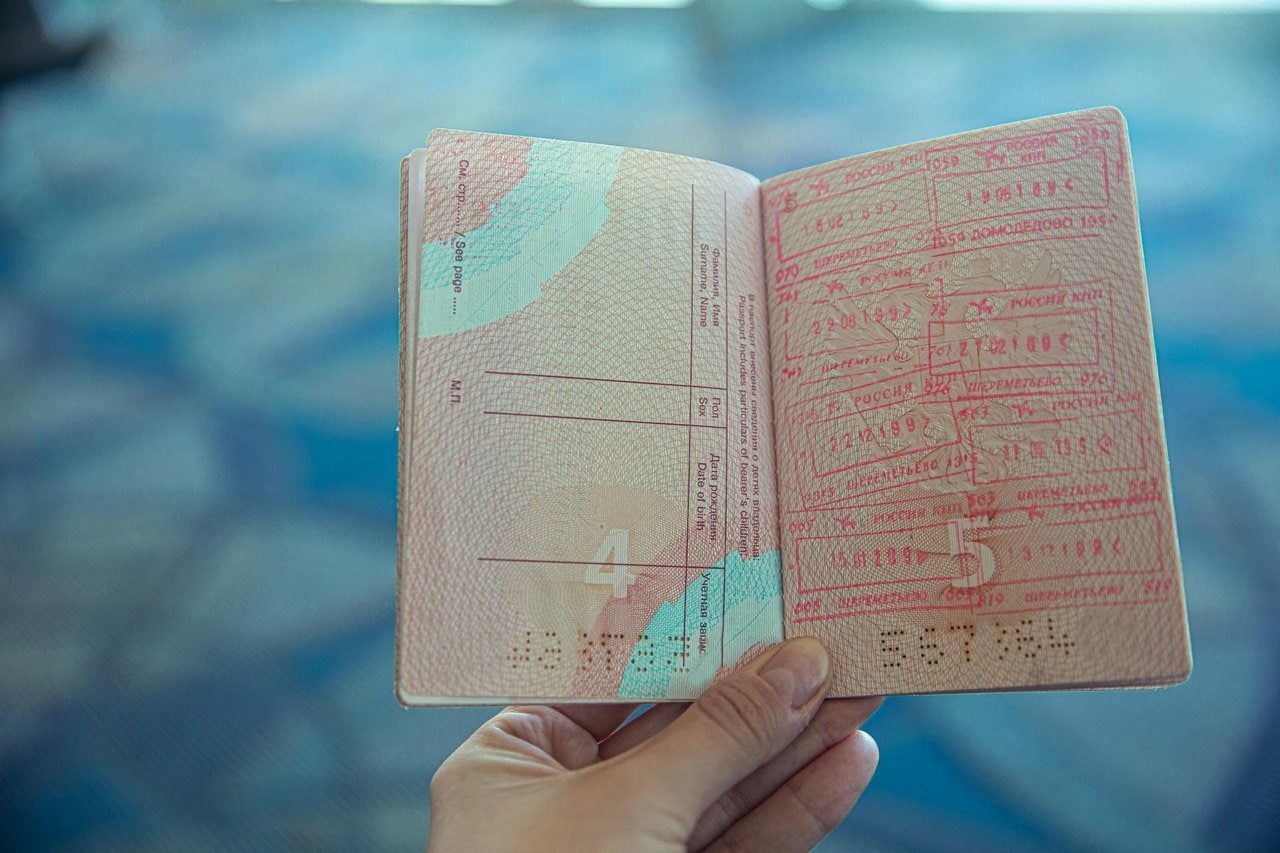
If you don’t have the right visa, your entire self-connection can collapse at the border. I’ve seen people stuck in limbo because they assumed they could “just stay airside” on separate tickets. Often, you can’t.
This is one of the easiest travel mistakes with budget airlines and separate tickets: underestimating how long baggage and immigration really take.
Key takeaway: If you’re checking bags or crossing borders on separate tickets, treat your connection like two completely separate trips. Time, visas, and baggage rules all matter.
5. When Separate Tickets Make Sense (and When They Really Don’t)
Separate tickets aren’t always bad. Sometimes they’re smart. The trick is knowing when you’re being strategic and when you’re just playing with fire.
Separate tickets can make sense when:
- You’re traveling with carry-on only.
- You build in generous buffers (3+ hours domestic, 4–6 hours international).
- You’re comfortable absorbing a missed connection cost if things go wrong.
- You want a deliberate stopover (e.g., a day in Reykjavik, Dubai, or Singapore).
- You’re combining an award ticket with a separate positioning flight.
Separate tickets are a bad idea when:
- You’re traveling with kids, seniors, or mobility issues.
- You have tight layovers and no flexibility.
- Your budget can’t handle buying a last-minute replacement ticket.
- You need to check bags and can’t risk delays.
- You’re unsure about visa requirements for the transit country.
Ask yourself bluntly: If my first flight is delayed by three hours, what happens to my trip?
If the honest answer is I’m screwed
, then the savings probably aren’t worth it. That’s the real difference between a separate ticket vs through ticket: one gives you a safety net, the other doesn’t.
Key takeaway: Separate tickets are a tool, not a default. Use them intentionally, not just because a search engine showed a cheaper price.
6. The Fine Print: Protection, Compensation, and False Assumptions
Another hidden risk: many travelers assume laws and protections will save them. Sometimes they do. Often they don’t.
A few realities:
- Single ticket vs separate tickets: EU Regulation 261 and similar protections are usually designed around a single journey on one ticket. Split that journey into separate tickets, and your rights can shrink dramatically.
- U.S. rules: In the U.S., airlines are not generally required to compensate you for missed connections unless they cancel or significantly change your flight and you choose not to travel. Even then, that’s usually a refund, not a free new ticket on another airline.
- Automated rebooking: Those handy auto-rebook tools many airlines use? They often don’t work if your onward flight is on a separate ticket.
Travel insurance can help with a missed connection on separate tickets, but only if:
- You actually bought a policy that covers missed connections on separate bookings.
- The cause of the delay is a covered reason (weather, mechanical, etc.).
- You kept documentation and follow the claim process.
Some policies or add-ons act like a kind of budget airline connection insurance, but you have to read the details. “Connection protection” can mean very different things depending on the provider.
Key takeaway: Don’t assume “the law” or “insurance” will magically fix a risky itinerary. Read the fine print before you book, not after you miss your flight.
7. How I Now Plan Self-Connections (So They Don’t Ruin My Trip)
Over time, I’ve built a simple personal rulebook for self-connecting and using budget airlines. You can adapt it to your own risk tolerance.
Before booking:
- I always check if I can get a single protected ticket first, even if it’s a bit more expensive.
- If I do go separate, I assume zero protection between flights.
- I look up on-time performance for the airlines I’m considering. Chronic delays + separate tickets = bad idea.
When choosing layovers:
- I treat self-connections like two separate trips that happen to be on the same day.
- I add enough buffer that a 2–3 hour delay on the first flight doesn’t automatically kill the second.
- For critical trips (weddings, cruises, big events), I often fly in a day early if I’m on separate tickets.
With baggage and airports:
- I go carry-on only whenever I’m self-connecting, especially with budget airlines.
- If I must check a bag, I plan around check-in cutoffs and assume I’ll need extra time.
- I look up the airport layout and terminals in advance, so I know if I’m facing a 5-minute walk or a 40-minute shuttle.
Backup plan:
- I mentally price in the cost of a backup ticket on the second leg. If that number makes me sweat, I rethink the itinerary.
- For complex trips, I consider travel insurance that explicitly covers missed connections on separate tickets.
This approach doesn’t remove the connecting flights on different airlines risk, but it makes it manageable. A delay becomes an inconvenience, not a disaster that leaves you stranded at an airport on separate tickets.
Key takeaway: Self-connecting and using budget airlines isn’t about being fearless. It’s about being honest with the risks and designing your trip so a delay is annoying, not trip-ending.

8. The Real Question to Ask Before You Click “Book”
When you see that tempting itinerary—two separate tickets, a tight connection, and a price that looks too good to ignore—pause for a moment and ask yourself:
If the first flight is delayed and I miss the second, am I still okay with this decision?
If the honest answer is yes—because you’ve built in time, you’re traveling light, and you can afford a plan B—then go for it. You’re using separate tickets as a smart tool, not walking into a trap.
If the answer is no, then that “cheap” ticket isn’t really cheap. It’s just hiding the true cost in risk and stress. That’s how tight connection planning mistakes turn into blown budgets and ruined trips.
In the end, the goal isn’t to avoid budget airlines or separate tickets forever. It’s to use them on your terms, not theirs.
Pay a little more attention now, and you’re far less likely to pay a lot more money later.