
I love a good long weekend as much as anyone. But after years of tracking every flight, hotel, and coffee on the road, I’ve noticed something uncomfortable: those “cheap” 3-day getaways can quietly burn through more money than a proper week-long vacation.
If you’ve ever come home from a short trip thinking, How did I spend that much in just three days?
you’re not imagining it. The math really can work against you.
Let’s break down the real cost of a short trip vs a full vacation, where weekend getaways hide their expenses, and when a longer break actually gives you better value for your travel budget.
1. The Fixed-Cost Trap: Why Flights Punish Short Trips
Every trip has two types of costs:
- Fixed costs – you pay them once per trip (flights, visas, airport transfers, some gear).
- Daily costs – you pay them per day (accommodation, food, local transport, activities).
Short trips are where those fixed costs get brutal.
Here’s a simple example, using the kind of averages you’ll see in tools like the Sum vacation budget calculator when you’re doing a 3 day trip cost breakdown:
- Round-trip flight: $500
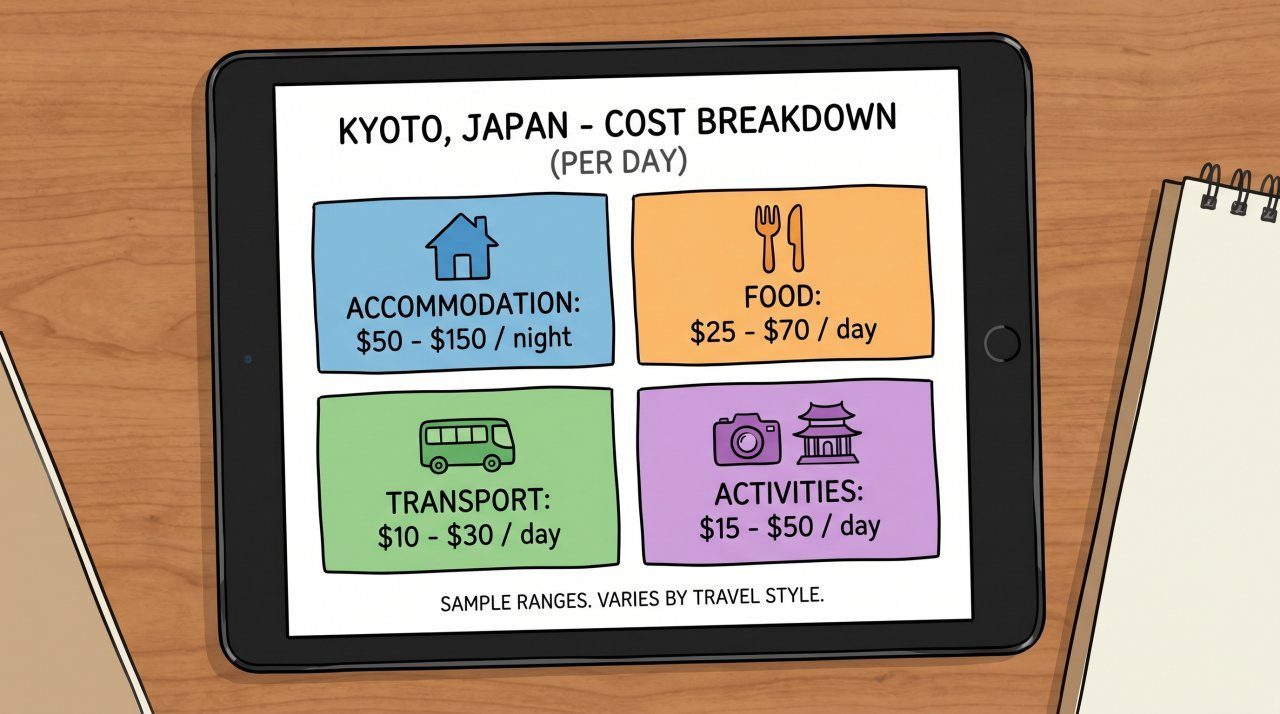
- Mid-range daily spend (hotel, food, local transport, activities): $200/day
Now compare a short city break with a longer stay:
- 3-day trip: $500 (flight) + $600 (3 × $200) = $1,100
- 7-day trip: $500 (flight) + $1,400 (7 × $200) = $1,900
On the 3-day trip, the flight is about 45% of your total cost. On the 7-day trip, it drops to around 26%. Same flight. Same destination. Completely different value.
That’s the core issue in the short trip vs full vacation cost debate: when you squeeze a destination into a weekend, you’re spreading those big fixed travel costs (especially flights and airport transfers) over fewer days. Each day becomes more expensive, even if the total trip looks smaller on paper.
Before you book a short break, ask yourself: Is the flight (or train) cost reasonable for the number of days I’ll actually be there?
If the answer feels off, you’re probably in the fixed-cost trap.
2. The Packing & Gear Premium: Tiny Trip, Big Purchases
Short trips are supposed to be simple. In reality, they often trigger rushed, last-minute spending that wrecks your travel cost efficiency per day.
You know how it goes: you book a quick getaway, then suddenly realize you need
a new carry-on, a better duffel, travel-sized everything, maybe even a new outfit because it’s just a weekend, I want to look good.
That’s how a 3-day trip quietly picks up a gear premium.

Here’s where short trips get sneaky:
- One-time purchases – luggage, daypacks, travel pillows, adapters, toiletries, shoes.
- Last-minute markups – airport toiletries, overpriced chargers, emergency clothing.
- Single-use mindset – buying things
just for this weekend
instead of for long-term travel.
On a longer vacation, those same purchases are spread over more days and more trips. On a 3-day break, they sit like a heavy lump in your budget and make the cost per day of a short vacation look much worse.
How I keep this in check:
- I keep a small, pre-packed
go bag
with reusable travel-size containers, cables, and basics. - I only buy gear that makes sense for multiple future trips, not just the next weekend.
- If I catch myself saying,
It’s only three days, I’ll just grab it at the airport,
I pause. That sentence is expensive.
3. The Weekend Markup: Paying Peak Prices for Fewer Nights
Short trips often mean weekends. Weekends often mean peak pricing.
Hotels, Airbnbs, and even some attractions quietly charge more for Friday and Saturday nights. When your “short holiday” is basically a Friday–Sunday sprint, you’re paying the highest nightly rates with no cheaper midweek nights to balance them out.
Current travel behavior backs this up: more people are slicing their vacations into micro-breaks and weekend stays, and over 40% of hotel searches are now for just one night, according to The Traveler. That demand keeps weekend prices high and makes the true cost of weekend trips easy to underestimate.
Now layer on:
- Event surcharges – concerts, festivals, sports games, conferences.
- Minimum stay rules – some places charge more if you don’t meet their ideal length.
- Last-minute booking – short trips are often spontaneous, and late bookings rarely get the best deals.
So your 2–3 nights might be the most expensive nights of the week, in the most expensive booking window. That’s the short vacation cost trap in action.
When a short trip makes sense despite the markup:
- You’re staying with friends or family (no lodging cost).
- You’re using points or miles that cover the peak rates.
- You’re driving somewhere nearby and avoiding flights entirely.
If none of those apply, it’s worth asking: Would I rather do one longer, off-peak trip instead of three expensive weekends?
For many people, one long vacation is better value than a string of short breaks.
4. The Time-Value Problem: Travel Days That Don’t Feel Like Vacation
Here’s the part we rarely price in when we compare short trips vs full vacations: your time.
On a 3-day trip, you might spend:
- Half a day getting to the airport, flying, and transferring.
- Another half day doing the same in reverse.
That’s one full day of logistics for two full days of actual vacation. You’re paying full price for days that don’t feel like a break.
Compare that to a 10-day trip with the same travel time. Suddenly, those logistics are spread over many more days of real rest and exploration, and the cost per day of the whole trip drops.
Short trips also tend to bleed into work:
- You leave straight after work, already tired.
- You come back late Sunday and hit Monday exhausted.
- You might even work remotely while away, especially if you’re hybrid or freelance.
As Dips & Trips points out, hybrid and remote workers often choose nearby destinations so they can rush back if needed. Practical, yes—but it also means you’re paying for a trip that never fully disconnects you.
My rule of thumb:
- If travel time (door to door) is more than 4–5 hours each way, I try to stay at least 5–7 days.
- If I can’t, I ask whether I’m okay paying a premium for a trip that’s more
change of scenery
than true vacation.
5. The Micro-Splurge Effect: Why We Overspend on Short Breaks
Short trips mess with our psychology and create hidden weekend getaway costs that don’t show up in the headline budget.
When you only have 48–72 hours, it’s easy to think:
It’s just one dinner, let’s go somewhere nice.
We’re only here once, let’s do the tour.
It’s only a weekend, I’ll worry about money later.
So you splurge on:
- Pricey restaurants instead of a mix of cheap and mid-range meals.
- Convenience transport (taxis, Ubers) instead of public transit.
- Paid attractions instead of free walks, parks, or museums.
On a longer trip, you naturally pace yourself. You cook sometimes. You walk more. You pick and choose paid activities. You think in terms of a daily budget
instead of a YOLO weekend.
Tools like the MoneyFit vacation budget calculator are great for seeing how these small choices add up. The article behind it points out that it’s often the underestimated little expenses—meals, parking, tips, extra activities—that push people into travel debt, not one big purchase.
How I avoid the micro-splurge trap on short trips:
- I still set a daily budget, even for a weekend.
- I pick one or two intentional splurges and keep the rest simple.
- I plan at least one free or low-cost activity per day (walks, viewpoints, markets).
6. The Budget Illusion: Why “Cheaper Overall” Isn’t Always Cheaper Per Year
On paper, short trips look easy: they’re smaller, simpler, and cheaper overall. A 3-day getaway will almost always cost less than a 2-week vacation in absolute dollars.
But that’s not the real comparison most of us should be making.
The better question is: How much are you spending on travel across the whole year? And within that, is one long trip cheaper than many short trips once you add up all the fixed travel costs like flights and hotels?
Let’s say you have a rough annual travel budget of $3,000. You could:
- Take one big 10-day international trip, or
- Take three short 3–4 day trips.
On paper, three short trips sound like more variety and more breaks. But remember the cost stack:
- Three sets of flights or long drives.
- Three sets of airport transfers, parking, and pet-sitting.
- Three rounds of packing, gear, and last-minute purchases.
As The Traveler notes, many people are now spreading their annual budget across several smaller trips. It feels flexible, but it can also mean you’re paying the fixed-cost penalty multiple times and wasting money on frequent short trips.
Try this exercise:
- Estimate your total annual travel spend (even roughly).
- List how many trips you usually take and how long they are.
- Ask:
If I combined two of these short trips into one longer one, would I get more value and rest for the same money?
Often, the answer is yes—and that’s where long vacations offer better value than a string of short breaks.
7. When Short Trips Actually Win (And How to Make Them Worth It)
Despite all this, I’m not anti-weekend-trip. I take them. I enjoy them. I just treat them differently and try to avoid classic short holiday budget mistakes.
Short trips can be fantastic when:
- You’re traveling locally or regionally (road trips, short trains, cheap short-haul flights).
- You’re staying with friends or family, or using points for hotels.
- You’re using a long weekend to test a destination you might return to later.
- You’re in a season of life where long trips just aren’t realistic (kids, work, caregiving).
They also have real mental health benefits. Even a 2-day break can reduce stress and boost productivity, as highlighted in pieces like Quartz Mountain’s look at weekend travel. Sometimes a quick reset is exactly what you need, even if the cost per day is higher.
The key is to design short trips that don’t pretend to be full vacations.
My personal rules for money-smart short trips:
- Keep travel time low. If I’m flying more than 3 hours, I try not to make it a 2–3 day trip.
- Cap the total budget. I decide in advance what I’m willing to spend for this level of rest.
- Reuse gear. No new luggage or gadgets unless they’ll serve many future trips.
- Plan one anchor experience. One great meal, one special activity—then keep the rest simple.
- Protect my return day. I try not to land late the night before work; exhaustion is its own hidden cost.

Short trips are best when they’re treated as micro-reset buttons
, not as compressed versions of a full vacation. Once you see them that way, it’s easier to accept that you’re paying a bit more per day for a different kind of benefit.
8. How to Decide: Short Break Now or Save for a Longer Vacation?
When I’m torn between a quick getaway and saving for a longer trip, I walk through a simple decision checklist. It keeps me honest about the true cost of weekend trips and whether I’m falling into the short vacation cost trap.
Step 1: Run the numbers.
- Use a budget tool (like Sum or MoneyFit) to estimate total cost.
- Add 10–15% as a buffer for surprises, as both calculators recommend.
- Compare:
What if I put this same money toward a longer trip later?
Step 2: Check the time-to-rest ratio.
- How many hours will you spend in transit vs. actually relaxing?
- Will you come back more rested, or just more tired in a different city?
Step 3: Be honest about your goal.
- If you need a deep reset, a longer vacation might be worth waiting and saving for.
- If you just need a change of scenery, a short, nearby, low-cost trip can be perfect.
Step 4: Decide on purpose, not impulse.
Short trips aren’t automatically bad. Long trips aren’t automatically better. The real waste happens when we book out of habit—everyone’s doing weekend trips
—without looking at the full cost stack and how often we’re paying those fixed travel costs for flights and hotels.
If you start asking, Is this short trip giving me enough value—rest, joy, connection—for what I’m spending?
you’ll make much better decisions, whether you’re away for 3 days or 3 weeks.
And if you ever feel like your frequent short trips are quietly draining your budget, it might be time to run the numbers and see whether one longer, slower vacation would serve you—and your wallet—better.