

I’ve seen more trips fall apart over money than over bad weather or delayed flights. Not because anyone is selfish, but because nobody wants to be that person
who talks about money before the fun starts. Then the last night rolls around, someone opens a notes app, and the vibe disappears.
This is how I avoid that. It’s practical, a bit blunt, and meant for real group trips with real people: different budgets, kids, habits, and comfort levels.
Think of each section as a decision to make before you go. The more you sort out early, the less drama you’ll have when the bills start landing on the table.
1. The First (Awkward) Decision: Are We Actually Financially Compatible?
Most money fights on trips don’t start when the check arrives. They start weeks earlier when someone quietly thinks, This is getting too expensive
and doesn’t say a word.
So in the group chat, I start with one clear question:
What’s everyone’s realistic budget for this trip, all-in?
Not just flights. All-in means transport, accommodation, food, activities, and a bit of buffer. Once that’s on the table, I usually do three things:
- Set a range, not a single number. For example:
Let’s aim for $900–$1,100 per person excluding flights.
A range gives room for different comfort levels. - Call out the big-ticket items early. Something like:
We’re thinking a villa around $250 per night total, 4 nights, split somehow.
That frames the real cost of the trip. - Invite opt-outs without guilt.
If this range doesn’t work for you, totally fine to sit this one out or just join for part of it.
Why bother? Because a lot of younger travelers say they’ve had money disagreements on group trips, and some even lose friendships over it. That’s rarely about the exact numbers; it’s about expectations that never matched.
If people can’t be honest about budgets, you’re not ready to talk about how to split travel costs with friends or family. Fix that first.

2. The Core Choice: Which Splitting Method Fits This Group?
There isn’t one universal fair
way to share vacation expenses. There’s only fair for this group, on this trip.
I usually pick from a small menu of methods and sometimes mix them.
Method A: Equal Split (Per Adult)
Best for: friends with similar budgets, couples’ trips, simple weekends away.
Everyone pays the same share of shared costs. It’s clean, quick, and emotionally easy.
Use it for: shared apartments, rental cars, basic groceries, and group activities everyone joins. For many people, this is the default way to split travel costs with friends.
Method B: Per-Night / Per-Use Split
Best for: people arriving or leaving on different days, or not using everything equally.
Example: one friend stays 3 nights, another stays 5. You divide the total accommodation by total person-nights and charge based on how many nights each person is there. Same idea for rental cars if some people only ride along part of the time.
Method C: Room-Based Pricing
Best for: villas, cabins, or Airbnbs with very different rooms.
People pay based on the room they choose. Master suite with balcony? Higher share. Sofa bed in the living room? Lower share.
This is the method that quietly saves friendships when there’s a big gap between the best and worst room. It’s one of the fairest ways of splitting hotel and Airbnb costs when the space isn’t equal.
Method D: Weighted Shares (Adults vs Kids)
Best for: mixed groups of families and child-free friends.
A common formula: adults count as 1, kids as 0.5. So a family of two adults and two kids counts as 3 shares
. You divide shared costs (like a villa or groceries) by total shares.
Method E: Proportional to Income (If You’re Brave)
Best for: very close friends or family with big income gaps and high trust.
Everyone shares a rough income bracket and agrees that higher earners cover a larger percentage of shared costs. It can be a very fair way to divide trip costs, but only if people are honest and genuinely comfortable with it.
My usual hybrid: equal split for fixed shared costs (accommodation, car rental), and per-use or per-night for variable stuff (activities, gas, extra nights). It’s simple enough to manage but still feels fair for group travel expense splitting.
3. The Conversation You Can’t Skip: The Pre-Trip Money Talk
If you only do one thing from this guide, do this: have a structured money talk before anyone books anything.
In the group chat, I like to send a message that covers four basics:
- Daily budget:
What’s everyone comfortable spending per day on food + activities?
- Split rules:
Are we splitting accommodation equally? How do we handle different rooms or different numbers of nights?
- Meals & drinks:
Are we doing separate checks at restaurants, or splitting the bill? How do we handle alcohol vs non-drinkers?
- Tracking tool:
Who’s setting up the app or calculator so we don’t have to do math at the end?
You can literally copy-paste something like this:
Hey all, quick money check-in so we don’t have awkwardness later:
– What’s your rough all-in budget for the trip (excluding flights)?
– OK to split the house equally, but price rooms differently if needed?
– For food, do you prefer separate checks or splitting shared meals?
– I can set up an expense-splitting app so we just log stuff as we go.
It might feel a bit formal, but it’s much better than the conversation later that sounds like: Why am I paying for your cocktails and your kid’s chicken nuggets?
Sorting this out early is one of the easiest ways to avoid money conflicts on group trips.
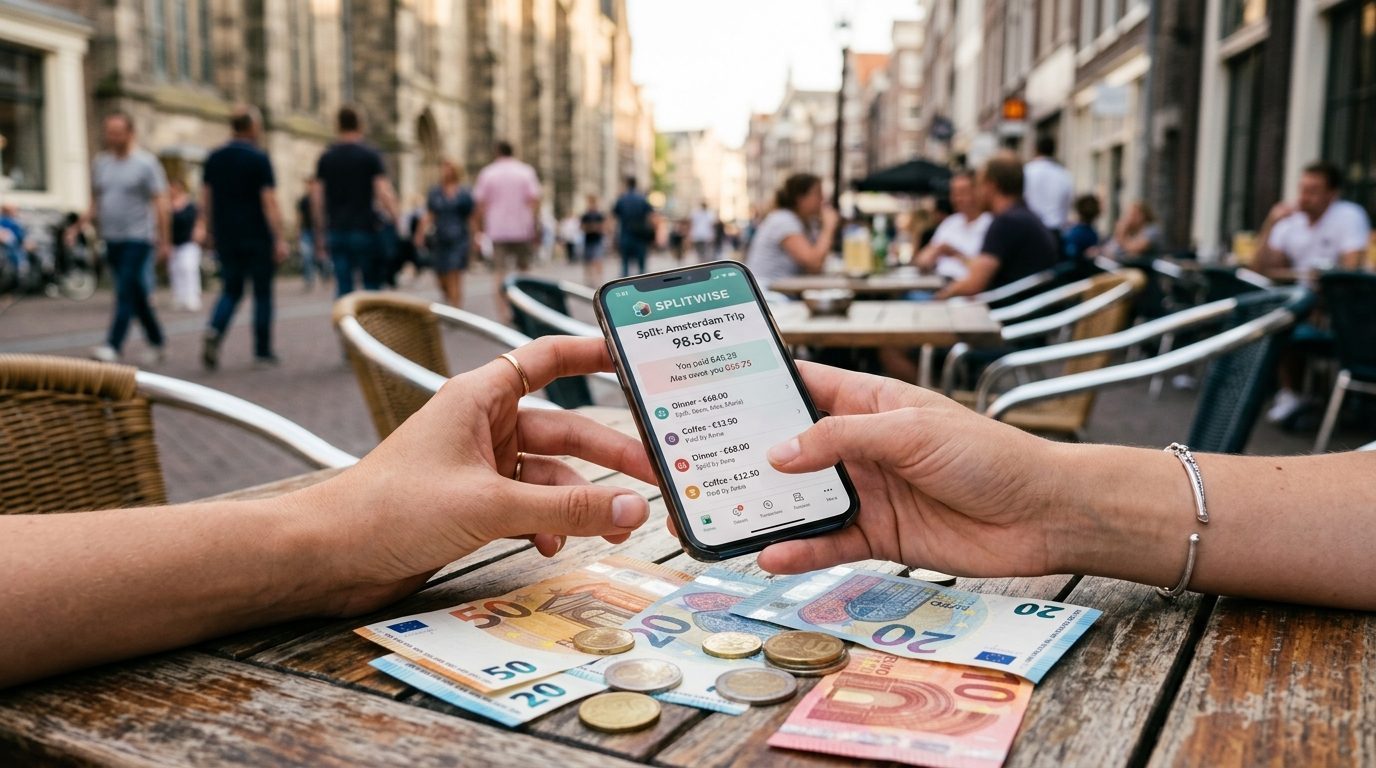
4. The Practical Setup: Tools That Do the Math For You
Trying to settle a week-long trip with a spreadsheet and half-remembered receipts is how you end up with three people overpaying and one person quietly underpaying.
Instead of reinventing the wheel, I use tools that do three things well:
- Track who paid what (and for whom).
- Handle uneven splits (because not everyone joins every activity).
- Minimize the number of payback transfers (so you don’t have 12 tiny payments flying around).
Some useful options for how to track shared travel expenses:
- TripProf / Tricount / Splitwise-style apps – great for logging every expense and seeing balances in real time. Some, like TripProf, even build cost sharing into trip planning.
- Online calculators – tools like the trip calculator on ExpensesSplit or Budget Rover’s splitter focus on
who owes whom
and simplify the final settlement. - No-login splitters – sites like Triploko’s expense splitter let you add people and expenses quickly, then show the minimum set of transfers needed.
My rule: one person sets up the tool, and everyone agrees to log expenses the same day they happen. No I’ll add it later
. Later never comes.
For bigger items, I still keep receipts or photos of receipts. Not because I don’t trust my friends, but because memory after three days of sun and cocktails is unreliable.
5. The Tricky Bits: Rooms, Kids, Cars, and Alcohol
This is where We’ll just split everything
stops working. Some costs are emotionally loaded. Handle them badly and people stew about it for months.
Rooms: Who Pays More?
If rooms are clearly different, I don’t pretend they’re equal. A simple approach:
- List each room and its perks (size, bathroom, balcony, view).
- Assign a simple price tier: e.g., master = 1.3x, regular = 1x, small/sofa = 0.7x.
- Let people choose rooms knowing the price difference.
That way, the person in the tiny room isn’t quietly subsidizing the couple in the suite. For splitting hotel and Airbnb costs fairly, this system keeps things transparent.
Kids: Half-Price or Full?
Kids complicate group travel expense splitting. They use space, eat food, and join activities, but usually less than adults. I like the weighted share model from family-focused guides like this one:
- Adult = 1 share
- Child = 0.5 share
Use that for accommodation and groceries. For restaurant bills, I often push for separate checks or at least separate kids’ items on the bill. It keeps the math and the feelings cleaner.
Cars: Who Actually Used It?
Rental cars are another classic trap. If some people barely use the car and others use it every day, splitting everything equally can feel unfair.
For road trip cost sharing with family or friends, a couple of options:
- Split the base rental equally, but divide gas and tolls by actual usage (days or kilometers).
- Or treat the car like an activity: only those who ride regularly share the cost.
Pick one approach and say it out loud before you pick up the keys.
Alcohol: Don’t Make Non-Drinkers Pay for Your Bar Tab
This one is simple. If some people don’t drink, I don’t include alcohol in shared grocery or restaurant splits. Instead:
- Run alcohol as a separate line item in the app, split only among drinkers, or
- Ask for separate bar tabs when possible.
It’s a small adjustment that prevents a lot of quiet resentment and is one of the easiest travel cost sharing mistakes to avoid.
6. The Daily Habit: How to Keep Things Fair While You’re Actually Traveling
Most people set up a system and then forget to use it. That’s when things get messy and you end up doing mental math instead of enjoying the trip.
Here’s the routine I like:
- One person pays, everyone logs. For each expense, one person pays with their card, then immediately logs it in the app with who it’s for.
- Breakfast check-in. Take 2 minutes each morning:
Did we log everything from yesterday?
- Use categories. Tag expenses as accommodation, transport, food, activities, groceries. It helps you see where the money is going and spot anything odd.
- Respect opt-outs. If someone skips an activity, they don’t pay for it. No guilt-tripping, no side comments.
On longer trips, a shared kitty (cash or a prepaid card) can work well for small shared costs like snacks, parking, or tips. Everyone contributes the same amount upfront, and you top it up only if needed. Just remember to track who put in what so the final split stays fair.
7. The Exit Strategy: Settling Up Without Drama
The last day of a trip is not when you want to discover that one person is down $400 more than everyone else.
Here’s how I like to wrap things up:
- Freeze new shared expenses the night before you leave, unless it’s something huge and obvious.
- Run the settlement in your app or calculator. Tools like Budget Rover or Triploko’s splitter will even minimize the number of transfers so you don’t have 10 people paying each other in circles.
- Show the group the summary. Transparency matters. Let people see the list of expenses and who paid what.
- Pay up quickly. Use whatever your group prefers (bank transfer, Venmo, Revolut, etc.) and aim to settle within a few days of getting home.
If someone is confused or uncomfortable, I’d rather walk through the numbers once than have them feel weird about it for months afterward.

8. Putting It All Together: A Simple Playbook You Can Actually Use
To make this concrete, here’s a quick checklist you can run through for your next group trip:
- Before booking: Agree on an all-in budget range and who’s really in.
- Choose your split model: equal, per-night, room-based, weighted for kids, or a hybrid that fits your group.
- Decide special rules: rooms, kids, car usage, alcohol, late arrivals/early departures, and how to handle different budgets on group vacations.
- Pick a tool: one app or calculator everyone commits to using for how to share vacation expenses.
- Set expectations: log expenses daily, keep receipts for big stuff, and speak up if something feels unfair.
- End clean: run a final settlement, show the summary, and pay up within a week.
Fair splitting isn’t about perfect math. It’s about having a system everyone understands and agrees to before the first bill hits the table. Do that, and you can focus on the trip itself instead of quietly doing calculations in your head.
And if you remember nothing else: talk about money early, write down the rules, and let the apps handle the rest.