
I don’t plan trips to be cheap. I plan them so I never look at a bill and think, Wow, I just paid double for the same thing.
That’s the goal here: not deprivation, but never overpaying.
What follows is the step-by-step trip planning framework I actually use. Follow it in order. Each step is a decision point: if you get the early ones wrong, you’ll overpay no matter how many discount codes or apps you use later.
1. Decide the Money First, Not the Destination
Most people start with, I want to go to Paris in July.
That’s how you overpay before you even open a flight search.
I start with a blunt question: How much can I realistically spend on this trip without debt or stress? Not the fantasy number. The real one.
- Look at your savings and monthly cash flow.
- Decide a total trip budget (for example, $1,500, $3,000, $6,000).
- Subtract non-negotiables at home (rent, bills, subscriptions, etc.).
Then I break that total into rough categories. This is where a lot of travel planning mistakes that cost money quietly hide.
- Flights / long-distance transport: 25–40%
- Accommodation: 25–40%
- Food & drinks: 15–25%
- Local transport: 5–10%
- Activities & experiences: 10–20%
These aren’t rules. They’re guardrails. If you blow 60% of your budget on flights, you’ve already forced yourself to overpay somewhere else (usually food or activities) because you’ll be constantly compensating.
Key takeaway: For trip planning on a realistic budget, set the total budget first, then rough percentages. Your destination has to fit inside that, not the other way around.
2. Choose the Right Kind of Trip for Your Budget (Not Just the Place)
Once I know my budget, I don’t immediately pick a country. I pick a trip style that fits the money.
Ask yourself:
- Do I want one expensive city for a short time, or several cheaper places for longer?
- Is this a food trip, a beach trip, a road trip, or a museum-and-cafés trip?
- Do I care more about comfort or stretching the days?
Why this matters: the same budget buys wildly different experiences depending on where you go.
- The cost of 3–4 days in Paris can equal 2–3 weeks in parts of Southeast Asia.
- A Maldives-style beach experience might be cheaper in Philippines, Sri Lanka, or Zanzibar.
I use cost-of-living and travel price tools (Numbeo, BudgetYourTrip, etc.) to get a rough daily cost for each candidate destination: accommodation, food, local transport, and a couple of activities. Then I check: Does this daily cost fit my budget for the number of days I want?
If it doesn’t, I don’t try to force it. I change the destination, the length, or the style of trip. That’s how you plan a trip without overpaying before you even start searching flights.
Key takeaway: Don’t ask, Can I afford Paris?
Ask, What kind of trip can I afford that still feels amazing?
Then pick destinations that match that answer.
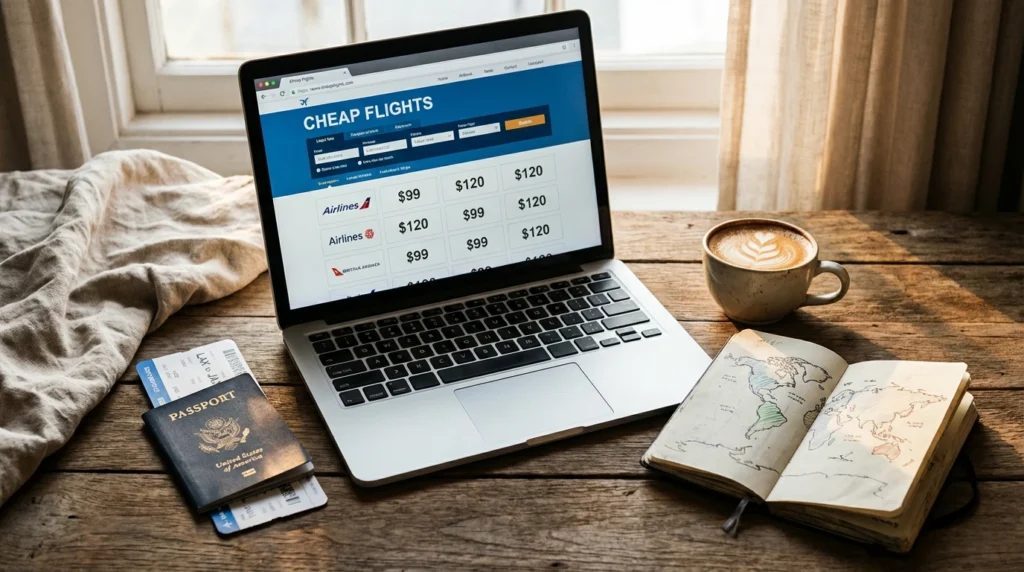
3. Use Flexibility to Beat Flight Prices (Instead of Chasing “The Perfect Date”)
Flights are where most people overpay because they lock in dates and airports first, then complain about prices. I do the opposite.
Here’s the travel booking order to save money on flights that works for me:
- Pick a rough window, not exact dates.
Thinklate May
oranytime in October
instead ofJuly 10–17 only.
Avoid major holidays and school breaks if you can. Prices drop, crowds thin out, and the experience is usually better. - Search with flexible tools.
I use Google Flights, Skyscanner, and sometimes Kayak or Hopper. I look at thecalendar
orflexible dates
view to see which days are cheapest. - Stay flexible on airports and routes.
- Check nearby airports (both at home and at your destination).
- Consider flying into a cheaper gateway city first, then using a budget airline, train, or bus to your final stop.
- Look at open-jaw or multi-city tickets (arrive in one city, leave from another) to avoid backtracking.
- Use alerts instead of guessing.
I set price alerts on Google Flights or Skyscanner and let them email me when fares drop. I also like deal-first tools like Going or similar services that send curated cheap fares from my home airport.
One more thing: I almost always book directly with the airline after finding the fare through a search tool. Third-party sites can be cheaper by a few dollars, but they’re a headache when something goes wrong. Saving $20 and losing flexibility is a hidden way of overpaying.
When to book? For most international trips, I aim for 60–90 days out. For domestic, 1–3 months is usually fine, earlier for peak seasons.
Key takeaway: Flexibility with dates, times (early morning/late night), and airports can easily shave 20–60% off airfare. That’s the difference between this trip is too expensive
and this is totally doable.
If you’re wondering how to avoid overpaying for flights and hotels, this is where you start.
4. Lock in a “Good Enough” Place to Sleep, Then Hunt for the Upgrade
Accommodation is where people quietly overpay because they book once and never look again. I treat it as a two-step process.
Step 1: Secure a safe, refundable base
As soon as my flights are booked, I:
- Book a refundable hotel, hostel, or apartment that fits my budget and basic standards.
- Make sure it’s in a good location for my style (walkable, near transit, or near the specific area I care about).
This is my safety net. I’m not hunting for perfection yet. I just want something decent that I can cancel without penalty.
Step 2: Re-shop the same stay
Then, every couple of weeks (and again 1–2 weeks before the trip), I re-check prices:
- Compare OTAs (Booking, Priceline, etc.) with the hotel’s own site.
- Look at opaque deals (where the hotel name is hidden until after booking) if I’m flexible.
- Check hostels with private rooms and vacation rentals if I’m staying longer or traveling with others.
- Call the hotel directly and ask,
I see this rate online—can you match or beat it, maybe with breakfast or free parking?
Often, prices drop as the date approaches, or better options appear. Because my original booking is refundable, I can cancel and rebook without stress.
Another trick: staying 10–20 minutes outside the absolute center can cut costs by 40–70% while still keeping you close to the action. I only skip this if late-night transport is a problem or if I know I’ll be out very late every night.
Key takeaway: Don’t treat your first booking as final. Treat it as a placeholder and keep re-shopping. Overpaying on accommodation is often just a failure to check again.
5. Design a Daily Money Plan So You Don’t Bleed Cash on the Ground
Even with cheap flights and a good hotel deal, you can still torch your budget once you arrive. The fix is a simple daily money plan—a core part of any budget travel planning process.
I start with my total budget and subtract flights and accommodation. Whatever is left gets divided by the number of days. That gives me a daily spend target for food, local transport, and activities.
Then I make a few deliberate choices:
- Food:
- Choose one or two special meals I’m willing to splurge on.
- Plan most other meals at local spots, markets, or street food, not tourist traps.
- If I have a kitchen, I plan to cook simple breakfasts or a few dinners.
- Activities:
- Pick a few paid experiences that really matter to me.
- Fill the rest with free or low-cost options: parks, neighborhoods, free museums, viewpoints, tip-based walking tours.
- Local transport:
- Learn the public transit system before I arrive.
- Check if there’s a tourist transit pass or city card that includes transport and attractions.
- Walk whenever it’s safe and reasonable. It’s free and usually more interesting.
I also track spending in a very low-effort way: a notes app, a simple spreadsheet, or a budgeting app. Not to be obsessive, but to avoid the classic we spent half our money in the first three days
problem.
Key takeaway: Overpaying on the ground is usually death by a thousand small decisions. A daily target and a rough plan for food, activities, and transport is a cost efficient trip planning move that keeps those decisions under control.

6. Use Timing and Tools to Avoid Hidden Travel Costs
Some of the worst overpaying happens in places you don’t see on Instagram: bank fees, baggage, bad timing, and fine print.
Here’s what I do to avoid that:
- Bank & card fees:
- Use a card with no foreign transaction fees.
- Withdraw cash from ATMs in larger, less frequent amounts to reduce per-withdrawal fees.
- Always choose to be charged in the local currency, not your home currency, when the card machine asks.
- Baggage:
- Travel with carry-on only when possible to avoid checked bag fees and lost luggage drama.
- If you must check a bag, pay for it online in advance. At the airport, it’s often more expensive.
- Transport choices:
- Compare the total cost of public transport + occasional rideshare vs. renting a car.
- In some countries (Iceland, New Zealand, etc.), a campervan can combine transport and accommodation and actually save money.
- Rewards & points:
- Use a travel rewards credit card for everyday spending before the trip to build points.
- Join airline and hotel loyalty programs if you’ll use them more than once. Free nights and flights are just pre-paid discounts.
None of this is glamorous, but this is where a lot of people quietly overpay. A 3% foreign transaction fee on everything you buy is basically a tax for not paying attention.
Key takeaway: The boring details—fees, baggage, timing—are where smart travelers save hundreds without sacrificing anything. If you want a travel planning checklist to avoid extra costs, this section is it.

7. Build a Simple Pre-Departure Checklist (So You Don’t Pay for Mistakes)
Last piece of the framework: avoid paying for avoidable mistakes. A missed visa requirement or an expired passport can cost more than any flight deal you ever find.
Before every trip, I run through a short checklist:
- Documents:
- Passport valid for at least 6 months beyond my return date.
- Visas or entry forms checked and, if needed, applied for early.
- Travel insurance if the destination or trip cost justifies it.
- Bookings:
- All flights, hotels, and key activities confirmed and saved offline.
- Airport transfers or first-night transport planned so I’m not stuck paying for the most expensive last-minute option.
- Money & phones:
- Bank and card companies notified of travel.
- Roaming plan, eSIM, or local SIM strategy decided in advance.
- Packing:
- Carry-on focused packing list to avoid baggage fees.
- Essentials like meds, chargers, and a change of clothes in my personal item.
None of this is complicated. But every missed item has a price tag: last-minute airport purchases, emergency taxis, rush fees, or even having to rebook flights.
Key takeaway: A 10-minute checklist can save you hundreds in avoidable costs and a lot of stress. It’s a simple but powerful part of any trip framework for budget conscious travelers.
Putting It All Together: Your No-Overpay Framework
If you want a simple way to remember this, here’s the framework in order—a step by step trip planning framework you can reuse for every adventure:
- Decide your total budget first and break it into categories.
- Choose a trip style and destinations that fit that budget, not the other way around.
- Use flexibility and tools to get fair flight prices—then book directly with the airline.
- Lock in a refundable stay, then re-shop accommodation for better deals.
- Set a daily money plan for food, activities, and local transport.
- Kill hidden costs (fees, baggage, bad timing) before they hit you.
- Run a pre-departure checklist so you don’t pay for avoidable mistakes.
Follow this sequence and you’ll notice something: you’re not just saving money. You’re buying freedom—freedom to say yes to the things that actually matter on your trip, without the constant background worry of, Can I afford this?
That’s the real point of how to plan a trip without overpaying on anything.