
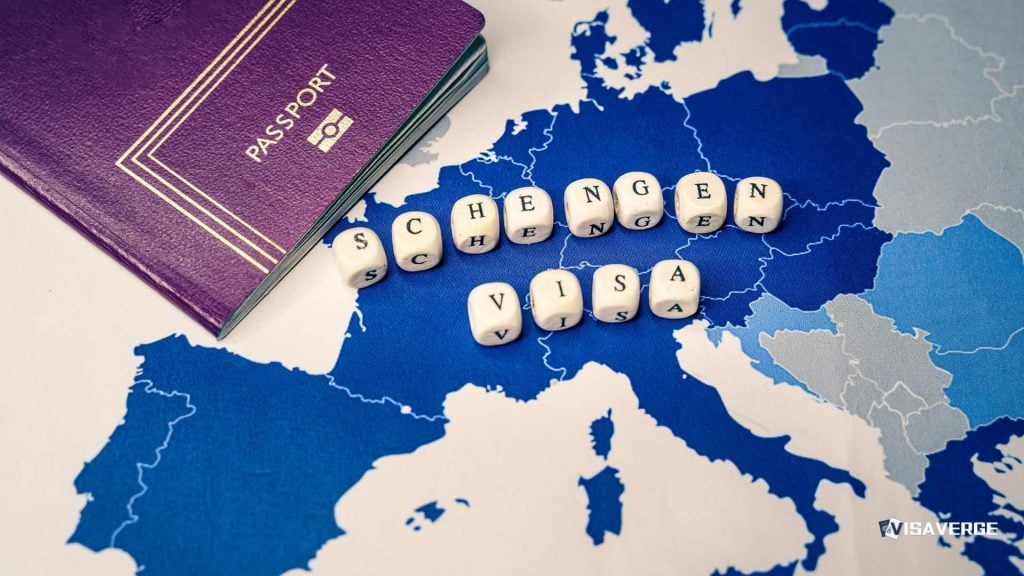
I don’t worry about turbulence. I worry about the gate agent who looks at my passport, shakes their head, and says the words every traveler dreads: You can’t board this flight.
Most people only learn about transit visa rules for layovers when it’s already too late. A missed connection is annoying. Being denied boarding because you needed a transit visa you’d never even heard of? That’s expensive, humiliating, and sometimes the end of the trip.
This guide walks through the real traps around airport layover immigration rules and airport transit visa requirements, especially in Europe and the Schengen Area. The goal is simple: keep you from getting stuck at the gate or stranded in a transit lounge.
1. The Core Question: Do You Actually Need a Transit Visa for This Layover?
Start with the only question that really matters: do you need a transit visa for this exact itinerary, with your exact passport?
There’s no universal rule for visa rules for international layovers. The answer depends on a mix of details:
- Your nationality (and sometimes your residence permit)
- Where you’re transiting (Schengen vs non-Schengen, and which country exactly)
- Whether you stay in the international transit area or must pass border control
- Whether you change airports or terminals that require exiting and re-entering
- How long your layover is (short vs overnight or 24+ hours)
In Europe, the key concept is the Airport Transit Visa (ATV), usually a Type A Schengen visa. It’s meant for travelers who:
- Fly from a non-Schengen country
- Transit through a Schengen airport
- Continue to another non-Schengen country
- Stay only in the international transit area
Here’s the twist: only certain nationalities need this ATV, and the list isn’t identical across Schengen. There’s an EU-wide list of nationalities that always need an ATV in any Schengen airport, and then individual countries add their own extra rules on top.
If you’re from a country like Afghanistan, Nigeria, or Syria, you’re often in the high-risk of needing an ATV
group. If you’re from the U.S., Canada, Australia, or other visa-exempt countries, you usually don’t need a transit visa for Schengen at all, even if you pass immigration. But “usually” is not a legal guarantee.
So the first step is non-negotiable: check your nationality against the rules of the specific country you’re transiting. Not “Europe in general”. Not “Schengen in general”. The exact country and, ideally, the exact airport.
Useful starting points (good for research, not for final confirmation):
- Official consulate or foreign ministry pages (for example, Spain’s consulate explains its ATV rules clearly: Spanish Consulate in New York)
- Airline or IATA-based tools (the same systems check-in agents use to decide if you can board)
If you’re guessing, you’re gambling.
2. Airside vs Border Control: The Invisible Line That Changes Everything
Most transit disasters start with one assumption: I’m just changing planes, I’m not entering the country.
Immigration doesn’t see it that way.
Inside an international airport, there are two different worlds:
- Airside / International Transit Area – you haven’t officially entered the country yet.
- Landside / After Border Control – you’ve passed immigration and are legally in the country.
An Airport Transit Visa (ATV) only covers you airside. The moment you need to cross that invisible line and go through passport control, you’re in full visa territory (usually a Type C Schengen visa for short stays).
Common situations that force you to cross that line:
- Changing airports in the same city (e.g. London Heathrow to Gatwick, or Paris CDG to Orly)
- Terminal changes that require exiting and re-entering security and immigration
- Separate tickets where you must collect and re-check baggage
- Overnight layovers where the transit area closes or your airline requires re-check-in landside
In those cases, an ATV is not enough. You’d need a regular Schengen visa (Type C) or the equivalent national visa for non-Schengen countries like the UK or Ireland.
So when you look at your itinerary, ask yourself:
Can I stay airside the whole time, on a single ticket, with my bags checked through?
If the answer is maybe
or I’m not sure
, that’s a warning sign. Call the airline and ask specifically: Will I need to pass border control to make this connection?
3. Schengen Isn’t “Europe”: Where You Actually Clear Immigration
Another classic trap: treating Europe
as one big immigration zone.
The Schengen Area is a group of European countries with a shared external border. Once you enter Schengen, you can move between Schengen countries without further passport checks. But not all European countries are in Schengen, and some have completely separate airport transit visa requirements.
Key points to keep in mind:
- Immigration happens at your first Schengen airport. If you fly U.S. → Amsterdam → Rome, you clear Schengen immigration in Amsterdam. The Amsterdam → Rome leg is treated like a domestic flight.
- If you fly U.S. → Frankfurt → Dubai, you enter and exit Schengen in Frankfurt during your layover.
- Countries like the UK and Ireland are not in Schengen. They have their own transit rules, visas, and separate transit without visa risks.
For U.S. citizens, Schengen is relatively straightforward:
- You do not need a Schengen transit visa for any airport scenario, whether you stay airside or pass immigration, as long as you respect the 90-days-in-180-days rule.
- Even a short layover where you pass immigration counts toward your 90 days in 180 limit.
For many other nationalities, things get more complicated:
- You may need an ATV just to sit in the transit area between two non-Schengen flights.
- If you transit through multiple Schengen airports (e.g. Istanbul → Paris → Madrid → Latin America), you may need a Type C Schengen visa instead of just an ATV, because movement between Schengen states is treated as domestic travel.
So ask yourself: Where exactly is my first Schengen entry point, and do I ever leave the Schengen Area before my final destination?
If your route touches Schengen more than once, or uses multiple Schengen airports, assume the rules are stricter and double-check them.
4. The Hidden Risk: Separate Tickets, Baggage, and Forced Immigration
On paper, your layover might look simple. In reality, the way your ticket is issued can completely change your connecting flight transit visa situation.
The big trap here: separate tickets.
When you book a single through-ticket (one booking reference) from your origin to your final destination, airlines usually:
- Check your bags all the way through
- Protect your connection if there’s a delay
- Route you in a way that keeps you airside when possible
When you book separate tickets (for example, a cheap long-haul deal plus a separate low-cost flight), you often have to:
- Exit the transit area
- Pass immigration
- Collect your luggage
- Check in again at the departure hall
- Go through security and possibly immigration again
That means you’re entering the country, even if you never step outside the airport building. If your nationality requires a visa to enter that country, you’ll need it. An ATV won’t help.
For visa-exempt travelers, this is mostly about time and stress. You’ll want 2–3 hours minimum for a self-transfer in a Schengen hub, instead of the 45–60 minutes that might be fine on a single ticket.
For travelers who need visas, it’s much more serious. A cheap separate ticket can suddenly require a full Schengen visa, with forms, fees, and consulate appointments. That “deal” can turn into a very expensive mistake.
Before you book that clever multi-ticket itinerary, ask:
- Will my bags be checked through?
- Do I have to check in again with a different airline?
- Does the airport allow airside transfers between these terminals and airlines?
If you can’t answer those questions confidently, you’re not just saving money. You might be buying yourself a visa problem.
5. When an Airport Transit Visa (ATV) Is Enough – and When It’s Not
Now let’s zoom in on the ATV itself, because this is where many transit visa mistakes happen.
An Airport Transit Schengen Visa (Type A) allows you to:
- Stay only in the international transit area of a Schengen airport
- For a short period (often up to 24 hours)
- While connecting between non-Schengen flights
It does not allow you to:
- Pass border control
- Change airports within the same city or country
- Transit through multiple Schengen airports as if you were entering Schengen
- Stay for long layovers that exceed the allowed transit time
There are three layers of rules to understand in any Schengen airport transit visa guide:
- EU-wide list – 12 nationalities that always need an ATV in any Schengen airport.
- Country-specific additions – some Schengen states (Germany, France, Austria, Belgium, Czech Republic, Greece, etc.) add extra nationalities that need an ATV when transiting their airports.
- Exemptions – even if you’re from an ATV-required country, you may be exempt if you hold certain visas or residence permits (e.g. valid U.S., Canadian, Japanese, or Schengen visas; EU/EEA residence; diplomatic passports; family member of EU/EEA citizen).
Spain’s consular rules, for example, explicitly say that some travelers from ATV-required countries are exempt if they hold valid visas or residence permits for places like the U.S., Canada, Japan, or Schengen itself. Other countries have similar, but not identical, exemptions.
So the decision tree looks like this:
- Step 1: Is my nationality on the EU-wide ATV list?
- Step 2: Is my nationality on the specific transit country’s extra list?
- Step 3: Do I hold any visa or residence permit that gives me an exemption?
- Step 4: Am I staying strictly airside, on a single ticket, within the allowed time?
If you fail any of those steps, an ATV might not be enough. You may need a Type C Schengen visa instead, or you may need to reroute your trip entirely.
And remember: processing times are usually around 15 days, sometimes longer. You can’t fix this at the airport check-in desk.
6. Long Layovers, Overnight Stops, and the 24-Hour Problem
Long layovers look romantic when you’re planning. I’ll just sleep in the airport, maybe explore the city a bit.
Immigration sees something else: a potential overstay.
Most airport transit visas and long layover visa requirements assume a relatively short connection. Once you cross certain thresholds, the rules change:
- Over 24 hours in many Schengen airports can push you out of
transit
and intoshort stay
territory. - Some airports close parts of the transit area overnight, forcing you to go landside.
- Some airlines require you to re-check in for the next day’s flight, which may mean passing border control.
There are also special categories like Long Stay Transit Visas in some countries, but these are niche, vary by country, and are not a quick fix. They often require more documentation and justification than a simple ATV.
If you’re planning a long or overnight layover, think through:
- Will the transit area be open the whole time?
- Does my visa (if I need one) actually cover the full duration?
- Am I secretly planning to enter the city? (If yes, you need a proper entry visa, not just a transit visa.)
If a delay causes you to overstay the time allowed on your transit visa, you’re in a gray zone. Contact your airline and local authorities as soon as possible. Don’t just hope nobody notices.
7. How to Sanity-Check Your Itinerary Before You Pay
By now, you might be thinking: This is a lot. How do I actually make a safe decision?
Here’s a practical checklist to run through before you book any itinerary with complex layovers or Schengen connections. It’s a simple way to avoid denied boarding due to transit visa issues.
- Map the route on paper
Write down every airport in order. Mark which ones are in Schengen, which are not, and where your first Schengen entry is. - Check your nationality against official rules
Go to the consulate or foreign ministry website of the country where you’ll transit. Look specifically forAirport Transit Visa
,Type A visa
, ortransit visa rules for layovers
. - List your existing visas and residence permits
U.S. visa? Canadian PR? Schengen visa? EU residence card? These can give you exemptions from ATV requirements in some countries. - Confirm ticket structure
One booking reference or multiple? Same airline alliance or a random mix? If it’s separate tickets, assume you may need to go landside. - Call the airline
Ask them directly:With my passport, on this exact itinerary, will I need to pass border control to make the connection?
andWill my bags be checked through?
- Check timing
Is your layover under 24 hours? Does the airport allow overnight airside stays? Is there enough time for immigration if you must go landside? - Plan a backup
If the rules look tight or confusing, consider rerouting through a country with simpler transit rules for your nationality, or where the transit visa cost by country and effort make more sense.
One more thing: rules change. Country lists get updated. Exemptions appear and disappear. An article you read last year might already be outdated. Treat any blog (including this one) as a starting point, not the final authority.
8. The Real Cost of Ignoring Transit Rules
So what actually happens if you get this wrong?
- Denied boarding at your departure airport because you don’t have the required visa.
- Rebooking costs for new flights, often at last-minute prices.
- Non-refundable hotels and tours at your destination that you never reach.
- Possible fines for airlines that carry improperly documented passengers (which is why they’re strict at check-in).
- Immigration trouble if you somehow arrive without the right visa and are refused entry or held in a transit area.
All of that because of one detail most people overlook: Do you stay airside, or do you cross the border?
If you remember nothing else, remember this:
Every layover is an immigration decision, even if you never leave the airport.
So slow down when you book. Question the routing. Check the official rules. Call the airline. If a connection looks too cheap or too clever, look very closely at where you’ll be standing between flights—and whether that spot is airside or landside.
That five-minute check can save you thousands of dollars, days of stress, and one very awkward conversation at the gate.