
I love traveling cashless. I also hate paying 6–10% more than I need to, just because I tapped the wrong card or hit the wrong button at an airport ATM.
If your trip budget keeps disappearing faster than you expect, your payment choices are probably to blame. The card you use, the app you rely on, and even whether you pick local currency or your home currency on a screen can quietly change the cost of every ride, every check‑in, and every coffee.
Let’s walk through the real decisions you face on the road—and what actually works to keep cashless travel costs under control.
1. First 24 Hours: How Much Cash Do You Really Need?
The first day in a new country is when people overspend the most. You’re tired, you just want to get to your hotel, and the airport kiosk is glowing like a beacon.
Here’s the uncomfortable truth: walk-up airport exchanges are usually the worst deal in the building. You’re hit with a bad rate and a fee. You can easily lose 5–10% of your money before you even leave the terminal, as highlighted in this breakdown of travel money options.
So what’s the alternative if you want to stay mostly cashless but still avoid getting stuck?
- Arrive with a small amount of local cash if you can order it online in advance at a decent rate. Enough for a taxi, a snack, and a backup ride if something goes wrong.
- Use an ATM at a bank branch in the arrivals hall or just outside the airport, not an independent tourist ATM. The rate is usually closer to market, even if there’s a fee.
- Withdraw a sensible chunk (for example, 2–3 days of expenses) rather than tiny amounts. Fixed ATM fees hurt less when spread over a larger withdrawal.
My rule of thumb: I land with a little cash, then use a bank ATM once to get set up. I avoid kiosks unless I’m truly stuck.

2. Everyday Spending: Which Card Should You Tap?
Most of your trip money goes on everyday stuff: metro rides, rideshares, coffees, museum tickets, dinners. This is where your card choice really matters—and where the cost of using travel credit cards versus your regular bank card starts to show.
There are three main contenders:
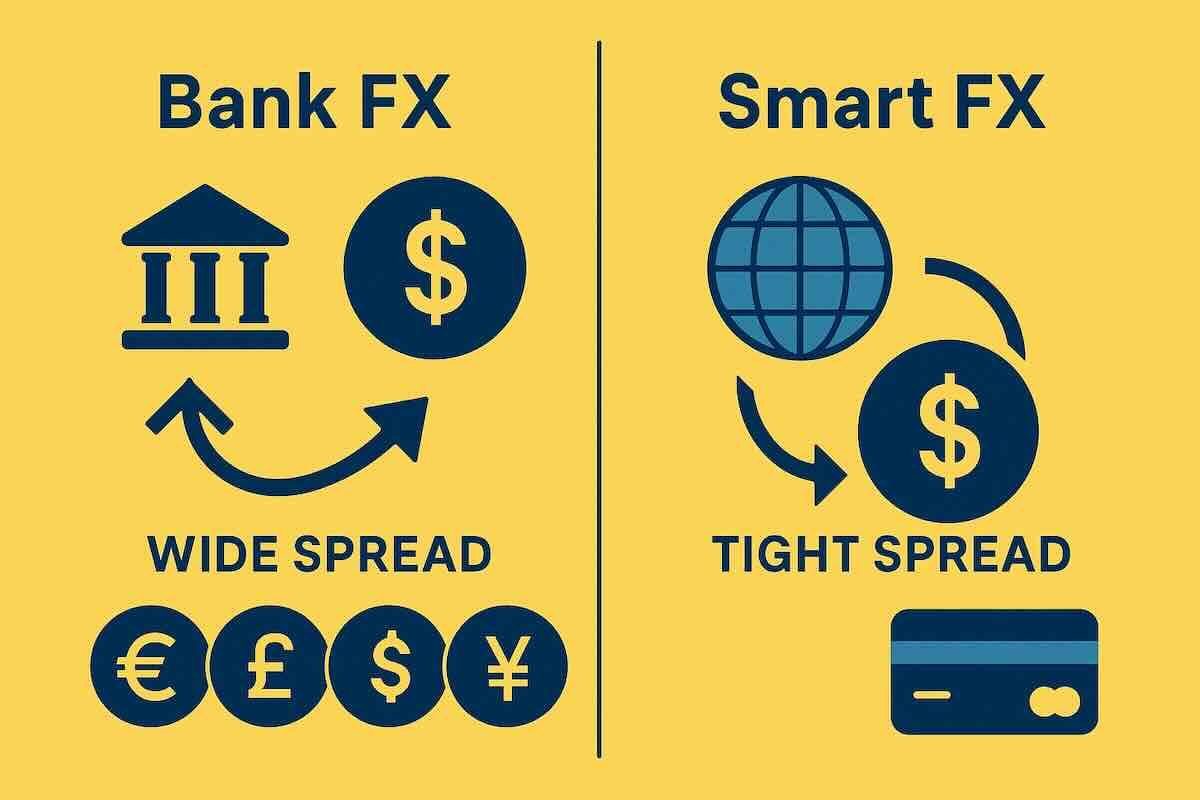
- Regular bank debit/credit card – convenient, but often 2–3% foreign transaction fee plus a hidden FX margin. Classic credit card vs cash abroad fees problem.
- Specialist travel card or multi-currency app (Wise, Revolut, etc.) – usually close to mid-market rates, low or no FX fees, good for day-to-day spending.
- Rewards credit card with no foreign transaction fees – great for larger purchases and online bookings, often with travel protections.
Here’s the catch: the difference between a 0% FX fee and a 3% fee doesn’t feel big on one coffee. But across a whole trip, it’s like paying for an extra night in a hotel you never stayed in.
What I actually do:
- Use a no-foreign-transaction-fee card or a multi-currency travel card for almost all taps and online payments.
- Keep my regular bank card as a backup, not my daily driver abroad.
- Check acceptance: Visa and Mastercard are widely accepted; Amex is patchier and expensive for cash advances.
If you only remember one thing: the card you use at home is rarely the cheapest card to use abroad.
Check its FX fees before you go and compare them with a prepaid travel card cost comparison or a specialist app.
3. The DCC Trap: Local Currency vs Home Currency at Checkout
You’re at a hotel desk or ticket machine. The screen asks: Pay in EUR or USD?
It looks like a friendly choice. It isn’t.
This is Dynamic Currency Conversion (DCC). When you choose your home currency, the merchant’s processor sets the exchange rate, often with a fat markup hidden inside. Multiple sources, including American Express, point out that this can add around 6% or more on big transactions like hotels.
That’s one of the most common dynamic currency conversion mistakes travelers make: thinking it’s safer to see prices in their home currency.
My rule is simple and non-negotiable:
- Always choose to pay in the local currency.
- Always decline DCC at ATMs and payment terminals.
Let your card network (Visa, Mastercard, etc.) do the conversion. Their rate is usually much closer to the real market rate, especially if your card has no FX fee.
If you’re unsure, use a currency converter app on your phone. Check the live rate, then still pay in local currency. That’s how you avoid the hidden FX fees when traveling that quietly inflate your bill.
4. Transport Costs: Metro Gates, Taxis, and Car Rentals
Transport is where payment friction really shows up. You’re in a rush, you’re in a queue, and you don’t want to be the person holding everyone up at the turnstile.
Let’s break it down.
Public transport and ride-hailing
For everyday movement, contactless card transport abroad has made life much easier—but only if the right card is loaded.
- Contactless cards and phones are increasingly accepted at metro gates and on buses. Use your low-FX-fee card in your phone wallet and tap through.
- For ride-hailing apps, set your default payment method to your best travel card before you leave home. Otherwise the app may default to a high-fee card.
- Some cities still require paper tickets or local transport cards. In those cases, you’ll often need cash or a card that works with local machines (chip & PIN, not just swipe).
Those small taps add up. Card fees on public transport overseas can quietly eat into your budget if you’re using the wrong card every day.
Taxis and local drivers
- In many places, taxis prefer cash, or their card machines mysteriously “don’t work”. Having some local currency avoids awkward arguments.
- Ask
Is card OK?
before you get in. If they say yes, confirmLocal currency, no conversion
when you pay.
Car rentals and deposits
- Use a credit card (not debit) for car rentals. You’ll often get better insurance coverage and avoid tying up your actual cash in a deposit hold.
- Check if your card has no foreign transaction fees. A 2–3% fee on a week-long rental plus fuel is not trivial.
- Decline DCC at the rental desk and at fuel stations. Local currency only.
Transport is where I’m most ruthless: the card with the lowest FX cost goes into my phone wallet, and that’s the one I use for every tap, gate, and ride.
5. Hotels and Check‑Ins: Holds, Deposits, and Sneaky FX
Hotels are where small percentage differences turn into big numbers. A 6% DCC markup on a week-long stay is real money, especially when you add it to other cashless travel costs like meals and transport.
Here’s how I handle it:
- Book online with a rewards credit card that has no foreign transaction fees. You earn points and often get better protections for cancellations and disputes.
- At check‑in, confirm the currency of your booking and any deposit. If they offer to charge you in your home currency, say no.
- Watch for security holds on your card. These can be large. Using a credit card keeps your actual cash free for daily spending.
- If you’re paying at checkout, double-check the terminal before you tap. Staff sometimes default to DCC without explaining it.
Think about hotel check in deposit payment options before you arrive: which card can handle a big hold without messing up your daily budget? Often, that’s your main travel credit card, not your everyday debit card.
One more thing: some hotels give a small discount for paying in cash because they avoid card processing fees. It’s worth asking, especially at smaller, family-run places. Just weigh any discount against the cost you paid to get that cash (ATM fees, FX margin).
6. ATMs, Cash, and How Often You Should Withdraw
Even if you love going cashless, you’ll still need some notes: markets, tips, small cafés, local buses, and places where the card machine is “broken”.
The trick is to get that cash without bleeding fees. This is where international ATM fee strategies really matter.
- Use ATMs attached to real banks, not random machines in tourist areas. Bank ATMs usually have better rates and clearer fee disclosures.
- Withdraw larger amounts less often. If the ATM charges a flat fee, taking out the equivalent of $200 once is cheaper than $50 four times.
- Store cash smartly: keep only a day’s worth on you, and stash the rest in your hotel safe or a separate bag.
- Always choose local currency on the ATM screen. Decline any offer to convert to your home currency.
Some cards (especially certain credit cards and Amex cash advances) are terrible for ATM withdrawals: extra fees, interest from day one, and weak FX rates. I avoid using credit cards for cash unless it’s a genuine emergency.
My setup: a debit or travel card with low ATM fees for withdrawals, and a credit card for everything else. That way, I keep everyday spending abroad exchange rates competitive while still having enough cash for places that don’t take cards.
7. Apps, Multi‑Currency Cards, and Budget Control
Multi-currency apps and cards (Wise, Revolut, and similar) have changed how I travel. They’re not magic, but they do three things very well:
- Better FX rates: often close to the mid-market rate, with transparent fees.
- Control: you can convert money when rates look good, hold multiple currencies, and see exactly what you’re paying.
- Budgeting: loading a fixed amount into the app makes overspending harder. When the balance drops, you feel it.
They’re especially useful if you’re hopping between countries and currencies. Instead of juggling multiple bank cards, you manage everything in one app and one physical card.
That said, I stay a bit skeptical:
- Check all fees: top-up fees, ATM fees, weekend markups, inactivity fees.
- Don’t rely on one app only. Keep a backup card from a traditional bank in case the app has an outage or your card is lost.
Used well, these tools can shave a few percentage points off your total trip cost and make your spending much more transparent. They’re a powerful part of any cashless travel money tips toolkit, especially when combined with mobile wallet payments overseas for quick taps.

8. Building Your Own Cashless Travel Setup
There’s no single perfect way to pay abroad. But there is a setup that’s right for you, your risk tolerance, and your destinations.
Here’s a simple framework I use when planning a trip:
- Primary card for spending: a no-foreign-transaction-fee credit card or a multi-currency travel card for everyday taps and online bookings.
- ATM card: a debit or travel card with low ATM fees for cash withdrawals.
- Backup card: stored separately (different bag or hotel safe) in case of loss or fraud.
- Starter cash: a small amount of local currency for arrival and cash-only situations.
Before you go, ask yourself:
What does each of my cards actually cost me abroad?
Look at FX fees, ATM fees, and hidden margins so you can focus on foreign transaction fee avoidance.Where will I need cash for sure?
Think taxis, markets, tips, small towns.How will I avoid DCC?
Train yourself to always choose local currency and ignore the “pay in your home currency” prompt.
Get those answers clear, and you’ll stop donating money to banks, kiosks, and sneaky FX markups—and start spending it on the things you actually traveled for.