
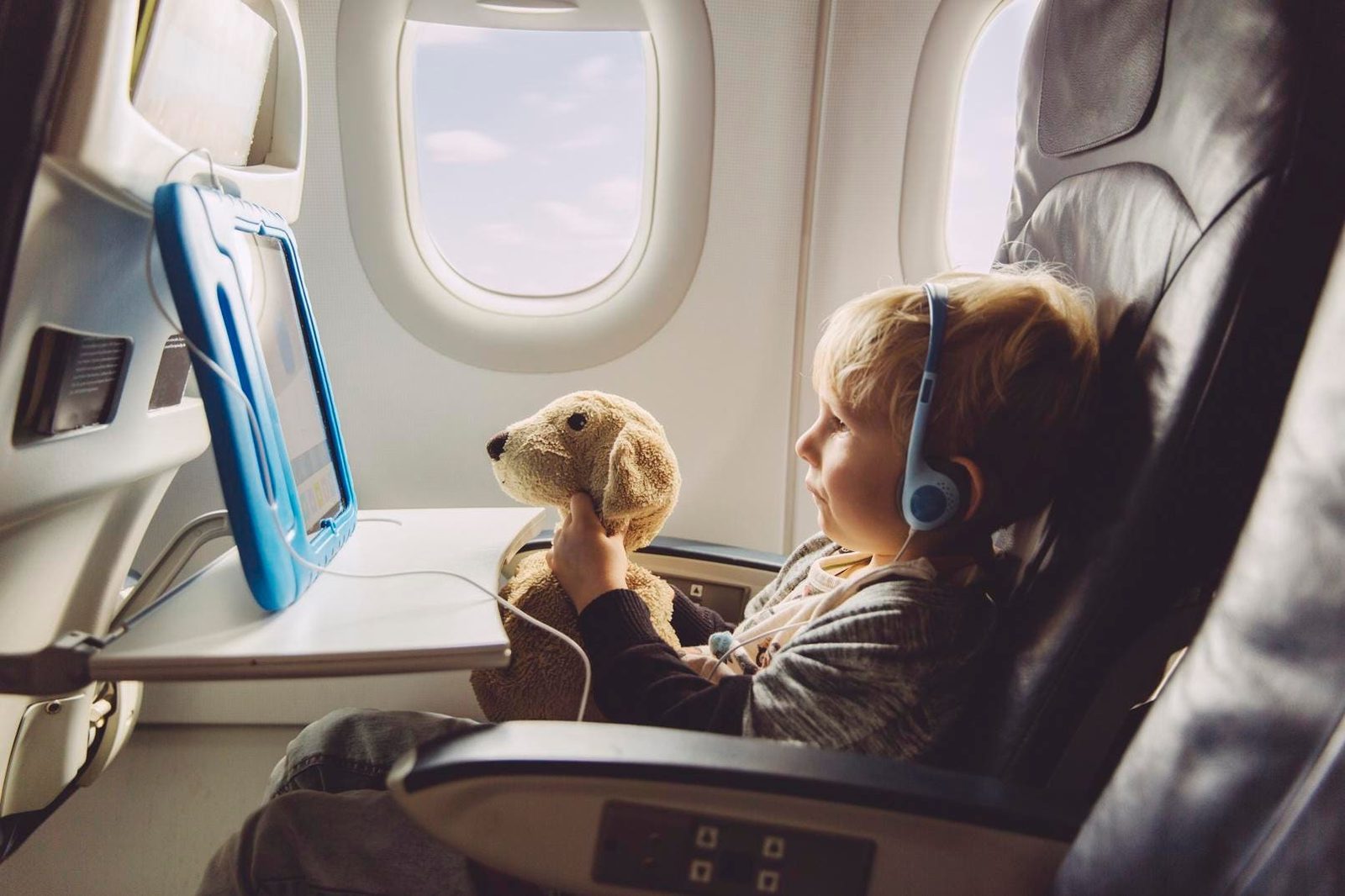
I don’t mind paying for flights with my kids. I do mind feeling tricked.
The base fare looks reasonable, I click a few buttons, and suddenly the total is hundreds of dollars higher. Seat fees. Bag fees. “Preferred” this. “Optional” that. None of it feels optional when you’re trying to keep a 6-year-old from melting down in 23B while you’re stuck in 32F.
This guide is my attempt to strip away that confusion. I’ll walk through the main decision points that quietly drive up the cost of flying with kids, and how I plan around them so I don’t get hit with surprise airline fees at checkout.
1. Will We Actually Sit Together, or Do I Have to Pay for Seats?
First big question: Do you pay for seat selection, or gamble?
Here’s the uncomfortable truth about airline fees for families in the U.S.: there is still no finalized federal rule that guarantees your child will sit next to you. The Department of Transportation (DOT) has proposed banning family seating fees and requiring adjacent seats for kids under 14, but it’s not law yet. For now, it all comes down to each airline’s policy and the fare you buy.
As of spring 2026, these airlines voluntarily guarantee that kids 13 and under can sit next to an accompanying adult at no extra cost, as long as adjacent seats are available at booking and everyone is on the same reservation:
- Alaska
- American
- Frontier
- JetBlue
Everyone else? They may try to seat you together, but they don’t promise it. On those airlines, the only reliable way to sit together is to pay for seat selection or buy a fare that includes it.
Seat selection fees for family travel often run $10–$50 per seat each way. “Better” seats—aisles, extra legroom, closer to the front—can easily hit $100+ per person.
For a family of four on a round-trip, that can turn into:
- $20 per seat per leg × 4 seats × 2 legs = $160 just to sit together
- $40 per seat per leg × 4 seats × 2 legs = $320
All of that is on top of the airfare you thought you were paying. This is where the real cost of flying with children starts to show up.
My rule of thumb:
- If I’m flying one of the four airlines with a formal guarantee and I can see plenty of open seats on the map, I’m comfortable skipping seat fees.
- On other airlines—especially busy routes or holidays—I assume I’ll need to budget for seat selection unless I’m okay with begging strangers to swap seats during boarding.
Before you book, check the DOT’s family seating dashboard at flightrights.gov. It shows which airlines have a formal, enforceable guarantee (green check) and which don’t (red X). It’s a quick way to avoid paying a hidden “parenting tax” just to sit next to your own kid and to understand the real airline fee breakdown for parents.
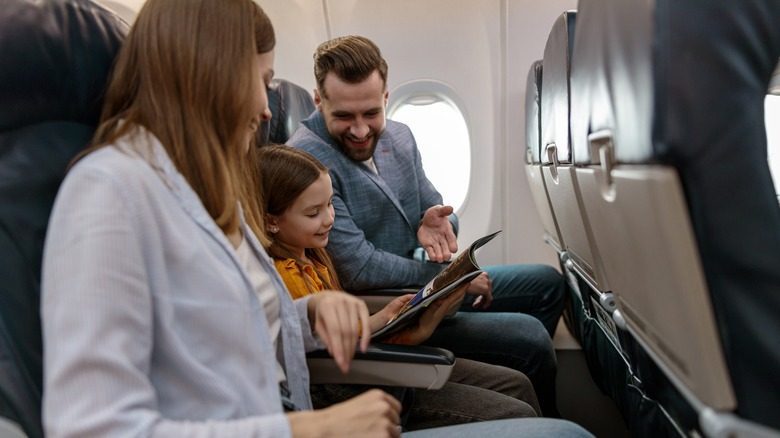
2. Basic Economy vs. Regular Fares: Is the Cheap Ticket a Trap?
That rock-bottom fare you see first? With kids, it’s often a trap.
Basic Economy (or whatever name an airline uses for its lowest tier) is designed to look cheap and then earn money on the back end through extra airline costs when flying with kids and adults alike. The biggest landmine for families: no advance seat selection. Seats are assigned at check-in, and the system doesn’t care that you’re a family.
On airlines without a family seating guarantee, that usually looks like this:
- You buy the cheapest fare.
- You can’t pick seats without paying extra.
- At check-in, the system scatters you around the cabin.
- You spend the gate and boarding process trying to fix it.
Some airlines are getting better. United, for example, has tools that try to seat kids under 12 with an adult even on Basic Economy, and will sometimes open up preferred seats or let you switch flights for free if they can’t. But again, that’s a policy choice, not a legal guarantee.
So how do I decide whether to book Basic Economy with kids?
I run through three questions:
- What will it cost to “fix” Basic Economy?
If I have to pay $30 per seat each way to choose seats, that’s $240 for a family of four on a round-trip. If the regular fare is only $150 more total and includes seat selection, the “cheap” fare isn’t actually cheaper. This is where family airfare vs basic economy fees really matters. - How full is this flight likely to be?
Peak holidays, school breaks, and Friday/Sunday flights are often packed. Fewer empty seats means fewer chances to shuffle families into adjacent spots later. - How old and independent are my kids?
A mature 13-year-old sitting a few rows away is one thing. A nervous 5-year-old alone between two strangers is another.
In practice, I usually skip Basic Economy when I’m traveling with younger kids. I’d rather pay a bit more upfront for a fare that includes seat selection than play seat roulette at the gate and discover a bunch of hidden family flight fees the hard way.
3. Baggage Math: Checked vs. Carry-On When You Have Kids’ Stuff
Next decision: Do we check bags, carry on, or mix both?
Airlines have turned baggage into a major profit center. Checked bags, carry-on bags on some low-cost carriers, overweight fees, sports gear, strollers, car seats—each has its own rules and price tag. If you don’t think this through, you can easily add $100–$200 to a family trip without realizing it.
Here’s how I break down baggage fees on family flights:
- Checked bags: On many U.S. airlines, the first checked bag is $30–$40 each way per person on basic fares. For a family of four, that’s $240–$320 round-trip if everyone checks a bag.
- Carry-on fees: Some budget airlines charge for larger carry-ons and even for certain backpacks. If you assume a bag is free and it’s not, you’ll pay more at the airport.
- Overweight/oversize: This is where people really get burned. A bag that’s a few pounds over can trigger a $75–$150 fee each way.
With kids, it’s tempting to overpack “just in case.” I try to do the opposite:
- Weigh bags at home so nothing is over the limit.
- Use one shared checked bag for bulky family items (toiletries, extra shoes, jackets) instead of one per person.
- Give each kid a small backpack with their own essentials: snacks, a change of clothes, comfort item, simple activities.
Also, look for what’s free before you start budgeting for airline add ons with kids:
- Most airlines let you check a stroller and car seat for free. Some allow gate-checking strollers at no charge. Always confirm the latest airline stroller and car seat fees on the carrier’s site, but in many cases, these don’t add to your total.
- Certain airline credit cards or elite status include one or more free checked bags. If you fly the same airline often, this perk alone can be worth more than the annual fee.
The key is to decide your baggage strategy before you book, not at the airport counter with a line behind you and a scale flashing “52 lbs.” That’s when family flight hidden fees stop being theoretical and start hitting your wallet.
4. Unaccompanied Minors & Split Itineraries: Are You Paying Twice?
Sometimes kids don’t fly with you. Maybe they’re visiting grandparents, or one parent flies out with them and the other flies back. That’s when unaccompanied minor (UM) fees and split itineraries can quietly blow up your budget.
UM programs sound reassuring: the airline “looks after” your child. In reality, they provide limited supervision and help with connections, but you still handle drop-off at the gate and pickup by a designated adult. And you pay for the privilege.
UM fees vary wildly by airline:
- Some charge per child each way.
- Others charge per booking (much better if you have siblings).
- Some allow connections or international flights; others require nonstop domestic only.
Those fees can easily add $150–$300+ round-trip on top of the ticket price. A carrier with a slightly higher base fare might actually be cheaper overall once you factor in UM fees, bag fees, and how they structure kids’ ticket fees and surcharges.
There’s no single site that compares UM policies across airlines. If I’m sending a child alone, I do this:
- Pick 2–3 possible airlines and routes.
- Look up each airline’s UM policy directly on their site (age limits, fees, nonstop vs. connections).
- Calculate the real total: base fare + UM fee + any bag fees.
Another hidden cost: split itineraries for families. If you book kids on a separate reservation to use miles or points, some systems won’t recognize that you’re a family. That can make it harder to seat you together automatically, and it can complicate rebooking if something goes wrong.
When possible, I keep everyone on one reservation, even if it means using miles less “optimally.” With kids, simplicity is worth money.
5. Add-Ons That Look Optional (But Often Aren’t With Kids)
Once you’ve picked flights, seats, and bags, the airline will still try to sell you more: early boarding, priority check-in, Wi-Fi, travel insurance, even printed boarding passes in some places. Most of these are technically optional. With kids, some become optional
in name only.
Here’s how I think about the common add-ons that quietly raise the cost of flying with children:
- Early boarding: If you need overhead bin space for a diaper bag, medical gear, or just want a calmer boarding experience, paying a modest early-boarding fee can be worth it. But if you’re checking bags and don’t care where your carry-on goes, skip it.
- Priority check-in / security: I rarely pay for this. Instead, I aim for off-peak flight times and arrive early. TSA PreCheck or similar programs are a better long-term investment if you fly regularly.
- Wi-Fi: For older kids on long flights, Wi-Fi can be sanity-saving. I decide per flight: is this a movie-and-snacks flight, or a school-day-in-the-sky flight?
- Travel insurance: The policy the airline offers at checkout is often not the best value. I prefer a separate, comprehensive policy if I’m insuring a big trip, or I rely on coverage from a good travel credit card.
The trick is to ask, “What problem does this fee solve for us?” If you can’t answer that clearly, it’s probably safe to decline. That simple question is one of the easiest ways to avoid surprise airline fees and keep your family vacation flight budget planner honest.
6. How to Build a Realistic Family Flight Budget (Without Surprises)
Now let’s pull this together. When I’m planning a family trip, I don’t just look at the fare. I build a simple, honest budget that includes all the likely extras—because that’s the only way to see the real airline charges parents forget.
Here’s the framework I use before I click “buy”:
- Start with the base fare.
Round-trip price × number of travelers. - Add seat costs.
Will we pay for seat selection? If yes, estimate per seat per leg. If we’re flying an airline with a family seating guarantee and I’m comfortable skipping fees, I still assume I might pay for one or two key seats (like an aisle for a nervous kid). - Add baggage costs.
Decide how many checked bags you’ll actually bring, and whether any carry-ons will be charged. Include potential overweight fees if you know you’re packing heavy. - Add UM or special fees.
If any child is flying alone or on a different itinerary, include UM fees and any extra ground logistics (parking, extra airport trips). - Add 10–15% for “soft” costs.
Airport meals, last-minute snacks, a toy or activity you buy in desperation. These aren’t airline fees, but they’re part of the real cost of flying with kids.
Once I have that number, I ask myself:
- Is this trip still worth it at the real price?
- Can I lower the total by changing airlines, dates, or airports?
- Would a slightly more expensive fare (with bags and seats included) actually be cheaper overall?
When you compare trips this way, the “cheapest” option on the search results page is often not the cheapest in real life. A simple family travel cost guide for flights like this turns a random deal into a clear decision.
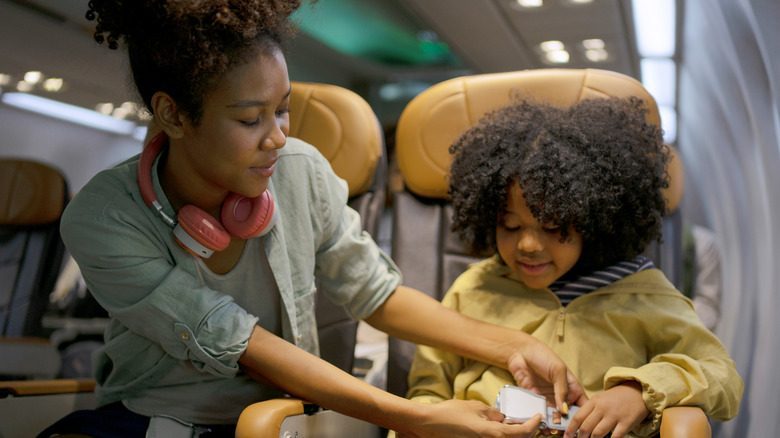
7. A Simple Mindset Shift: From “Tricks” to Trade-Offs
Airlines aren’t going to stop charging fees anytime soon. Ancillary fees—seat selection, bags, and all the rest—bring in tens of billions of dollars a year. That’s the business model.
But you don’t have to feel tricked by it.
If you treat every flight as a series of trade-offs instead of a flat ticket price, you regain control over those family flight hidden fees:
- You choose whether to pay for seats or pick an airline that seats families together for free.
- You choose whether to check bags or pack lighter and use a card that includes free bags.
- You choose whether to accept Basic Economy’s restrictions or pay more for flexibility and sanity.
Next time you search for flights with your kids, pause before you click the cheapest option. Ask yourself:
What will this really cost us once we’re all on the plane, sitting together, with our stuff?
When you answer that honestly—and budget for it up front—you stop being surprised by airline fees for families. You start using them, strategically, to build the trip that actually works for your crew.