

I love a good “Europe for $1,200” headline as much as anyone. But whenever I see one, I automatically add 30–50% in my head. Why? Because the real cost of a “cheap” Europe vacation is padded with quiet extras: city taxes, reservation fees, card charges, airline add‑ons, and transport rules that punish anyone who doesn’t read the fine print.
If you want your budget Europe trip to actually stay on budget, you have to plan for the stuff nobody mentions in the caption. Let’s walk through the main money traps I see travelers fall into—and how to dodge them without turning your holiday into a full-time accounting job.
1. City Taxes: The Hotel Fee That Shows Up at Checkout
Here’s the first surprise most people meet in Europe: you think you’ve prepaid your hotel, then at checkout the receptionist smiles and says, And now the city tax, please.
City (or tourist/occupancy/stay) tax is a mandatory local fee in much of Europe. It’s usually charged per person, per night, and it often doesn’t appear in the headline price when you book. That’s why so many budget Europe trip cost breakdowns end up wrong.
Typical ranges: roughly €1–€7 per person per night, but it can be higher in big-name cities or upscale hotels. Some places cap the number of nights (for example, only the first 7 nights are taxed) or exempt kids. Others charge a percentage of the room rate instead of a flat fee.
Examples that add up fast:
- Amsterdam: around 12.5% of the net room rate as tourist tax, on top of VAT.
- Barcelona: layered city + regional taxes; higher for nicer hotels and cruise stays.
- Venice: overnight guests pay a tourist tax; day-trippers pay a separate entry fee.
- Prague / Ljubljana: lower, flat per-night fees (roughly a couple of euros) but still noticeable over a week.
On a multi-city trip, this is not pocket change. A couple doing 14 nights across high-tax cities can easily drop €140–€200+ in city taxes alone. A family of four? Double it. That’s the kind of hidden cost of “cheap” Europe trips that rarely shows up in glossy ads.
How I handle it:
- Assume it’s not included unless the booking clearly says “city tax included”. If it’s silent, I budget extra.
- Check the city’s official tourism site or a recent article (for example, overviews like this breakdown of tourist taxes by country) to see current rates.
- Look for caps and exemptions: some cities don’t charge for kids under a certain age or after a set number of nights.
- Keep some cash: many smaller hotels and guesthouses still ask for city tax in cash at check-in or checkout.
City tax isn’t a scam; it funds infrastructure, cleaning, and crowd control. The problem is communication. If you don’t factor it in, your “bargain” hotel bill suddenly looks a lot less friendly—and your Europe city tax for tourists becomes a nasty surprise instead of a planned expense.

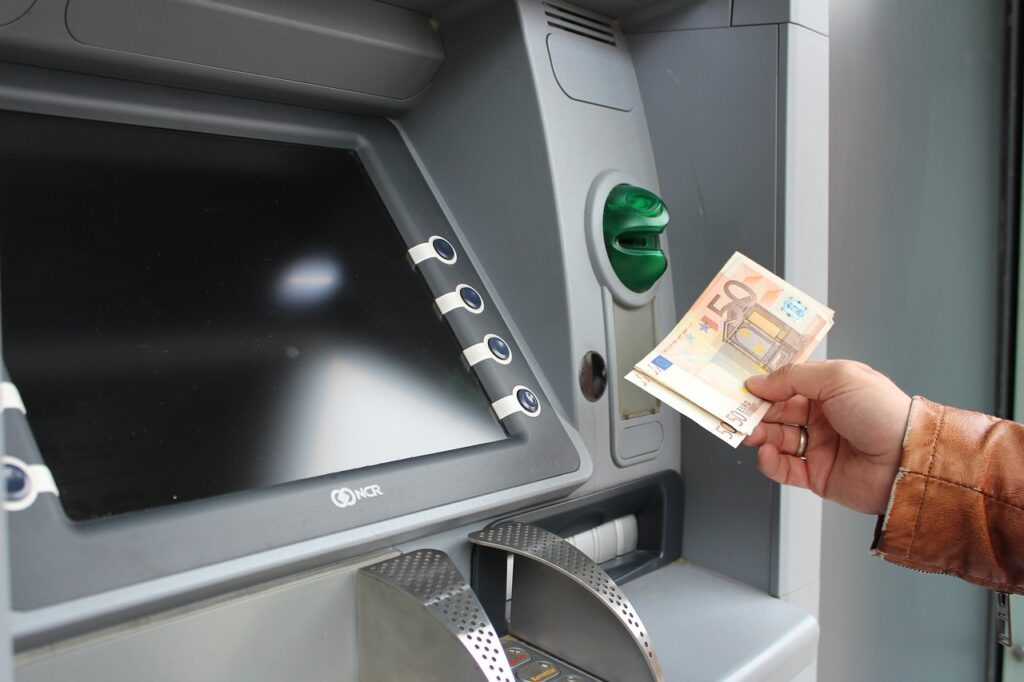
2. Card Fees, ATMs and Currency Tricks: Death by 3% Here, 5% There
Most people obsess over getting a cheap flight and then casually hand 3–8% of every purchase to their bank without realizing it. The financial system loves travelers who don’t pay attention.
Here are the main culprits behind these hidden charges on Europe trips:
Foreign transaction fees
Many U.S. credit cards still charge 2.5–3% on every purchase in foreign currency. That’s on your hotel, your dinners, your museum tickets—everything. On a $3,000 spend, that’s $75–$90 for absolutely nothing.
ATM fees and double-dipping
Withdraw cash abroad and you can get hit twice:
- Your home bank’s foreign ATM fee (often $3–$5 per withdrawal, sometimes plus a percentage).
- The local ATM’s own fee, which can be another few euros.
Do that a handful of times and you’ve quietly burned through the cost of a nice dinner.
Dynamic Currency Conversion (DCC)
This is the sneaky one. The card terminal or ATM asks if you want to pay in your home currency (USD, GBP, etc.) instead of euros. It looks friendly. It’s not.
When you choose your home currency, the machine applies its own inflated exchange rate, often adding 3–5% on top of any card fees you already pay. You’re basically tipping the payment processor for no reason.
My rules of thumb:
- Use a card with 0% foreign transaction fees as your primary travel card. If your current card charges 3%, it’s worth getting a no-fee card before you go.
- Always choose to pay in the local currency (euro, pound, etc.) at terminals and ATMs. If the screen is confusing, I slow down and read it twice.
- Minimize ATM withdrawals: take out larger amounts less often, and use a bank that reimburses ATM fees if possible.
- Keep a backup card from a different bank in case one gets blocked or eaten by an ATM.
None of this is dramatic on its own. But add 3% here, 5% there, and suddenly your cheap Europe vacation has quietly picked up a few hundred dollars in extra fees.
3. Budget Airlines: When a €19 Flight Becomes €120
Ryanair, easyJet, Wizz Air and friends are both brilliant and brutal. They’ll fly you across Europe for less than the cost of a taxi… if you play by their rules. If you don’t, they’ll happily charge you more than a full-service airline.
Here’s where the “cheap” ticket inflates and those surprise fees on low cost European airlines show up:
- Bags: Many low-cost carriers now charge for any carry-on larger than a small personal item. A standard cabin bag can cost more than the base fare.
- Strict weight limits: Go 1–2 kg over and you can pay painful per-kilo overage fees at the airport.
- Seat selection: Want to sit with your partner or kids? That’s extra. On a family booking, this adds up quickly.
- Check-in and boarding passes: Some airlines charge if you don’t check in online or if you need a printed boarding pass at the airport.
- Remote airports: That “Paris” flight might land in Beauvais, not Charles de Gaulle. The cheap ticket can be wiped out by a long, expensive transfer into the city.
By the time you add a cabin bag, a checked bag, seat selection, and a bus from a remote airport, your €19 fare can quietly become €80–€120. That’s the true cost of some “cheap” Europe holidays.
How I keep budget flights actually cheap:
- Pack to the smallest allowed size and weigh your bag at home. I treat the airline’s size box as gospel.
- Compare total trip cost, not just the ticket: include bags, seat fees, and airport transfers. Sometimes a “more expensive” airline into a central airport is cheaper overall.
- Check-in online as soon as it opens and save your boarding pass offline.
- Be early at the gate: low-cost carriers are strict about closing doors and gate-checking bags.
If you’re traveling light and organized, budget airlines are fantastic. If you’re not, they’re a fee machine—and a classic example of hidden charges on Europe package tours and DIY itineraries alike.
4. Trains, Reservations and Fines: The Hidden Cost of Not Reading the Rules
European trains are one of the best parts of traveling here. They’re fast, scenic, and usually straightforward. They’re also full of small rules that can cost you real money if you ignore them.
Rail passes vs. reservations
Eurail and Interrail passes look like a magic “ride anything” ticket. But many popular routes require paid seat reservations on top of the pass—especially high-speed trains in France, Italy, and Spain.
If you don’t realize this, you can end up paying €10–€30 per leg, per person, on top of a pass you thought covered everything. On a multi-country trip, that’s easily another €100+ in unexpected transport costs in Europe.
Validation rules and on-the-spot fines
Some cities and countries require you to validate your ticket before boarding (stamp it in a little machine on the platform or bus). If you don’t, inspectors can fine you on the spot—even if you did buy a ticket.
Real-world example: in Vienna, failing to validate a transit ticket can mean a €135 fine right there on the tram. No, they don’t care that you’re a tourist.
Other common fine triggers:
- Riding in the wrong class (1st vs 2nd) with the wrong ticket.
- Using a discounted ticket (youth, senior, regional) without qualifying.
- Not having ID when required for certain tickets or passes.
How I avoid paying for “lessons”:
- Check if reservations are required for each route, even with a rail pass. I look directly on the national rail site, not just third-party apps.
- Ask locals or staff about validation the first time I use a new city’s transport. I’d rather look clueless for 10 seconds than pay €100+.
- Keep tickets and passes handy until I’m out of the station; inspectors often appear at exits.
- Read the fine print on discounted tickets. If it says “ID required,” I make sure I have it.
Public transport surprises in Europe are rarely dramatic, but they’re expensive. A few minutes of checking the rules can save you a lot of money—and stress.
5. Roaming, Data and “Just a Few Texts” That Cost $150
Mobile data is the new oxygen. But if you let your U.S. carrier handle everything by default, you can pay a shocking premium for it in Europe.
Typical U.S. roaming options:
- Day passes around $10–$15 per day per line.
- “Travel packages” that sound generous but throttle speeds or charge overages.
On a 10-day trip, a family of four can easily spend $400–$600 just on roaming if everyone uses their own pass. That’s a couple of nights in a decent hotel—or a big chunk of your budget Europe trip cost breakdown blown on data.
Cheaper alternatives:
- Travel eSIMs from providers that specialize in data for Europe. You pay upfront, often much less than U.S. carrier rates, and avoid surprise bills.
- Local SIM cards if your phone is unlocked and you’re staying longer in one country.
- Wi‑Fi + discipline: download maps offline, save playlists, and use hotel Wi‑Fi for heavy tasks.
One more thing: relying on random public Wi‑Fi for banking or sensitive logins is asking for trouble. If I have to do anything important on a café network, I use a VPN or wait until I’m on a trusted connection.
My approach: I calculate the total cost of my carrier’s roaming for the whole trip, then compare it to a travel eSIM or local SIM. If the difference is more than the price of a nice dinner, I switch.
6. Restaurants, “Service Charges” and Airbnb Cleaning Fees
Food and accommodation are obvious costs. The hidden part is the extra line items that sneak onto the bill and quietly inflate the true cost of cheap Europe holidays.
Restaurant service charges
In many European cities, especially touristy ones, restaurants add a 10% (or similar) service charge to the bill. Sometimes it’s clearly labeled; sometimes it’s buried in small print.
If dinners run around $34 per person, a family can easily spend another $95+ in service charges over a week without realizing it. In some places, you still tip a little on top; in others, the service charge replaces the tip. The key is to read the bill and ask if you’re unsure.
Cover charges and “coperto”
In Italy and a few other countries, it’s normal to see a small per-person charge for bread, table service, or “coperto.” It’s not a scam; it’s just a different system. But it does mean that “cheap” meal is a bit less cheap than the menu suggests.
Airbnb and vacation rental cleaning fees
Short-term rentals often look cheaper than hotels—until you scroll to the bottom and see a non‑negotiable cleaning fee, often around $50–$70 per stay or more in popular cities.
For a one- or two-night stay, that fee can completely erase the savings vs. a hotel. For a week-long stay, it’s easier to swallow. This is one of those money mistakes on budget Europe travel that’s easy to avoid if you check the full price.
How I keep this under control:
- Check the full rental price including cleaning and service fees before comparing to hotels.
- Stay longer in each rental so the cleaning fee is spread over more nights.
- Scan restaurant bills for service charges and cover charges before tipping.
- Ask locals what’s normal for tipping; in many places, 5–10% or just rounding up is plenty.
7. Tourist Rules, Fines and “I Didn’t Know” That Cost €100+
Some of the most painful “fees” in Europe aren’t fees at all—they’re fines. And they often hit tourists who assume that if something isn’t obviously forbidden, it’s allowed.
Examples that catch people out:
- Buying counterfeit goods in Italy: that “cheap designer” bag from a beach vendor can legally cost the buyer up to €10,000 in fines, not just the seller.
- Feeding pigeons in Venice’s St. Mark’s Square: banned, with fines attached.
- Sitting on Rome’s Spanish Steps: also banned; fines are enforced.
- Swimming or jumping into Venice’s canals: heavily fined and very much not romantic.
- Ignoring local decorum rules: eating on certain monuments, walking shirtless in historic centers, etc., can all be fine-worthy in some cities.
These rules exist because overtourism has pushed cities to the edge. They’re trying to protect historic sites and keep daily life bearable for residents. But if you don’t know the rules, you can pay dearly for a photo or a joke.
My simple system:
- Before I go, I search
city name + tourist fines
or check recent articles about local rules. - On arrival, I pay attention to signs, even if they’re in another language—icons are usually clear.
- When in doubt, I watch what locals do. If nobody else is sitting on that monument or feeding those birds, I don’t either.
Think of this as part of understanding Europe tourist taxes and surcharges in a broader sense: some are official fees, some are fines, but all of them hit your wallet if you ignore the rules.
8. How to Budget for the Hidden 30–50% (Without Going Crazy)
All of this can sound overwhelming. It doesn’t have to be. The goal isn’t to track every euro in a spreadsheet; it’s to stop being surprised by the hidden costs of cheap Europe trips.
Here’s how I build a realistic budget for a “cheap” Europe trip:
- Add 30–50% to your initial estimate
If you think you’ll spend $3,000, plan for $3,900–$4,500. That buffer covers city taxes, card fees, transport extras, and the occasional mistake. - Do a 30-minute fee audit
For each major category—accommodation, transport, money, phone, activities—ask:- What fees are not in the headline price?
- What rules could trigger fines or surcharges?
- What’s the cheaper alternative (no-FTF card, eSIM, different airport, etc.)?
- Pick your battles
You don’t have to optimize everything. Maybe you’re fine paying a bit more for roaming but want to be ruthless about airline fees. Decide where you care and where you don’t. - Keep a small “oops” fund
I mentally set aside €100–€200 for mistakes: a missed train, a surprise fee, a fine I couldn’t avoid. If I don’t use it, great—that’s money for a splurge at the end.
The point isn’t to turn your vacation into a war against fees. It’s to travel with your eyes open. When you know where the traps are—city taxes, reservation fees in Europe hotels, card charges, budget airline add-ons, public transport surprises, roaming, and fines—you can step around most of them and spend your money on what you actually came for.
So before you book that “too good to be true” Europe deal, ask yourself: What’s missing from this price?
The more you ask that question now, the less you’ll be asking it at the checkout desk, the ticket counter, or the ATM. That’s how you avoid the worst hidden expenses and keep your cheap Europe vacation from quietly getting very expensive.