I love a good flight deal. But I’ve also watched a “$79 fare” quietly morph into a $350 hit to my credit card by the time I added everything I actually needed. If you’ve ever had that sinking feeling at checkout, this guide is for you.
Instead of chasing the lowest number on the screen, it’s worth asking a better question: What will this trip really cost me once I land? The cheap flight is just the headline. The real story is everything that comes after.
Let’s walk through the hidden travel costs that turn cheap flights into expensive vacations – and how to budget for them before you click “Book”.
1. Baggage: The Biggest Budget Trap Hiding Behind Cheap Fares
When I see a suspiciously low fare now, my first thought is simple: What’s the baggage catch?
Because these days, bags are where airlines quietly make a fortune.
Here’s the reality many travelers still miss when they only budget for airfare:
- Checked bags are a major revenue stream, not a perk. On major U.S. airlines, the first checked bag often runs about $35–$50 each way. On low-cost airlines, it can jump to $55–$99+ if you add it late.
- Even carry-ons can cost you. Some basic and ultra-low-cost fares only include a small personal item. That “free” carry-on you assume you have? It might turn into a $40–$60 surprise at the gate.
- Late decisions are expensive decisions. Paying for bags at the airport or gate is usually the worst-case scenario. Oversized or overweight? You can easily cross the $100-per-bag line.
To make it more confusing, baggage rules vary between airlines, routes, and fare types. Connecting on two different airlines? You might pay twice. That’s how a cheap flight’s total trip cost quietly balloons.
How I budget for baggage now:
- Before I fall in love with a fare, I open the airline’s baggage page and note what’s included, what’s extra, and the price for prepay vs. airport.
- I always calculate round-trip costs for every bag, not just one direction.
- If I’m traveling with family, I multiply everything by the number of people. That “cheap” flight can double in cost very quickly.
- I ask:
Can I realistically travel with just a personal item or one shared checked bag?
If not, I treat baggage as part of the ticket price, not an optional extra.
Once you start doing this, you’ll notice something interesting: sometimes the “more expensive” airline with better baggage rules is actually cheaper overall when you factor in all those hidden airline and airport fees.

2. Seat Selection: Comfort, Control, and the Cost of Sitting Together
Seat fees are sneaky because they look small. $18 here, $29 there. No big deal, right? But on a round-trip with connections, those little numbers multiply fast – especially for families who want to sit together.
What’s changed with modern airline pricing:
- Seat selection is no longer “included” by default. Many basic or budget fares charge for almost any advance seat choice, even standard aisle or window seats.
- Premium spots are priced aggressively. Preferred seats might average around $30+, exit rows closer to $50, and extra-legroom seats on long-haul flights can hit $100–$160 each way.
- Families pay a “togetherness tax.” If you want to guarantee that everyone sits together, you’re often paying per seat, per segment.
Here’s the part airlines don’t shout about: on most carriers, you’ll still get a seat for free at check-in if you skip pre-selection. You just won’t control where it is. For some trips, that’s fine. For others, it’s a hard no.
How I decide whether to pay for seats:
- Short solo trip? I usually skip seat fees and take whatever I’m assigned. I’d rather keep that $30–$80 for the actual trip.
- Long-haul or overnight flight? I treat seat comfort as part of the ticket price. If I know I’ll be miserable in a middle seat for 10 hours, I budget for a better spot from the start.
- Traveling with kids or older relatives? I assume I’ll pay something to sit together and add that to my real flight cost before comparing fares.
The key question I ask: If I add realistic seat fees for this trip, is this still the cheapest option – or just the cheapest-looking?
This is where a lot of people get caught by extra fees beyond airfare.
3. Food, Drinks, and Airport Days That Turn into Restaurant Days
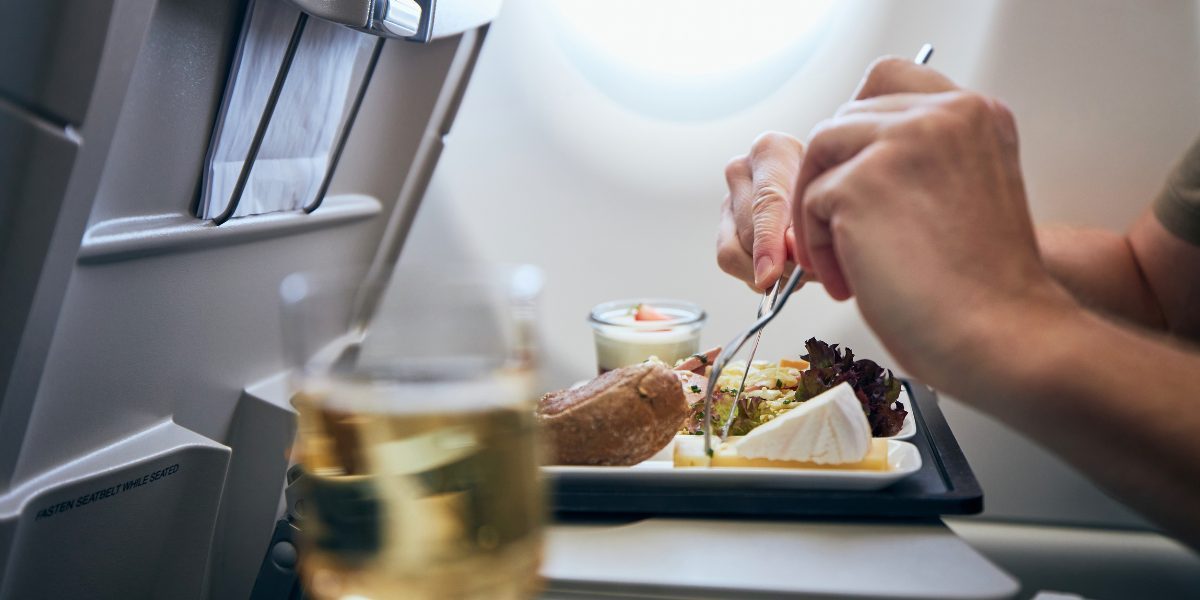
On paper, a 3–4 hour flight doesn’t look like a big food expense. In real life, it often turns into:
- Airport coffee and a snack before boarding
- Paid drinks and snacks on the plane
- Maybe a meal during a layover
On many budget airlines, even water isn’t free. Two people on a medium-length flight can easily spend $30–$50 on drinks and snacks alone. Add airport prices, and your “cheap” flight day quietly becomes one of the most expensive days of the trip.
Meanwhile, full-service carriers often include non-alcoholic drinks and a small snack on domestic routes, and more substantial meals on long-haul flights. That matters when you’re doing a full travel cost breakdown beyond flights.
How I keep food costs under control:
- I check whether the airline includes any food or drinks on my specific route and fare type.
- I assume I’ll buy at least one airport meal on travel days and budget accordingly.
- I bring a refillable water bottle (to fill after security) and simple snacks so I’m not forced into $8 chips and $12 sandwiches.
- When comparing airlines, I mentally add a “food buffer” to bare-bones carriers that charge for everything.
So I ask myself: Am I really saving money if I pay less for the ticket but more for every sip and bite?
Often, those unexpected trip expenses add up faster than you think.
4. Change, Cancellation, and Flexibility: The Fine Print That Can Wreck Your Budget
Cheap fares often come with a quiet warning label: “Don’t you dare change your mind.” That’s where many travelers get burned when they’ve only budgeted for the base fare.
Here’s what I watch for now:
- Basic and ultra-cheap fares are often rigid. Some are nonrefundable and non-changeable. Others allow changes but with fees that can rival the ticket price.
- Short change windows. A few budget carriers offer a 24-hour or very limited low-fee change period. After that, most of your fare is effectively sunk.
- Disruption protection is weaker. With the cheapest fare types, you may have fewer options if your flight is delayed or canceled. That can mean extra hotel nights, meals, or even buying a new ticket last-minute.
For flexible trips with light luggage, these restrictions might be fine. But for time-sensitive travel – weddings, cruises, important meetings – a rock-bottom fare can be a financial gamble.
How I factor flexibility into the “real” price:
- I read the fare rules before booking, not after something goes wrong.
- If my plans are even slightly uncertain, I compare the cost difference between basic and standard economy and ask:
Is this extra flexibility worth it to me?
- For big or expensive trips, I consider travel insurance or at least a fare that allows changes without brutal penalties.
Sometimes the smartest move is to pay more upfront for a flexible fare and avoid the risk of paying twice later. It’s one of the most common mistakes people make when they budget only for airfare.
5. Airports, Layovers, and Transfers: The Ground Costs Everyone Forgets
We obsess over airfare and then casually ignore everything that happens between our front door and the hotel. That’s where a lot of “invisible” money disappears – especially on trips that start with a cheap flight but end up being an expensive vacation.
Here’s what I look at now before I call any flight cheap:
- Airport location and transfer costs. The low-cost flight might land at a secondary airport far from the city. Add up taxis, rideshares, trains, or buses for both directions. Sometimes that alone wipes out the savings.
- Layover length and timing. A long or overnight layover can mean extra meals, airport lounge passes, or even a hotel. That’s real money, not just “inconvenience.”
- Connection risk. Tight connections increase the chance of missed flights, rebooking costs, and lost time. For important trips, I treat a safer schedule as part of the price.
My quick ground-cost checklist:
- How much will it cost me to get to and from each airport, realistically?
- Will I need extra meals or a hotel because of layovers or odd flight times?
- If something goes wrong with a tight connection, what’s my backup plan – and what might it cost?
When I compare total trip cost vs. total trip cost
instead of just base fares, the “cheapest” option often changes. A slightly higher fare with easier ground transportation can be the true budget win.
6. Payment, Currency, and Taxes: The Small Print That Adds Up
Even after you’ve handled bags, seats, and food, there are a few more line items that quietly inflate the final number. These are the kinds of hidden travel costs that don’t show up until the last screen.
Things I watch for:
- Foreign transaction fees. If you’re booking in a foreign currency with the wrong credit card, you might pay 2–3% extra for the privilege. On a big trip, that’s not trivial.
- Payment and booking surcharges. Some airlines or agencies add fees for certain payment methods or for booking by phone. It’s often just a few dollars – until you multiply it by several tickets.
- Taxes and surcharges, especially on award tickets. A “free” flight booked with miles can still carry $200–$1,400 in taxes and fees on some international routes. Miles don’t cover everything.
How I keep these from surprising me:
- I use a card with no foreign transaction fees for international bookings.
- I click through to the final payment screen and read every line item before I commit.
- When using miles, I compare not just the mileage cost but also the cash surcharges against a paid ticket on the same route.
It’s not about avoiding every fee – some are unavoidable. It’s about knowing they’re coming and deciding if the deal still makes sense once you factor in all those low-cost airline hidden charges.
7. A Simple Pre‑Booking Checklist: Turn “Cheap Flight” into “Smart Trip”
When I’m tempted by a low fare, I pause and run through a quick checklist. It takes five minutes and has saved me hundreds of dollars (and a lot of frustration).
Before you book, ask yourself:
- Bags: What’s included? What will I realistically bring? What’s the total round-trip cost for my luggage? Am I budgeting for baggage and seat fees, or just pretending they don’t exist?
- Seats: Do I care where I sit on this trip? If yes, how much will it cost me (and my travel companions) to choose seats?
- Food & drinks: Does this airline include anything? How much will I likely spend on airport and in-flight food?
- Flexibility: If my plans change, what happens? What are the change/cancellation rules and fees for this specific fare?
- Airports & layovers: How much will ground transport, layovers, and possible hotels or extra meals cost me?
- Payment & taxes: Are there extra booking or card fees? What are the taxes and surcharges, especially if I’m using miles?
Only after I’ve answered those do I compare options. Sometimes the rock-bottom fare still wins. Often, a slightly higher base price with better inclusions is the true bargain once you factor in all the hidden travel costs after a cheap flight.
If you start thinking this way, you’ll notice a shift: you stop chasing the cheapest flight and start designing the best-value trip for how you actually travel. That’s how you avoid surprise costs on budget airlines and build a trip budget that reflects the real price of your vacation.